

Every individual carries a story written deep within their DNA—a story that stretches back thousands of years, across continents, cultures, and civilizations. Today, advances in genetic science allow us to uncover this story with remarkable precision.
DNA-based ancestry analysis doesn’t just tell you where you’re from—it reveals how your ancestors moved, settled, and evolved over millennia. At the heart of this discovery lies a powerful tool: SNP (Single Nucleotide Polymorphism) mapping.
DNA as a Historical Record
Long before written history, human migration shaped the genetic landscape of populations worldwide. As communities moved, intermingled, and adapted to new environments, they left behind genetic markers that persist even today.
These markers act like breadcrumbs across time—allowing scientists to reconstruct ancient migration routes and population histories.
What Are SNPs and Why Do They Matter?
SNPs, or Single Nucleotide Polymorphisms, are tiny variations at specific positions in your DNA sequence. While small, these variations carry powerful information about ancestry.
Think of SNPs as fragments of a genetic story:
- Some SNPs are unique to specific regions
- Others are shared across populations due to historical migrations
- Certain patterns can be traced back to ancient civilizations and communities
By analyzing hundreds of thousands of these markers, scientists can identify where your DNA most closely aligns geographically and ethnically.
Mapping Migration Through Genetic Patterns
DNA migration mapping works by comparing your SNP patterns against large genetic reference databases. These databases contain DNA samples from populations across different regions and time periods.
Here’s how the process unfolds:
1. Genetic Pattern Analysis
Your DNA is scanned for SNP markers that carry ancestral signals.
2. Population Matching
These markers are matched against known genetic signatures from global and regional populations.
3. Migration Reconstruction
Based on these matches, scientists trace how your ancestors likely moved across regions over thousands of years.
The result? A dynamic map of your ancestral journey—from ancient origins to present-day identity.
The Indian Context: A Deeply Layered Genetic History
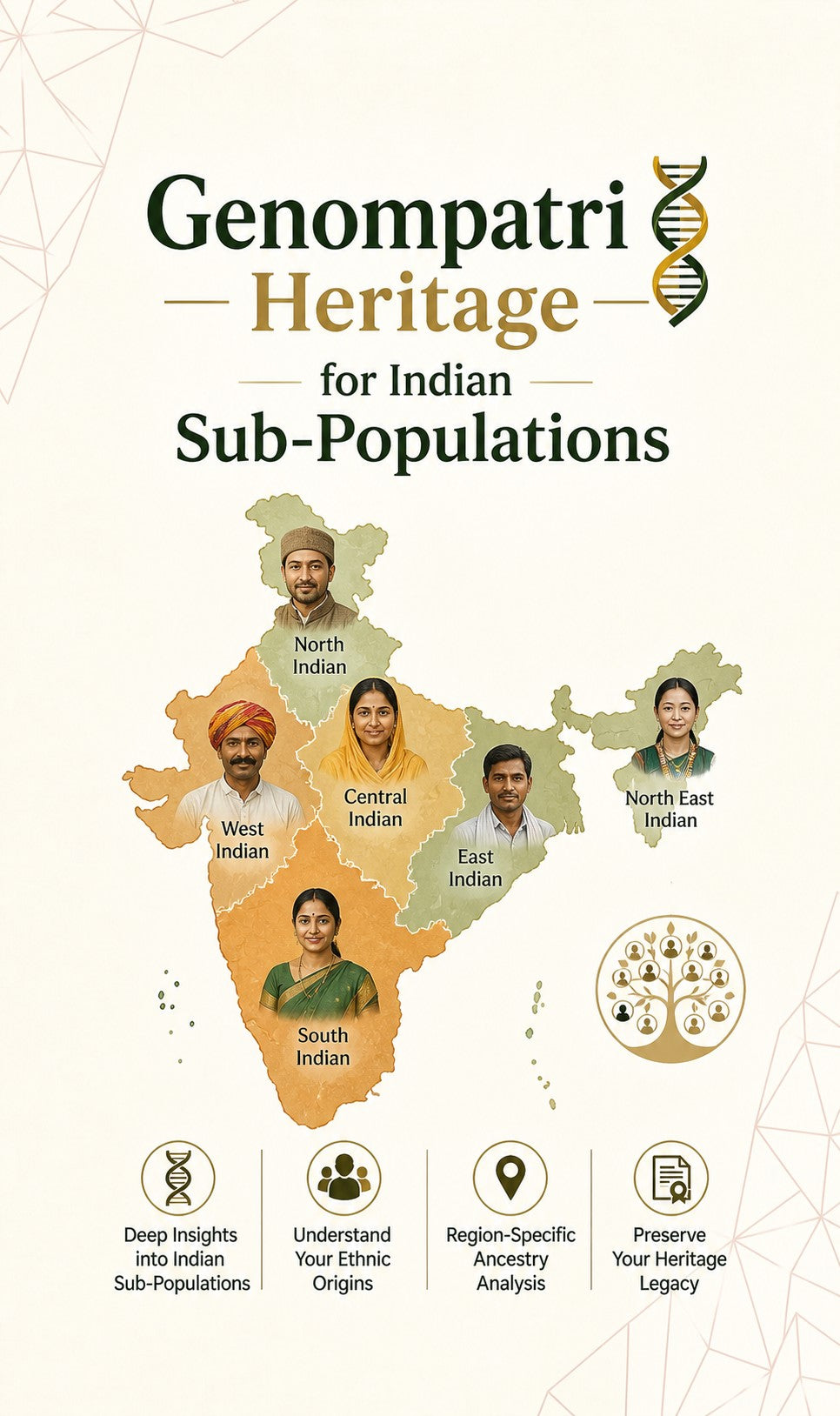
India presents one of the most complex and fascinating migration stories in the world. Its population is shaped by multiple waves of migration, cultural evolution, and regional isolation.
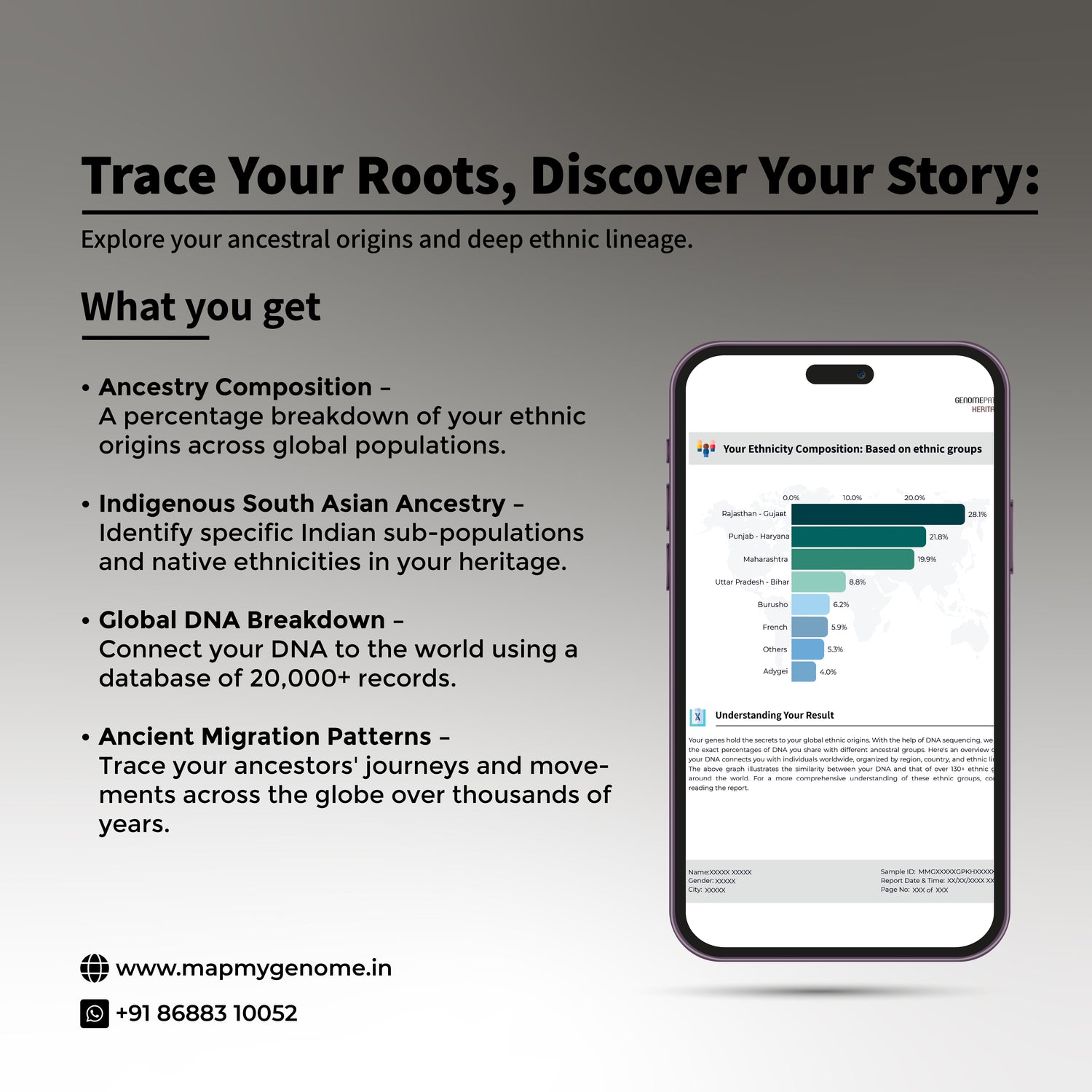
Through DNA analysis, individuals can uncover connections to major ancestral lineages such as:
- Indo-Aryan Lineages: Linked to ancient migrations into northern India, contributing to linguistic and cultural frameworks seen today.
- Dravidian Lineages: Associated with some of the oldest settled populations in southern India, with deep-rooted genetic continuity.
- Tribal and Indigenous Groups: Representing some of the earliest inhabitants of the subcontinent, preserving ancient genetic signatures.
These layers combine to form a uniquely rich and diverse genetic identity.
From Millennia to You: Your Personal Migration Story
What makes DNA-based migration mapping powerful is its ability to personalize history. Instead of broad historical narratives, you get insights tailored to your unique genetic makeup.
Your results can reveal:
- Ancestral origins across regions and continents
- Migration pathways taken by your ancestors
- Genetic connections to specific ethnic groups and communities
It transforms history from something you read into something you carry within you.
Why This Matters Today
Understanding your genetic migration story is more than curiosity—it’s a deeper connection to identity.
It helps answer questions like:
- Where did my ancestors come from?
- How did they move and evolve?
- What communities am I genetically connected to?
In a world where identities are increasingly global, DNA offers a grounded, scientific perspective on who we are and where we come from.
Your DNA is more than a biological blueprint—it’s a living archive of human history. Through SNP-based mapping, it becomes possible to trace ancient journeys, uncover hidden connections, and understand the forces that shaped your ancestry.
From Indo-Aryan migrations to Dravidian roots and indigenous heritage, every genetic marker adds a piece to your story.
And when you put those pieces together, you don’t just discover your past—you rediscover yourself.