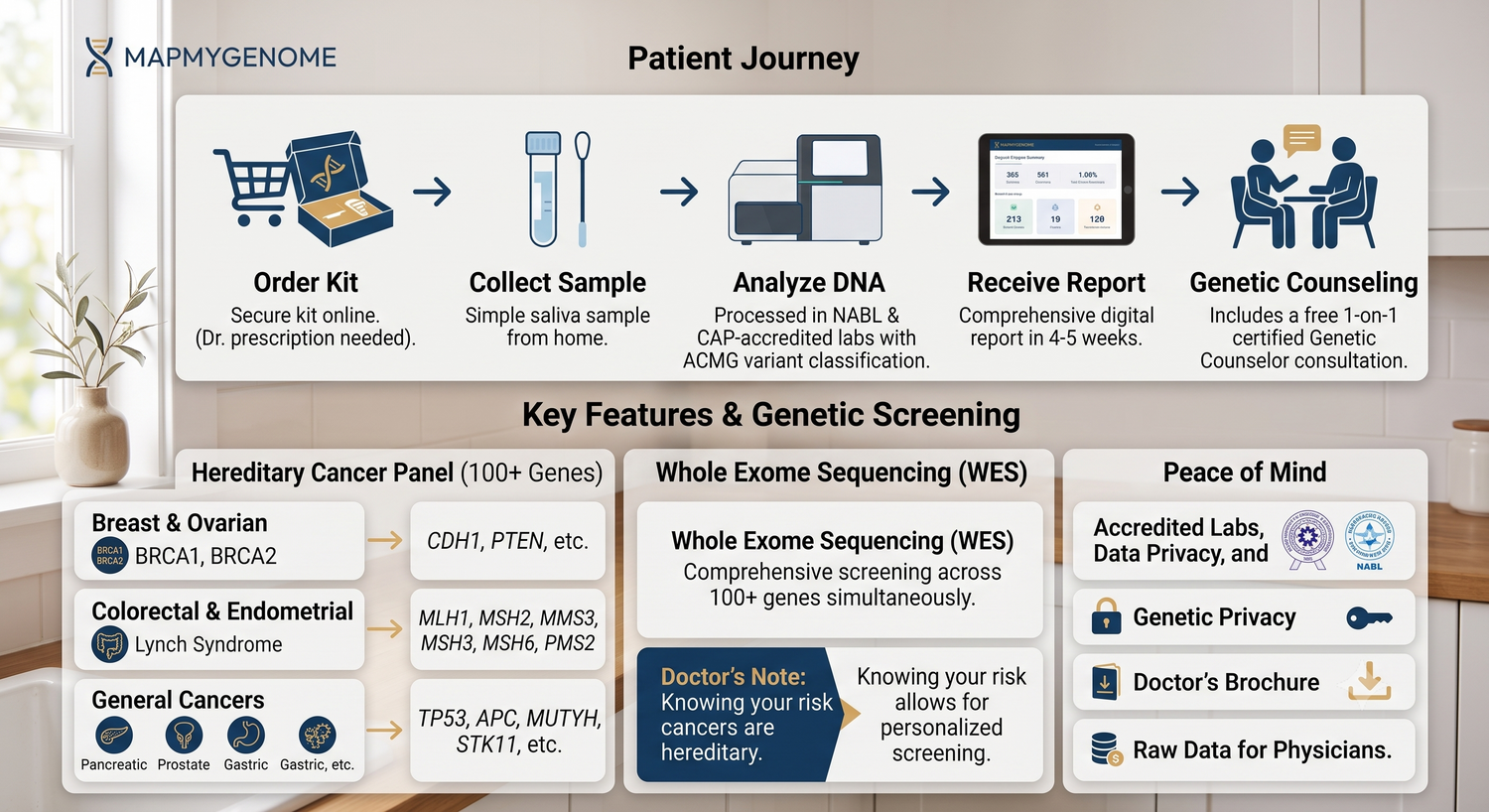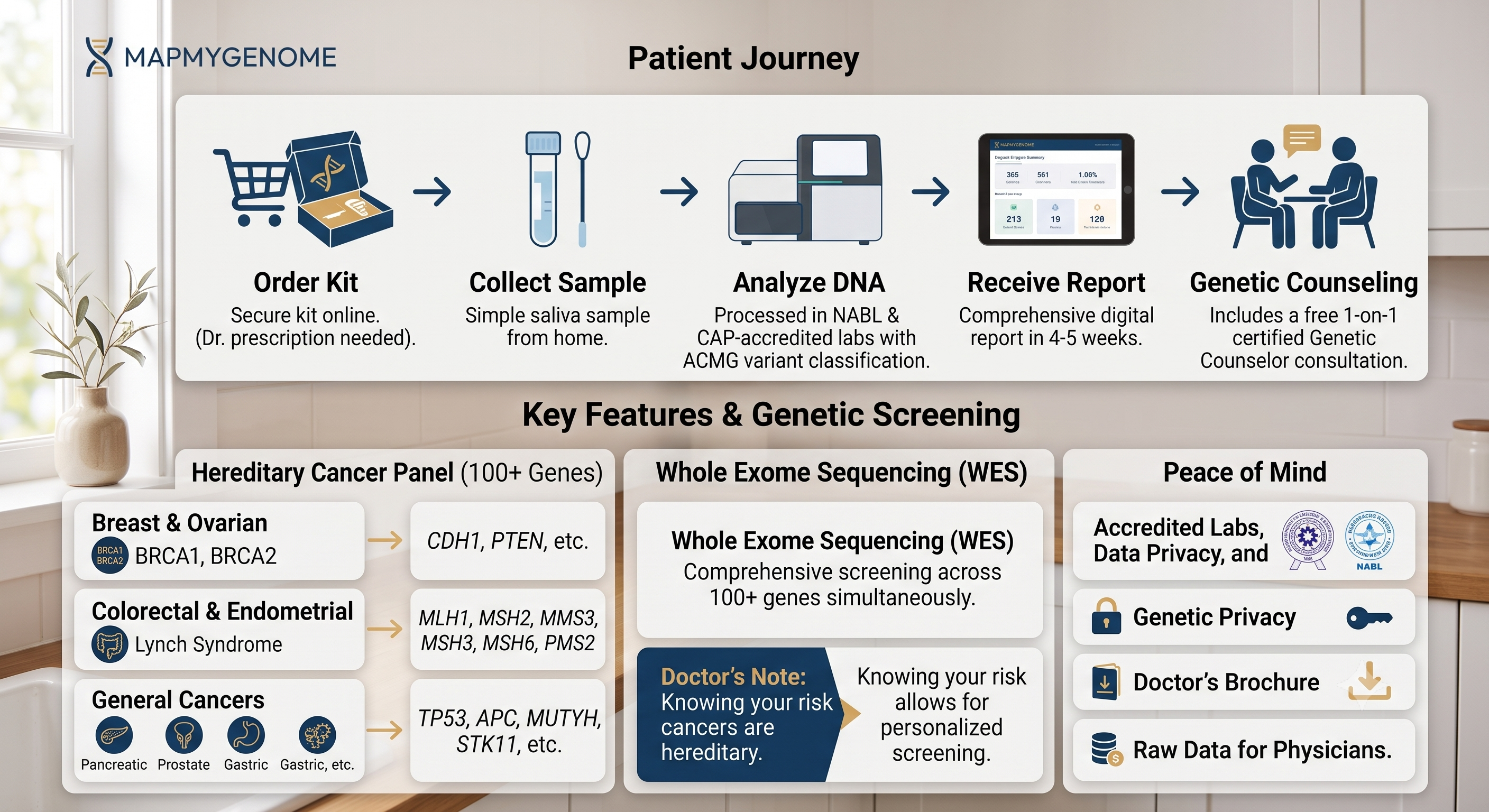


Cancer is one of the most feared diagnoses anyone can receive. But what if you could know your risk before symptoms ever appear? For individuals with a family history of cancer, genetic testing for inherited cancer risk is one of the most powerful tools available in preventive healthcare.
What Is Inherited Cancer Risk?
Most cancers are caused by acquired mutations that develop over a lifetime due to environmental exposures, lifestyle factors, or random cellular errors. However, approximately 5–10% of cancers are hereditary — caused by germline mutations passed down through families. These inherited mutations significantly increase the lifetime risk of developing certain cancers.
The most well-known examples include BRCA1 and BRCA2 mutations (associated with breast and ovarian cancer), Lynch syndrome genes (associated with colorectal, endometrial, and other cancers), and TP53 mutations (associated with Li-Fraumeni syndrome).
When Should You Consider Genetic Testing for Inherited Cancer Risk?
1. Strong Family History of Cancer
Consider testing if you have multiple close relatives (parents, siblings, children) diagnosed with the same or related cancers, relatives diagnosed at unusually young ages (e.g., breast cancer before 50), or cancers that are rare in the general population appearing in your family.
2. Personal History of Certain Cancers
If you have already been diagnosed with cancer — particularly breast, ovarian, colorectal, or pancreatic cancer — genetic testing can identify whether a hereditary mutation contributed, which has implications for your treatment and for your family members' risk.
3. Specific Ethnic Backgrounds
Certain populations have higher carrier rates for specific mutations. For example, individuals of Ashkenazi Jewish descent have a significantly higher prevalence of BRCA1/BRCA2 mutations. In India, founder mutations in BRCA1/BRCA2 have been identified in specific communities.
4. Abnormal Tumor Characteristics
Certain tumor features — such as triple-negative breast cancer, microsatellite instability (MSI-high) in colorectal cancer, or bilateral cancers — are associated with hereditary syndromes and warrant genetic evaluation.
5. Proactive Health Planning
Even without a personal cancer diagnosis, individuals who want to understand their inherited risk and take proactive preventive steps can benefit from genetic testing.
What Happens After a Positive Result?
A positive result doesn't mean cancer is inevitable — it means your risk is elevated and you can take action. Options include enhanced surveillance (more frequent screenings), risk-reducing medications, preventive surgeries, and lifestyle modifications. Genetic counselling is essential to interpret results and build a personalised action plan.
The Role of Genetic Counselling
Genetic testing for cancer risk should always be accompanied by expert genetic counselling. A certified genetic counsellor helps you understand what the test can and cannot tell you, interpret your results in the context of your personal and family history, and navigate the emotional and practical implications of your findings.
Know Your Inherited Cancer Risk — Before Symptoms Appear
Genomepatri by MapmyGenome assesses your genetic predisposition to breast cancer, colorectal cancer, and 100+ other conditions — backed by NABL-certified labs and expert genetic counsellors who help you build a personalised prevention plan.