

Breast Cancer and BRCA 1/2 Full Gene Testing
Breast cancer accounts for approximately 25% of all cancers diagnosed in women. Advanced genetic tests like BRCA 1 & 2 full gene testing can help in preventing the onset of this disease. This test uses a simple blood sample to identify mutations in breast cancer susceptibility genes BRCA1 and BRCA2.
The BRCA 1/2 genes are tumour suppressor genes which repair DNA damage. They lose their function when mutations occur, which can promote cancer. Mutations in the BRCA 1/2 genes are inherited and significantly increase the risk of developing breast, ovarian, and other forms of cancer in both women and men.
A positive result implies a pathogenic mutation in one of the breast cancer genes — likelihood of developing breast or ovarian cancer is higher compared against the normal population. However, a positive result does not mean one will definitely develop cancer. By detecting these mutations early, one will have access to preventative measures and proactive treatment — leading to an overall better prognosis.
How the Test Can Reduce Cancer Risk
Increasing surveillance — clinical breast exams, MRI and mammography every 6 months for early detection
Taking medication such as Tamoxifen in consultation with a physician to reduce risk of developing breast cancer by about 50% in women at increased risk
Opting for prophylactic mastectomy
Opting for prophylactic oophorectomy
Having an accurate and detailed family history is essential to establishing a person’s risk of hereditary breast or ovarian cancer. It’s very important to undergo a genetic counselling session from a certified counsellor.
Understanding Breast Cancer / Ovarian Cancer Genetics
There is more than one gene associated with breast/ovarian cancer, so a negative result for one gene does not mean that a person is not suffering from a disease-causing mutation in another gene. If a mutation has been detected, we offer testing to family members for any identified mutation at a reduced price.
Genes involved in hereditary breast/ovarian cancer: BRCA1 (chromosome 17), BRCA2 (chromosome 13) — autosomal dominant transmission. Carrier frequency of BRCA1/2 mutations is approximately 1/500–1/1,000 in the general population.
Who Should Take This Test
Women diagnosed with breast and/or ovarian cancer, or with first or second degree relatives with breast or ovarian cancer
Women with a first degree relative diagnosed with bilateral breast cancer or before the age of 50
Multiple cases of breast or ovarian cancer on the same side of the family, especially in more than one generation
A family member with breast cancer diagnosed before the age of 35
A family member with both breast and ovarian cancers
Men with a strong family history of breast/ovarian cancer
Written by Arun Kiran P, Genetic Counsellor, MapmyGenome.
Know Your Hereditary Breast & Ovarian Cancer Risk
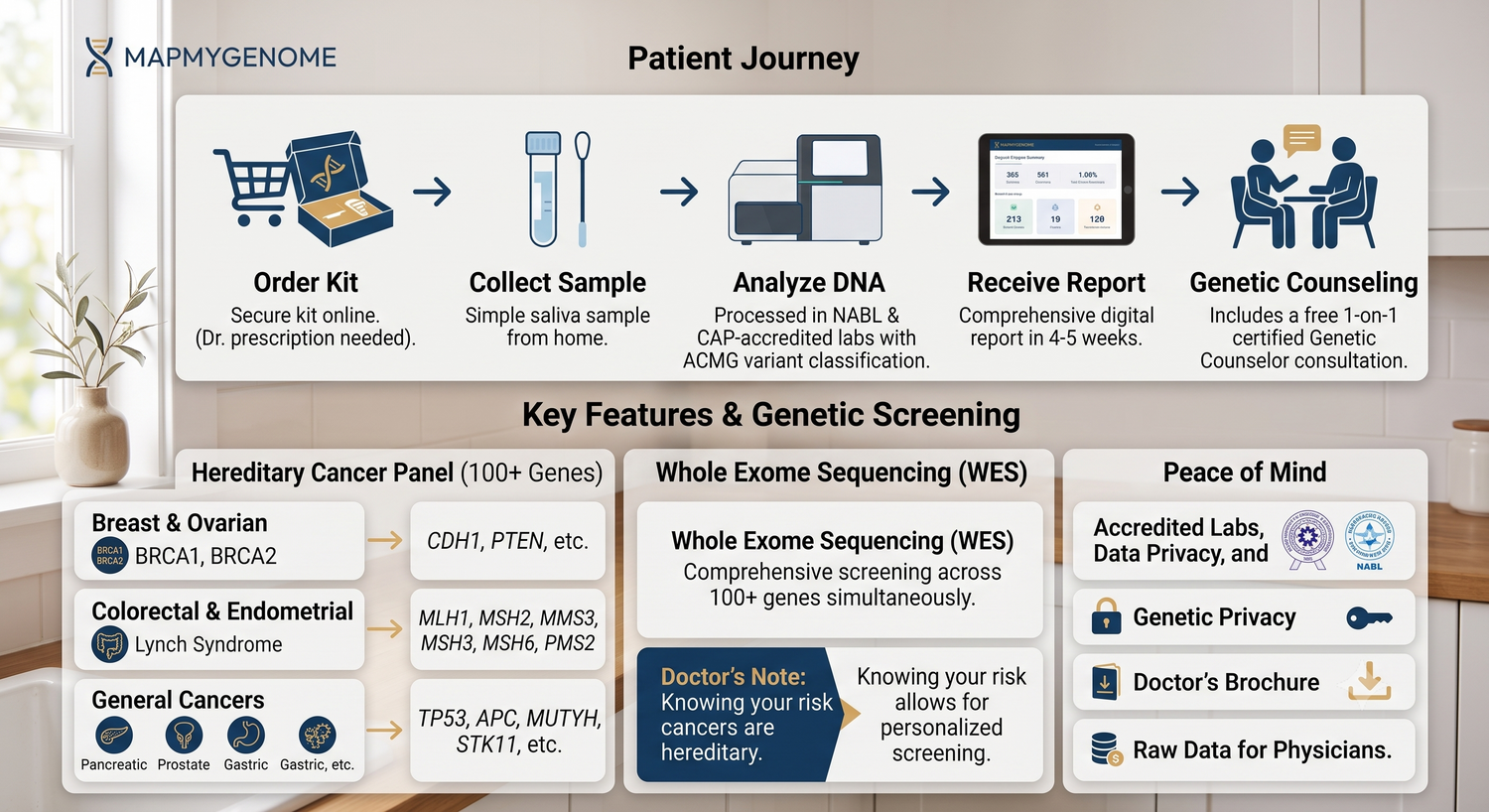
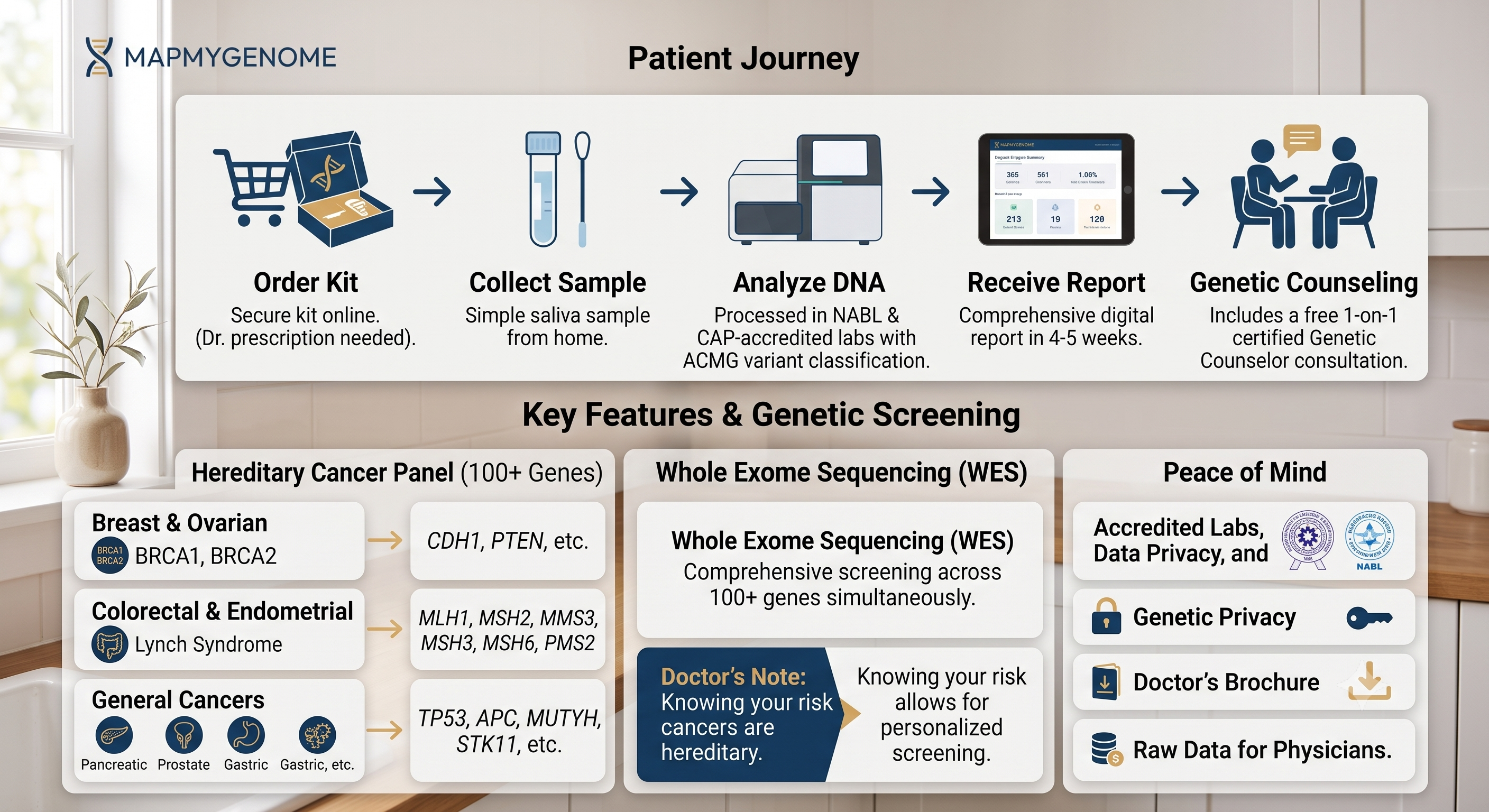
BRCAMap by MapmyGenome screens specifically for BRCA1 and BRCA2 mutations. For broader hereditary cancer risk, Oncomap offers expanded panel testing. Both include certified genetic counselling.