Every human cell typically contains 46 chromosomes — 23 pairs that carry the genetic instructions for our development, growth, and function. But sometimes, a small and entirely random error occurs during cell division: an extra copy of a chromosome is produced. When this happens with chromosome 21, the result is Trisomy 21 — more commonly known as Down syndrome.
Down syndrome is the most common chromosomal condition in humans, occurring in approximately 1 in 700 births worldwide. It is not caused by anything the parents did or didn't do — it is a chromosomal variation that occurs at or around the time of conception, most often by chance.
What Causes Down Syndrome?
Down syndrome occurs when a person has three copies of chromosome 21 instead of the usual two. There are three types:
- Trisomy 21 (Standard) — The most common form (~95% of cases). A random error in cell division (nondisjunction) results in an egg or sperm cell with an extra chromosome 21. Every cell in the body has three copies of chromosome 21.
- Mosaic Down Syndrome — (~2% of cases). The extra chromosome 21 is present in some, but not all, cells. People with mosaic Down syndrome may have fewer associated features.
- Translocation Down Syndrome — (~3% of cases). Part of chromosome 21 becomes attached (translocated) to another chromosome. The total chromosome count may be 46, but the extra chromosomal material causes the features of Down syndrome. This is the only form that can be inherited from a parent.
Risk Factors
The most significant risk factor for Down syndrome is advanced maternal age. The probability increases with age:
- At age 25: approximately 1 in 1,250
- At age 35: approximately 1 in 350
- At age 40: approximately 1 in 100
- At age 45: approximately 1 in 30
However, because younger women have more pregnancies overall, the majority of babies with Down syndrome are born to mothers under 35. This is why prenatal screening is recommended for all pregnant women, regardless of age.
Features and Health Considerations
Down syndrome is associated with a characteristic set of physical features and a range of health considerations that vary significantly between individuals:
Physical features:
- Upward-slanting eyes with epicanthal folds
- Flattened facial profile and nasal bridge
- Small ears and mouth
- Single palmar crease (simian crease)
- Low muscle tone (hypotonia) at birth
- Short stature
Health considerations:
- Congenital heart defects — Present in approximately 40–50% of individuals; often correctable with surgery
- Intellectual disability — Ranges from mild to moderate; most people with Down syndrome can learn, work, and live fulfilling lives with appropriate support
- Thyroid disorders — Hypothyroidism is common and manageable with medication
- Hearing and vision issues — Regular screening and early intervention are important
- Increased risk of Alzheimer's disease — Due to the extra copy of the APP gene on chromosome 21, which influences amyloid production
- Atlantoaxial instability — Affects a small percentage; relevant for contact sports and certain medical procedures
Prenatal Screening and Diagnosis
Down syndrome can be identified before birth through screening and diagnostic tests:
Screening tests (identify risk, not diagnosis):
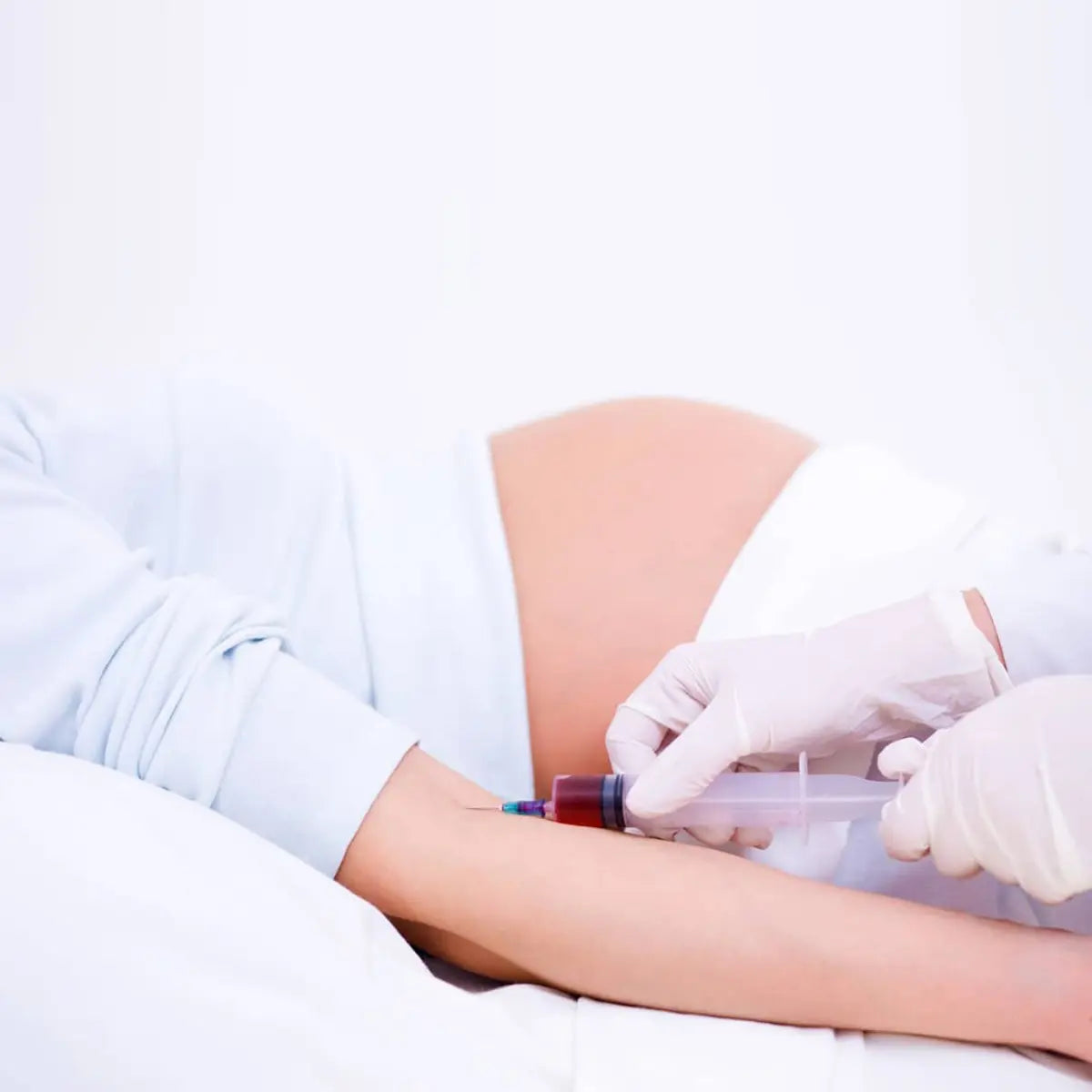
- NIPT (Non-Invasive Prenatal Testing) — A blood test from 10 weeks of pregnancy that analyzes fetal DNA in the mother's blood. Detection rate for Down syndrome: >99%. The most accurate non-invasive screening available.
- First-trimester combined screening — Nuchal translucency ultrasound + blood markers (PAPP-A, free β-hCG). Detection rate: ~85–90%.
- Second-trimester quad screen — Blood markers at 15–20 weeks. Detection rate: ~80%.
Diagnostic tests (definitive, but invasive):
- Chorionic Villus Sampling (CVS) — Performed at 10–13 weeks; small risk of miscarriage (~0.5–1%)
- Amniocentesis — Performed at 15–20 weeks; small risk of miscarriage (~0.1–0.3%)
A positive screening result (including NIPT) should always be confirmed with a diagnostic test before any clinical decisions are made.
Life with Down Syndrome
With appropriate medical care, early intervention, and inclusive education, people with Down syndrome lead meaningful, productive, and fulfilling lives. Life expectancy has increased dramatically — from approximately 25 years in the 1980s to over 60 years today, thanks to advances in cardiac surgery, medical management, and inclusive support systems.
Many people with Down syndrome attend mainstream schools, hold jobs, live independently or semi-independently, and contribute richly to their families and communities. Early intervention — including speech therapy, physiotherapy, and occupational therapy — makes a significant difference in developmental outcomes.
FAQs About Down Syndrome
Is Down syndrome hereditary?
Standard Trisomy 21 (the most common form) is not inherited — it occurs as a random error in cell division. Translocation Down syndrome can be inherited from a parent who carries a balanced translocation. Genetic counselling can clarify the recurrence risk for families.
Can Down syndrome be prevented?
Standard Trisomy 21 cannot be prevented. However, prenatal screening (particularly NIPT) allows families to be informed early and prepare appropriately. For families with translocation Down syndrome, preimplantation genetic testing (PGT) during IVF can select unaffected embryos.
What is the difference between NIPT and amniocentesis for Down syndrome?
NIPT is a non-invasive screening test with >99% detection rate and no risk to the pregnancy. Amniocentesis is a diagnostic test that provides a definitive answer but carries a small risk of miscarriage. NIPT is typically done first; amniocentesis is recommended to confirm a positive NIPT result.
Conclusion
Down syndrome is a chromosomal variation — not a disease — that results from an extra copy of chromosome 21. With modern medical care, early intervention, and inclusive support, people with Down syndrome live longer, healthier, and more fulfilling lives than ever before. For expectant parents, early prenatal screening provides the information needed to prepare, plan, and make informed decisions.
🧸 Prenatal Genetic Screening with MapmyGenome
MapmyGenome's NIPT offers >99% detection accuracy for Down syndrome and other chromosomal conditions — from just 10 weeks of pregnancy, with no risk to your baby. All tests are processed in our CAP & NABL-accredited laboratory and include access to certified genetic counselling.
→ Book Your NIPT — Safe, Accurate Prenatal Screening from 10 Weeks
Have questions about prenatal genetic testing? Book a genetic counselling session for personalized guidance from one of our specialists.