

The average person applies dozens of skincare and hair care products every day — cleansers, moisturizers, serums, shampoos, conditioners, and styling products. But how many of those products are actually safe for your skin and hair? And how many are causing more harm than good?
The answer depends significantly on your genetics.
Why Genetic Sensitivity Matters for Skincare and Hair Care
Your genes influence how your skin and scalp respond to specific ingredients. Some people have genetic variants that make them more susceptible to contact dermatitis, fragrance sensitivity, or irritation from common preservatives. Others have genetic predispositions for dry skin, eczema, or scalp sensitivity that make certain ingredients genuinely harmful for them — even if those same ingredients are perfectly safe for most people.
Common Ingredients to Be Aware Of
Parabens
Widely used preservatives in skincare and hair care. Some individuals with specific genetic variants show heightened sensitivity to parabens, which can disrupt hormonal signaling. If you have a genetic predisposition for hormonal sensitivity, paraben-free products are worth considering.
Sulfates (SLS/SLES)
Foaming agents in shampoos and cleansers. Genetically dry or sensitive scalps are more vulnerable to sulfate-induced moisture stripping and irritation. If your genetics indicate low sebum production or scalp sensitivity, sulfate-free formulations are strongly recommended.
Fragrances
One of the most common causes of contact dermatitis. Fragrance sensitivity has a genetic component — individuals with certain immune gene variants are more likely to develop reactions to synthetic fragrances.
Retinoids
Highly effective for anti-aging, but genetic variants in vitamin A metabolism genes can affect how well your skin tolerates and responds to retinoids. Some people need lower concentrations or less frequent application.
Sunscreen Ingredients
Chemical sunscreen filters like oxybenzone can cause reactions in genetically sensitive individuals. Mineral sunscreens (zinc oxide, titanium dioxide) are generally better tolerated across all genetic profiles.
Building a Genetically Informed Skincare and Hair Care Routine
- Understand your genetic skin type — not just your current skin condition
- Identify your genetic sensitivities to specific ingredient classes
- Choose products formulated for your genetic predispositions
- Patch test new products, especially if you have known sensitivities
- Prioritize products with transparent ingredient lists and minimal synthetic additives
FAQs
How do I know if a product is causing a reaction?
Signs include redness, itching, burning, flaking, or breakouts after product use. If you experience these, discontinue the product and consult a dermatologist.
Are natural or organic products always safer?
Not necessarily. Natural ingredients can also cause reactions in genetically sensitive individuals. The key is understanding your specific sensitivities — not just choosing "natural" labels.
Build a Skincare Routine Based on Your DNA
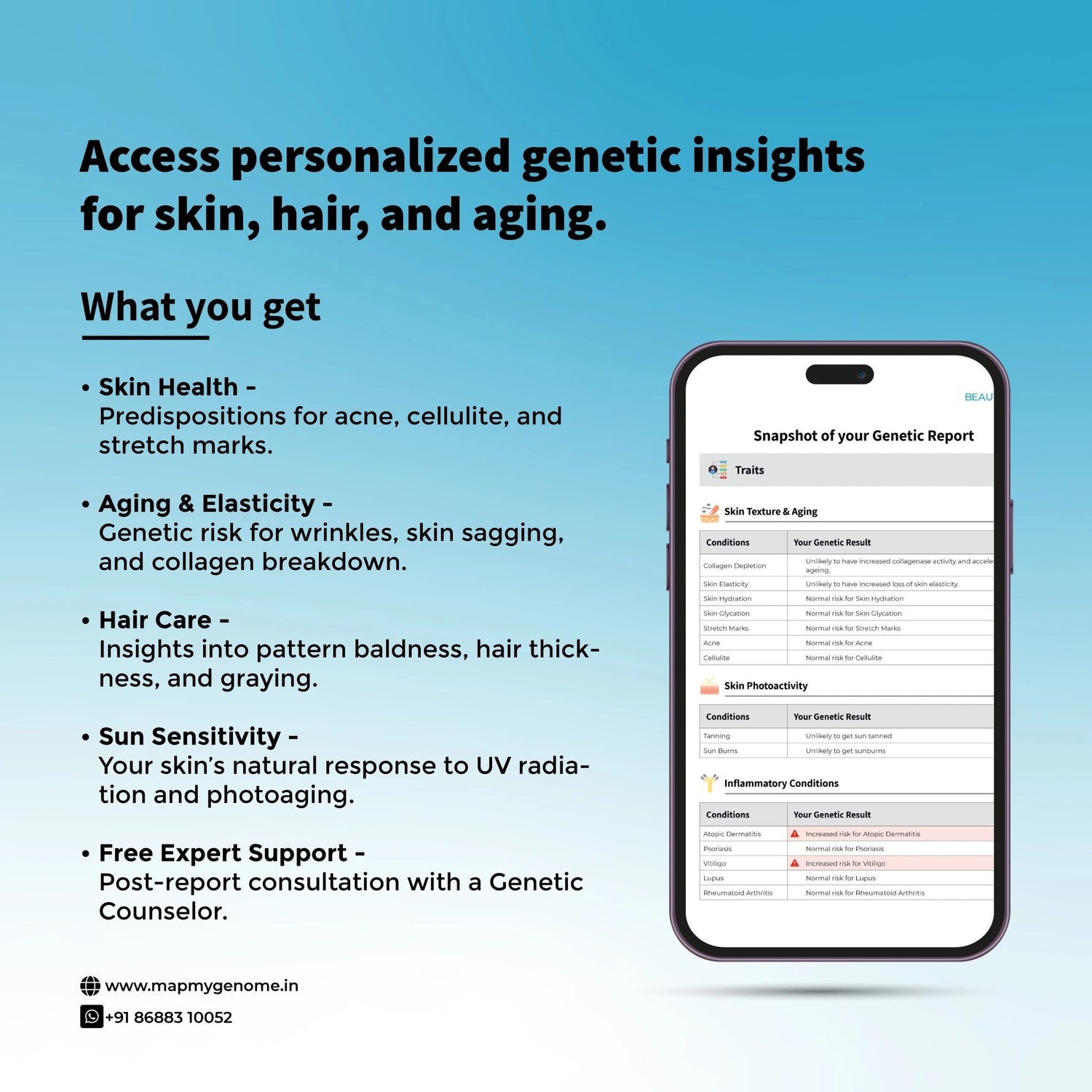
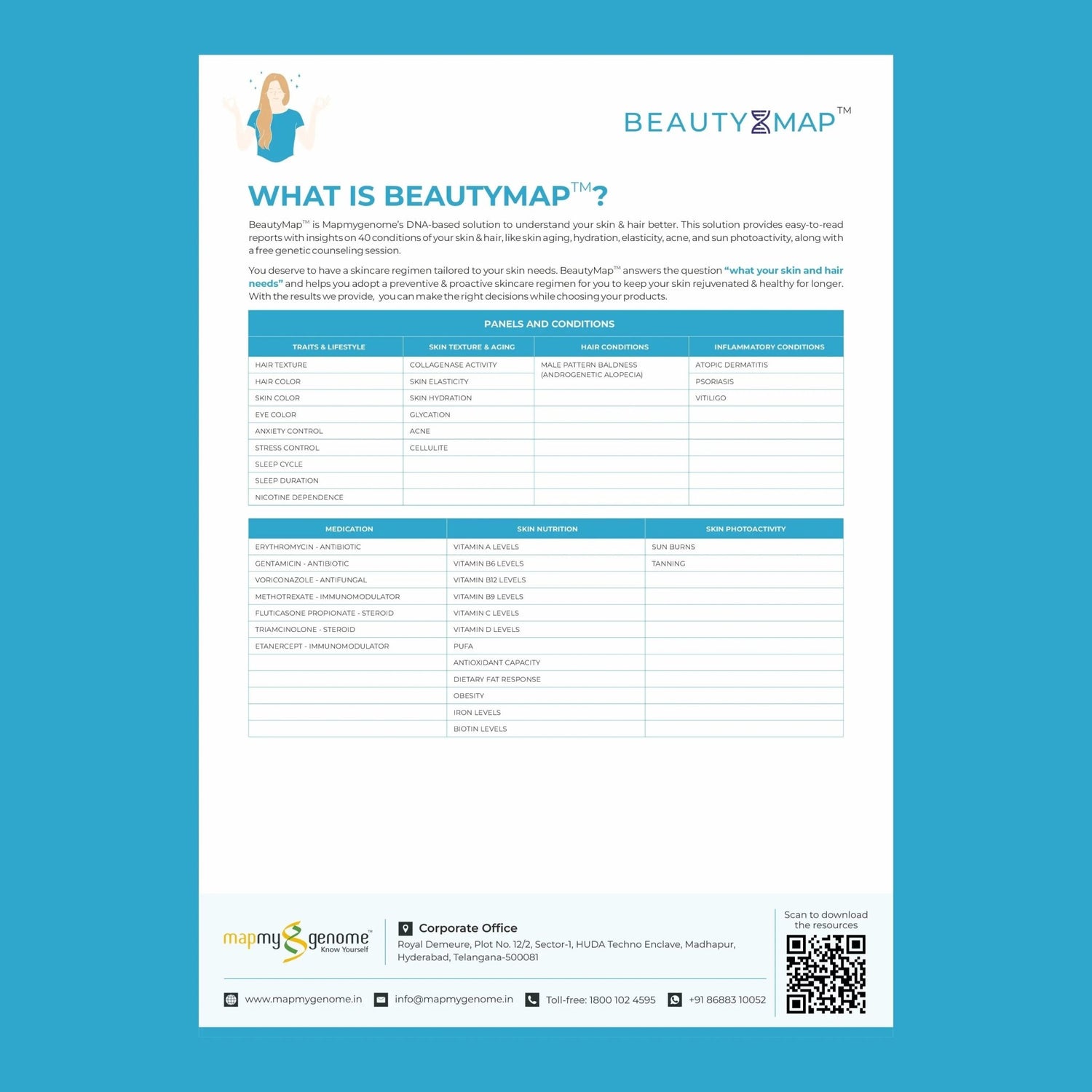
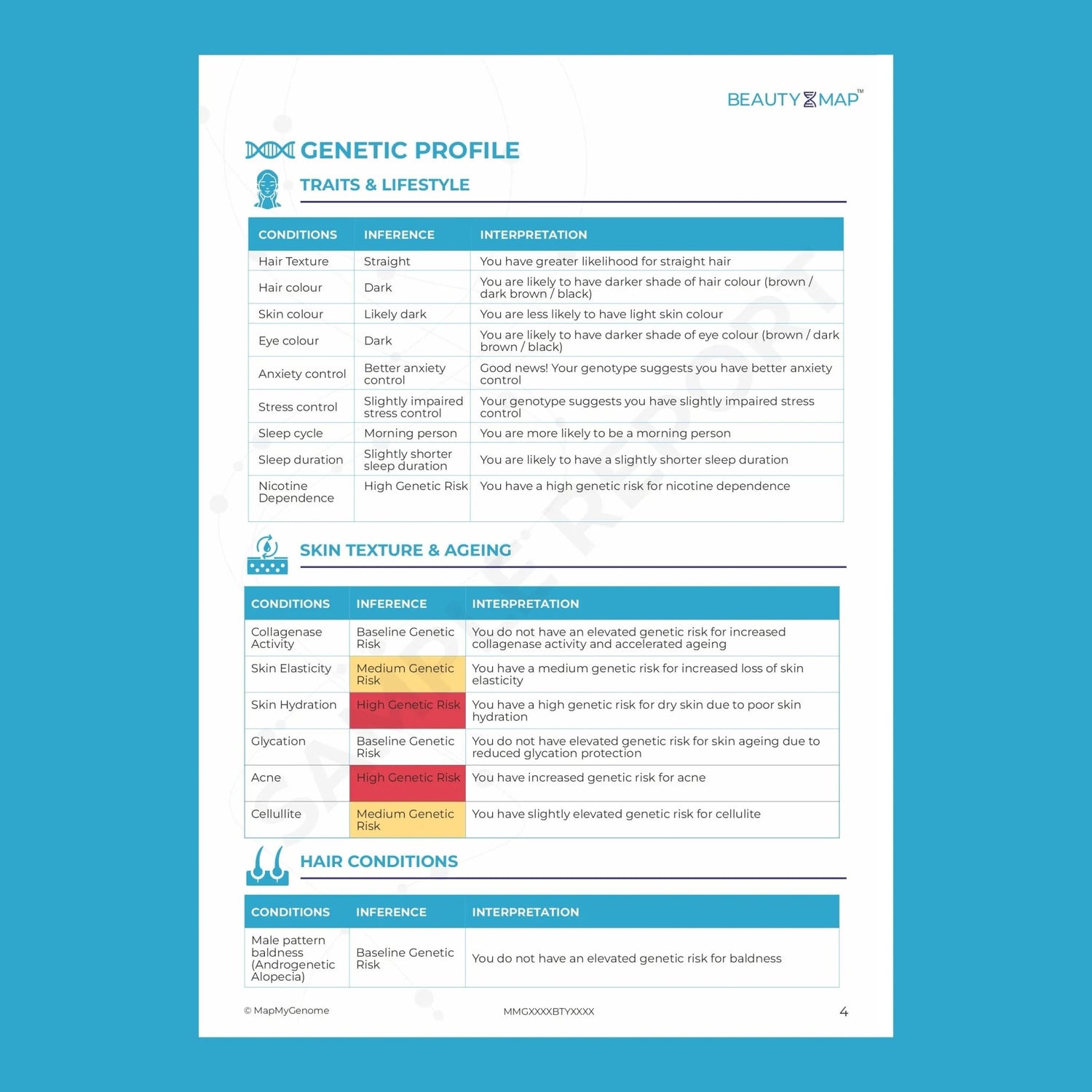
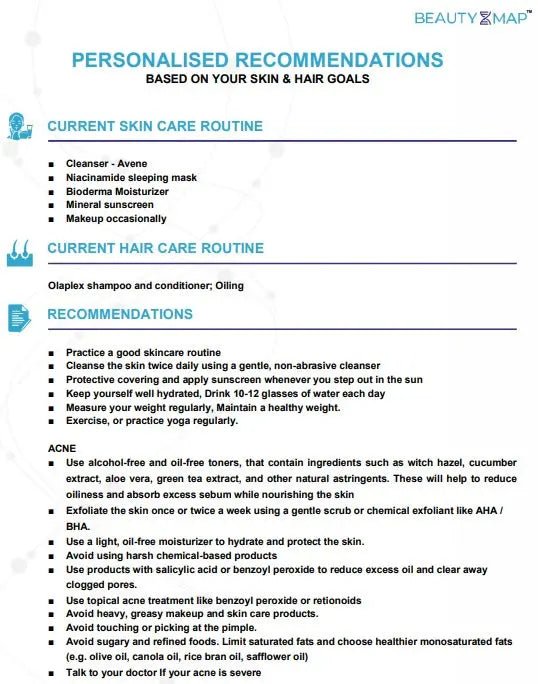
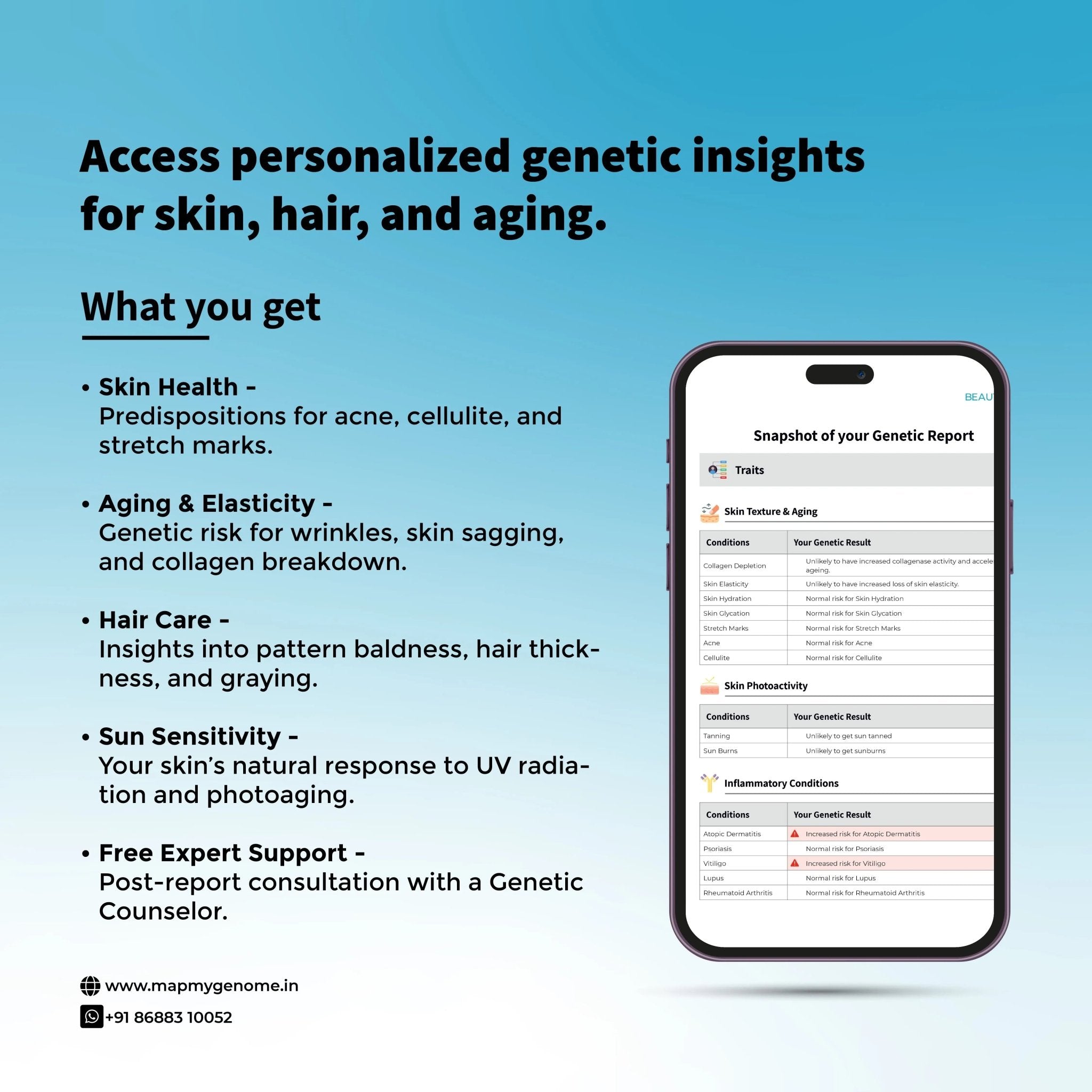
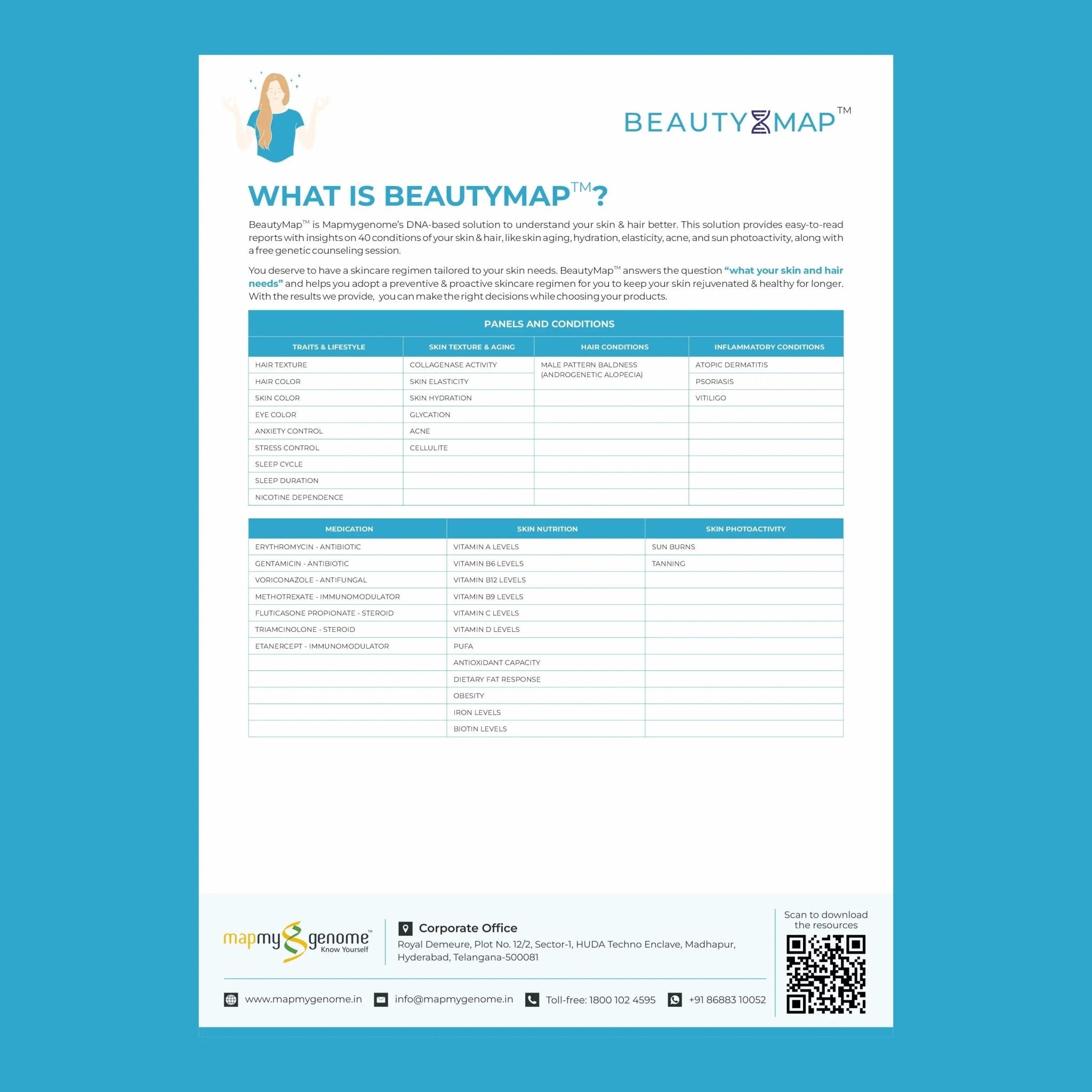
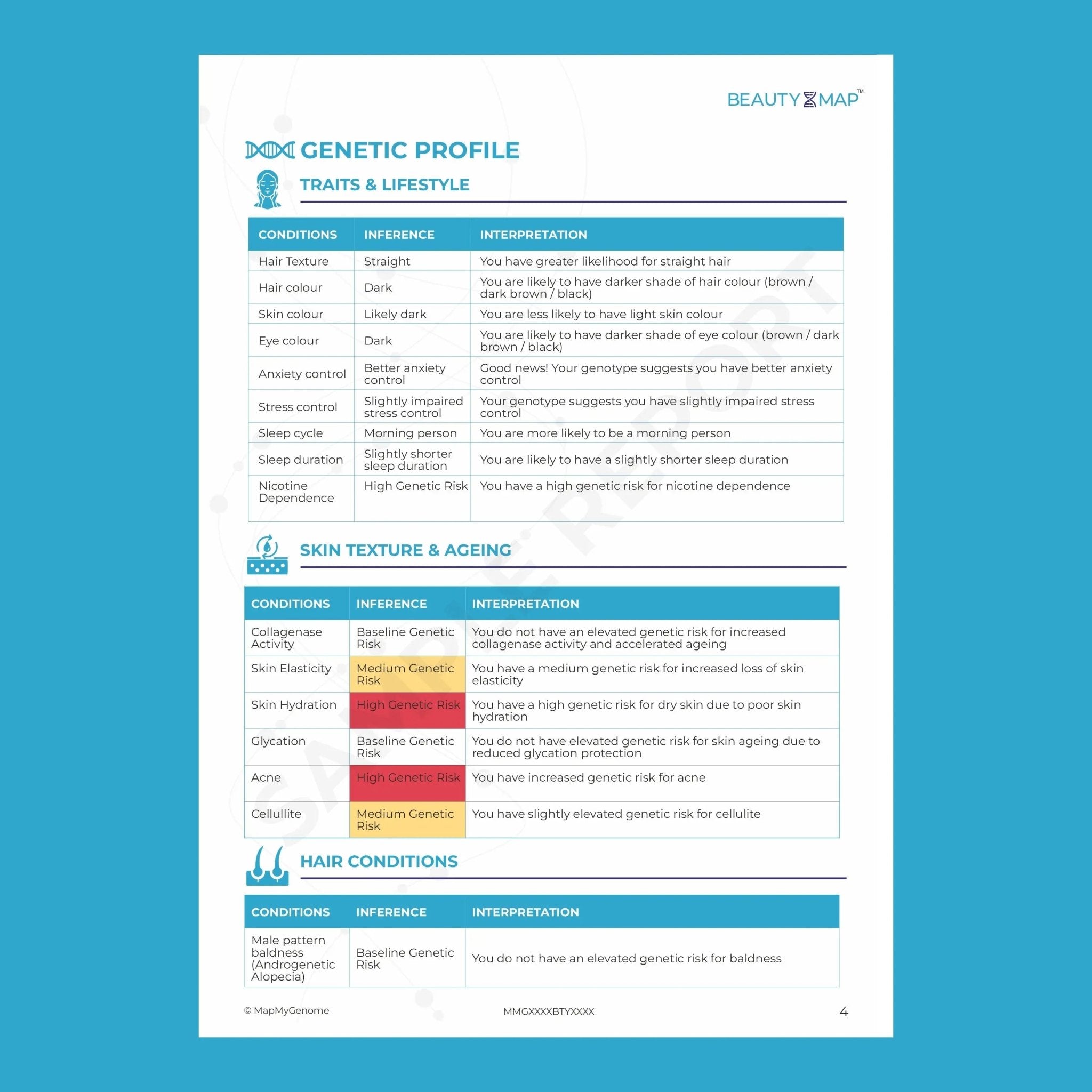
BeautyMap by MapmyGenome analyzes 40+ skin-related genetic traits — including your sensitivity to specific ingredients, your skin's aging profile, and your nutritional needs for optimal skin health. Stop guessing and start personalizing.