

International Women's Day is celebrated every year on March 8th — a day to honor the social, economic, cultural, and political achievements of women, and to call for accelerated progress toward gender equality. This year's theme, "Embracing Equity," highlights a crucial distinction: equality means giving everyone the same thing; equity means giving people what they specifically need to thrive. In healthcare, this distinction is particularly important — and genomics is helping us understand what women specifically need for their health.
Why Women's Health Needs Equity, Not Just Equality
For most of medical history, women have been underrepresented in clinical research. Drug trials, cardiovascular studies, and even basic science research have historically used male subjects as the default — with findings then applied to women without adequate validation. The consequences are real: women are more likely to experience adverse drug reactions, more likely to be misdiagnosed with cardiovascular disease, and more likely to have their symptoms dismissed as psychological.
Embracing equity in healthcare means recognizing that women's bodies are not simply smaller versions of men's bodies. Women have distinct hormonal profiles, different disease presentations, different drug metabolism patterns, and different genetic risk factors. Truly equitable healthcare accounts for these differences.
Genomics and Women's Health
Hereditary Cancer Risk
BRCA1 and BRCA2 mutations significantly increase the risk of breast and ovarian cancer. Women with BRCA1 mutations have a lifetime breast cancer risk of 55–72% and ovarian cancer risk of 44–46%. Identifying these mutations allows for enhanced surveillance, risk-reducing medications, and preventive surgery — dramatically reducing cancer mortality. Lynch syndrome mutations (MLH1, MSH2, MSH6, PMS2) increase the risk of endometrial and ovarian cancer in addition to colorectal cancer.
Reproductive Health
Genetic factors influence fertility, pregnancy outcomes, and reproductive conditions. Carrier screening identifies women who carry mutations for recessive conditions that could affect their children. Prenatal genetic testing (NIPT, amniocentesis) provides information about fetal chromosomal health. Genetic factors contribute to conditions like endometriosis, polycystic ovary syndrome (PCOS), and premature ovarian insufficiency.
Cardiovascular Health
Heart disease is the leading cause of death in women globally — yet women are less likely to be diagnosed and treated appropriately. Women often present with atypical symptoms (fatigue, nausea, jaw pain) rather than the classic chest pain associated with heart attacks in men. Genetic risk factors for cardiovascular disease — including Lp(a) levels, familial hypercholesterolaemia, and inflammatory gene variants — are equally important in women and should be assessed.
Pharmacogenomics
Women metabolize many drugs differently from men — due to differences in body composition, hormonal influences on drug-metabolizing enzymes, and genetic variants in CYP enzymes. Women are more likely to experience adverse drug reactions, partly because drug dosing has historically been based on male physiology. Pharmacogenomic testing can help optimize medication selection and dosing for women.
What Equity in Women's Healthcare Looks Like
- Routine hereditary cancer risk assessment for all women, not just those with obvious family histories
- Carrier screening offered to all women planning a pregnancy
- Cardiovascular risk assessment that accounts for female-specific risk factors (pregnancy complications, autoimmune conditions, hormonal factors)
- Pharmacogenomic testing to optimize medication safety and efficacy
- Research that includes women as subjects and analyzes results by sex
FAQs
Should all women get BRCA testing?
Current guidelines recommend BRCA testing for women with a personal or family history of breast, ovarian, or related cancers. Population-wide BRCA screening is being studied and may become standard in the future. Discuss your family history with your doctor or a genetic counsellor to determine if testing is appropriate for you.
What is the most important genetic test for women's health?
This depends on your personal and family history. For most women, a comprehensive genetic health test covering cancer risk, cardiovascular risk, and pharmacogenomics provides the most actionable information. For women planning a pregnancy, carrier screening is particularly important.
Invest in Your Genetic Health This Women’s Day
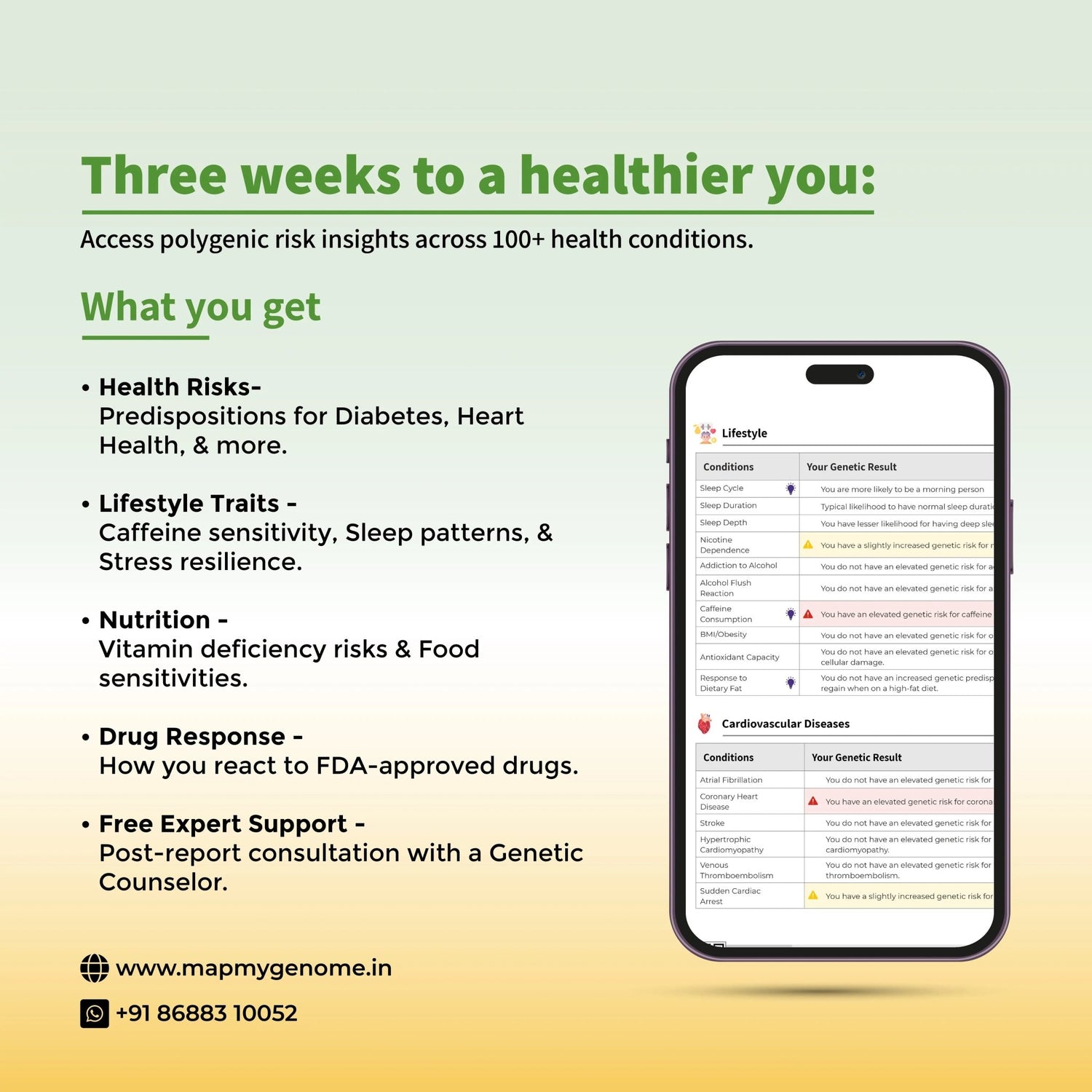
Genomepatri by MapmyGenome covers 100+ health conditions including hereditary cancer risk, cardiovascular health, and pharmacogenomics — giving women the personalized genetic insights to take proactive control of their health.