

Why do some people excel at sprinting while others thrive in endurance events? Why does one person build muscle quickly while another struggles despite consistent training? The answer lies, in significant part, in your genes.
Genetics account for approximately 50% of the variation in physical fitness across the population. Over 100 genes have been identified as influencing physical performance — affecting muscle composition, endurance capacity, oxygen uptake, cardiac performance, and injury risk. A genetic test for sports and fitness translates this science into actionable, personalized insights.
The Science: How Genes Influence Sports Performance
The ACTN3 Gene — The "Speed Gene"
The most studied sports performance gene is ACTN3 (alpha-actinin-3), which is specifically expressed in fast-twitch skeletal muscle fibres — the fibres responsible for explosive power, sprinting, and weightlifting. A functional ACTN3 gene is strongly associated with elite sprint and power performance; it is found in the vast majority of Olympic sprinters and power athletes.
A common variant in ACTN3 leads to a deficiency in the alpha-actinin-3 protein. Interestingly, this variant is associated with better endurance performance — suggesting that people with non-functional ACTN3 may be better suited to long-distance running, cycling, or swimming than to explosive power sports. This variant is present in approximately 18% of the general population but is very rare among elite sprint athletes.
Other Key Sports Performance Genes
- ACE (Angiotensin-Converting Enzyme) — Influences cardiovascular efficiency and endurance capacity. The I allele is associated with endurance performance; the D allele with power and strength.
- PPARGC1A — Regulates mitochondrial biogenesis and aerobic capacity. Variants influence VO2 max trainability.
- VEGF — Influences blood vessel formation and oxygen delivery to muscles during exercise.
- COL5A1 — Associated with soft tissue injury risk, particularly Achilles tendon and anterior cruciate ligament (ACL) injuries.
- IL6 — Influences inflammatory response and recovery rate after exercise.
What a Sports Genetic Test Can Tell You
For Athletes and Fitness Enthusiasts
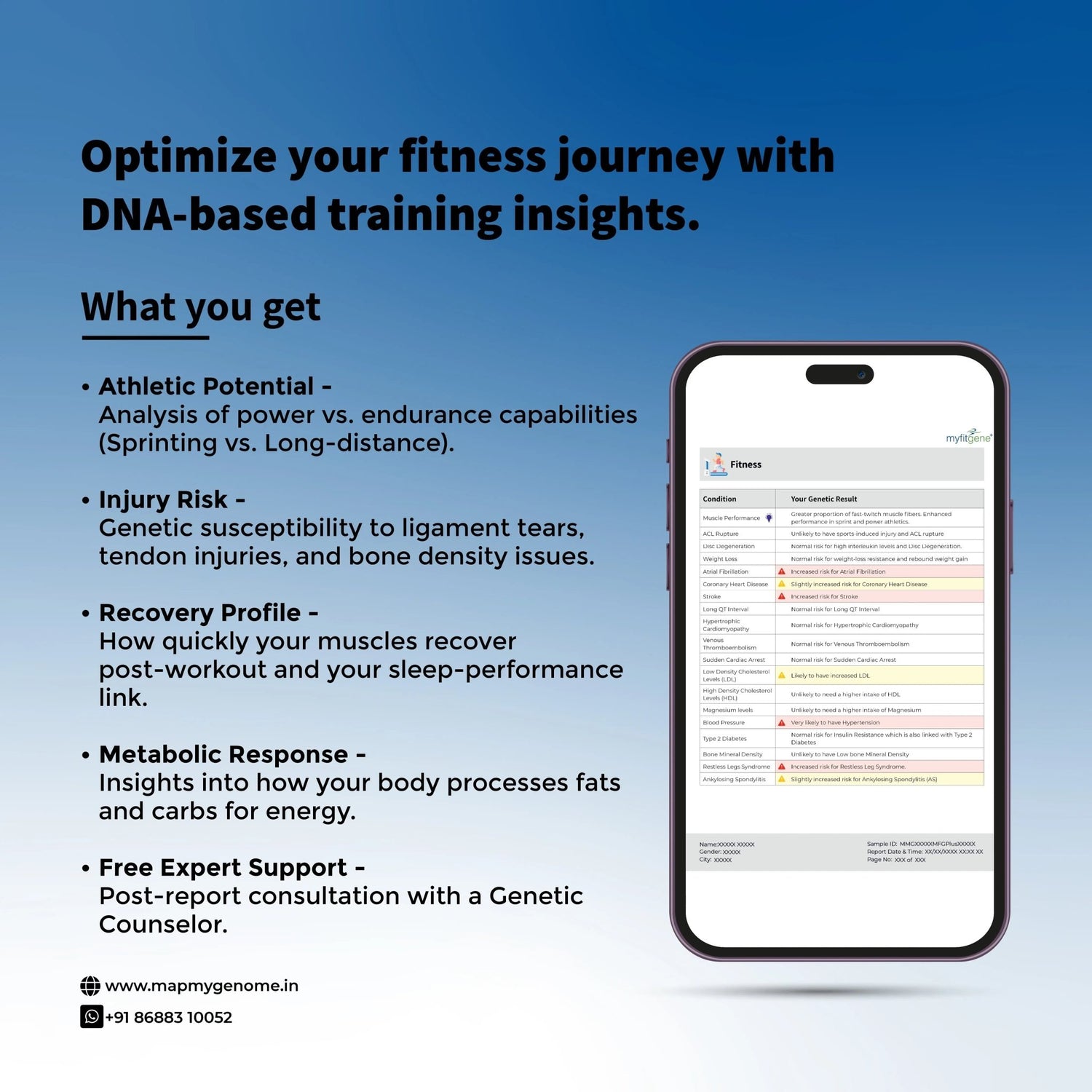
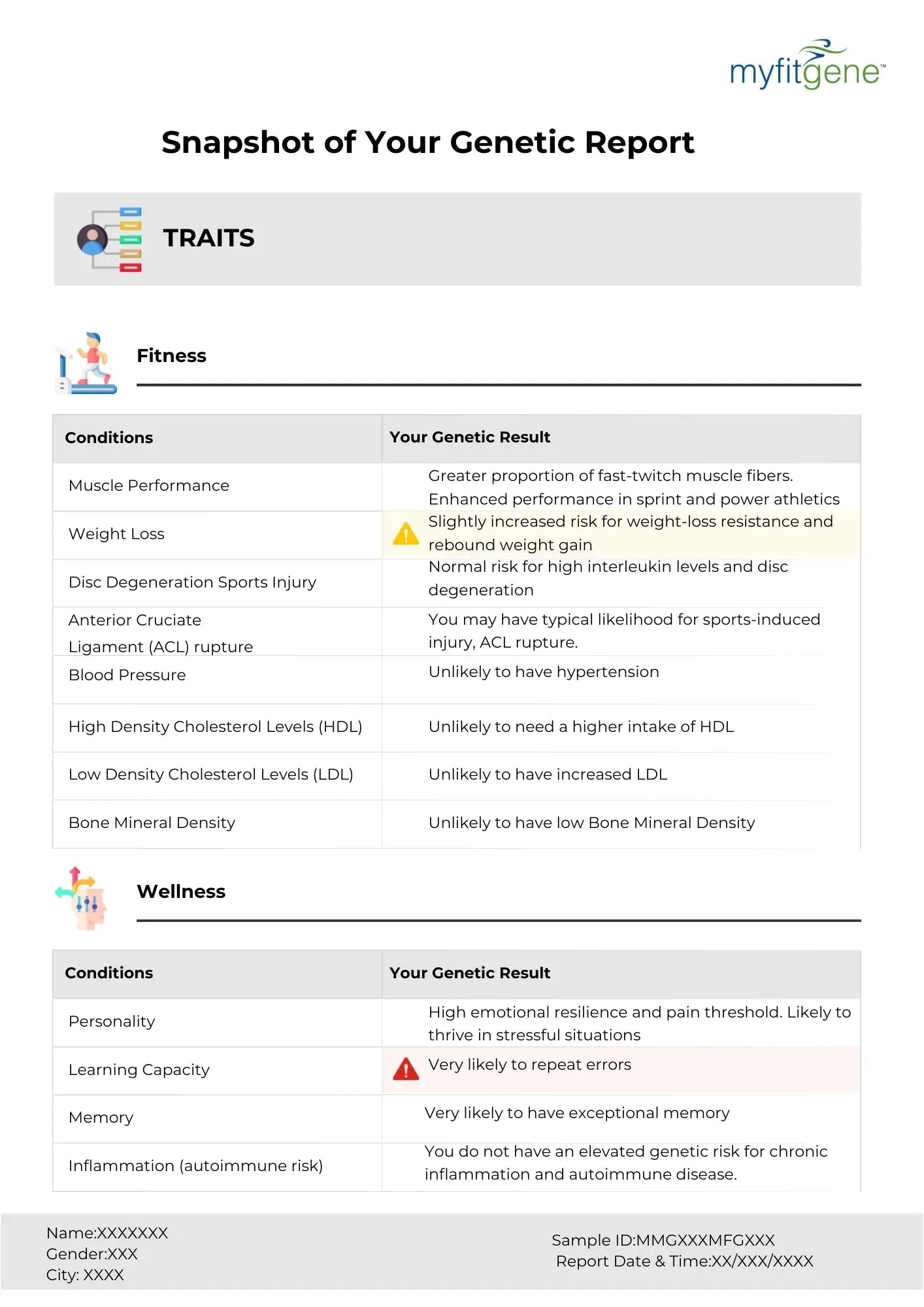
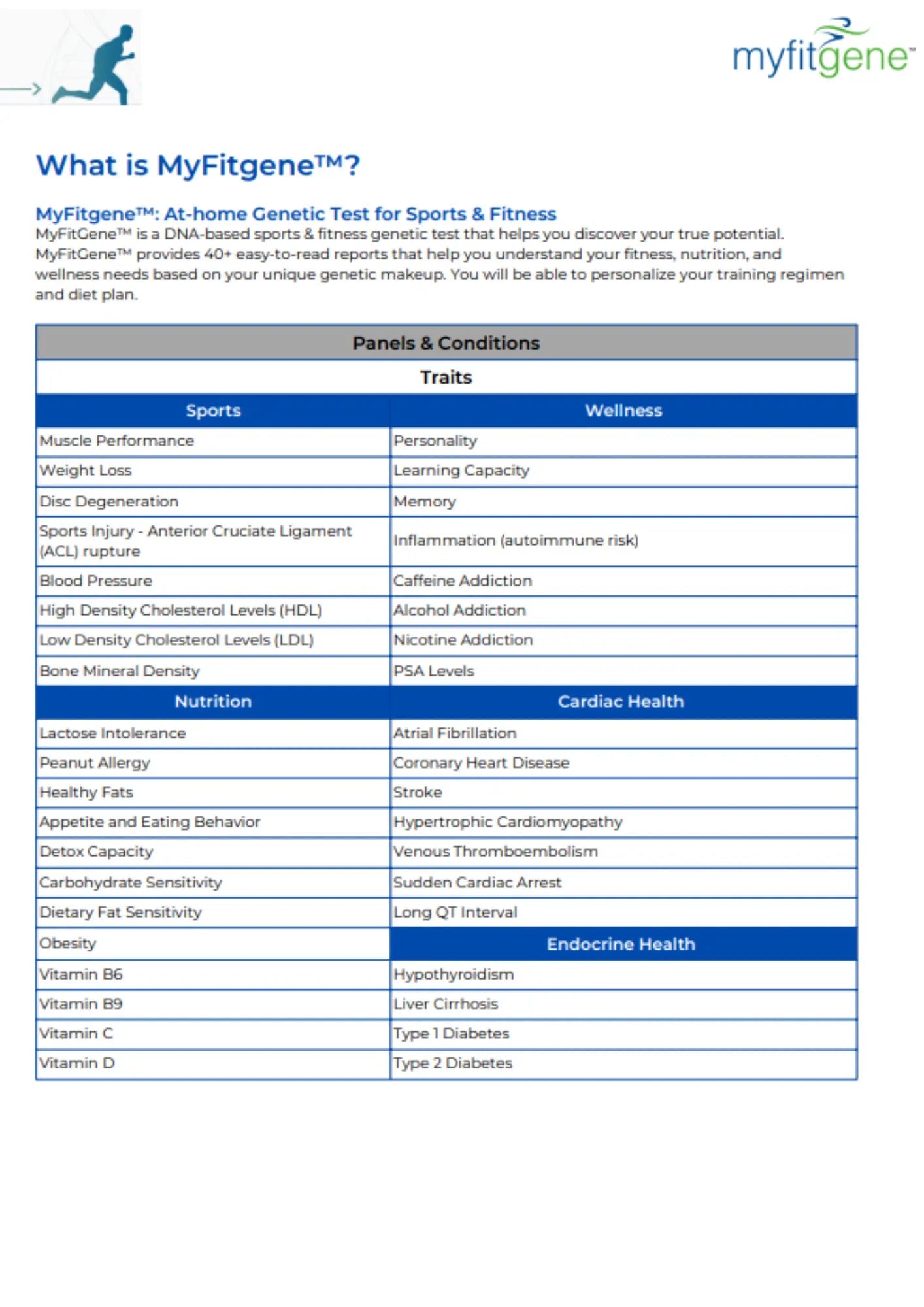
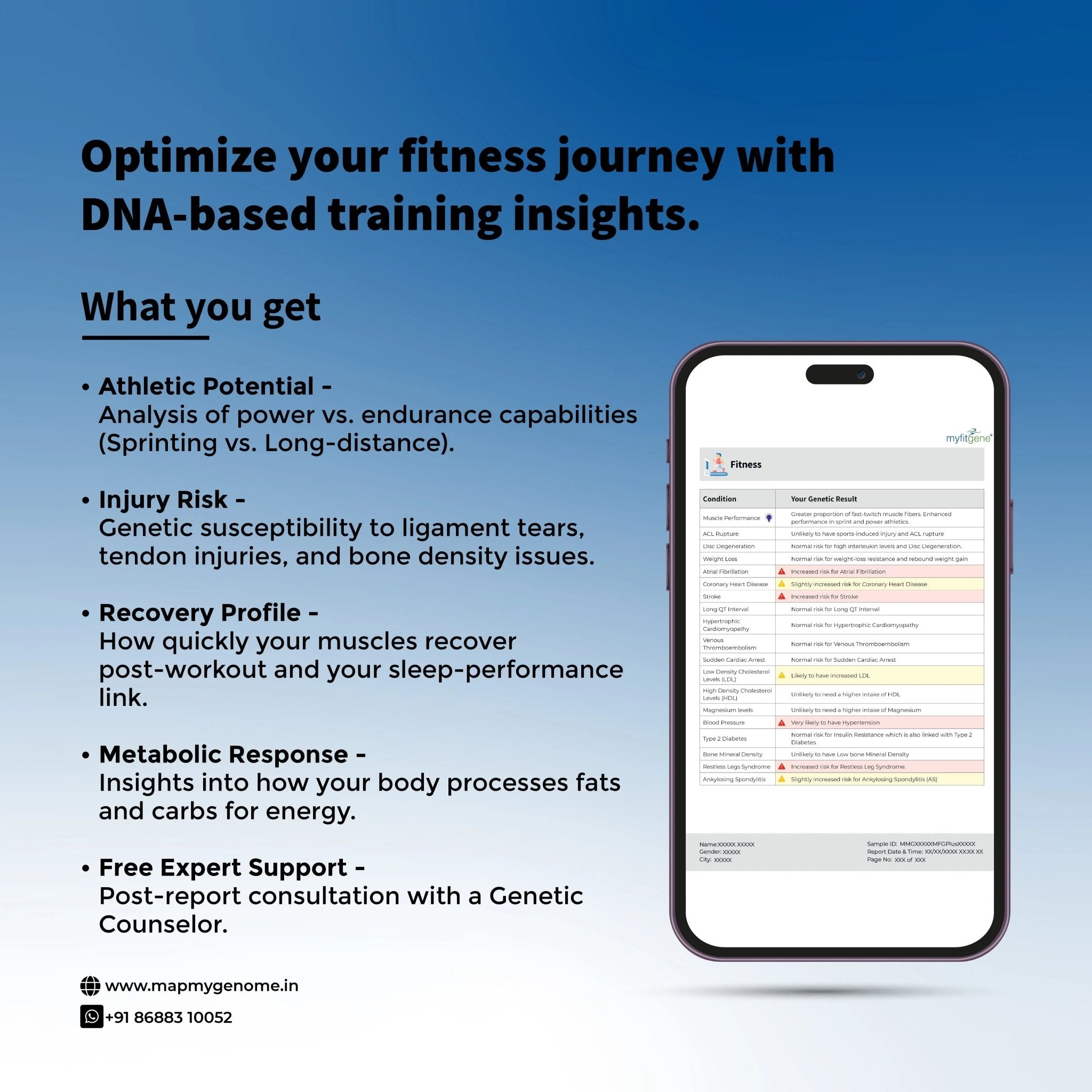
- Power vs. endurance profile — Are you genetically better suited to explosive sports (sprinting, weightlifting, team sports) or endurance activities (marathon, cycling, swimming)?
- VO2 max trainability — How much your aerobic capacity is likely to improve with training
- Muscle recovery rate — How quickly your muscles recover after intense exercise, informing optimal training frequency
- Injury risk profile — Genetic predisposition to soft tissue injuries, helping you take targeted preventive measures
- Optimal training type — Whether high-intensity interval training, strength training, or steady-state cardio is most effective for your genetic profile
For Weight Management
Weight loss requires both dietary and exercise components. A sports genetic test reveals which types of physical activity are most effective for your metabolism — helping you burn calories more efficiently and sustain your fitness routine long-term.
For Parents and Young Athletes
If you're considering a sporting career for your child, a genetic test can help identify the types of activities where they are likely to perform best — enabling a more targeted approach to early training. However, it's equally important to consider the child's own interests and enjoyment. As Khalil Gibran wrote: "You may give them your love but not your thoughts. For they have their own thoughts."
For Marathon Runners
Marathons are increasingly popular in India. A sports genetic test can help you understand your endurance potential, optimal training load, and recovery needs — so you can train smarter and cross the finish line stronger.
FAQs About Sports Genetic Testing
Can a genetic test make me a better athlete?
A genetic test doesn't make you a better athlete — but it gives you the information to train more intelligently. By understanding your genetic strengths and limitations, you can focus your training where it will have the greatest impact and avoid approaches that are poorly suited to your biology.
Is sports genetic testing only for elite athletes?
Not at all. Sports genetic testing is valuable for anyone who exercises regularly — from weekend runners and gym-goers to competitive athletes. The insights are equally relevant whether your goal is weight loss, fitness, injury prevention, or competitive performance.
Can genes predict whether my child will be a professional athlete?
No. Genetics is one factor among many — training, nutrition, coaching, motivation, and opportunity all play critical roles. A genetic test can identify natural aptitudes, but it cannot predict sporting success.
Conclusion
Your genes are a powerful guide to smarter training — not a limitation. Understanding your genetic sports profile helps you focus your efforts where they'll have the greatest impact, reduce injury risk, and achieve your fitness goals more efficiently. Whether you're a competitive athlete, a fitness enthusiast, or a parent supporting a young sportsperson, a sports genetic test provides the personalized insights to train with purpose.
🏃 Discover Your Genetic Athletic Profile
Myfitgene by MapmyGenome is India's leading sports and fitness DNA test — revealing your power vs. endurance profile, VO2 max trainability, injury risk, recovery rate, and optimal training type. Backed by peer-reviewed science and processed in our CAP & NABL-accredited laboratory.
→ Order Myfitgene — India's #1 Sports & Fitness DNA Test
Want a complete picture of your health alongside your fitness genetics? Pair Myfitgene with Genomepatri for comprehensive DNA-based health and wellness insights.