

Autism Spectrum Disorder (ASD) is one of the most common neurodevelopmental conditions — affecting approximately 1 in 36 children globally. While ASD is diagnosed based on behavioural criteria, approximately 30–40% of cases have an identifiable underlying genetic cause. Advances in genetic testing technology are rapidly expanding our ability to find these causes — transforming how ASD is diagnosed, managed, and understood.
Genetic Causes of Autism Spectrum Disorder
Genetic causes of autism can include:
- Specific genetic syndromes — such as Fragile X syndrome (the most common inherited cause of intellectual disability and ASD), Rett syndrome (MECP2 mutations), Angelman syndrome, and Phelan-McDermid syndrome
- Single gene mutations — disease-causing changes in genes such as SHANK3, SYNGAP1, ADNP, DYRK1A, and others identified through whole exome sequencing
- Chromosomal copy number variants (CNVs) — missing or duplicated segments of chromosomes that increase ASD risk, such as 22q11.2 deletion syndrome, 16p11.2 deletion/duplication, and 15q11-q13 duplications
- Polygenic risk — the combined effect of many common genetic variants, each contributing a small amount to overall ASD risk
Why Genetic Testing Is Recommended for ASD
Many medical experts recommend genetic testing for individuals diagnosed with ASD for the following reasons:
- Accurate medical management — Identifying a specific genetic cause can guide medical monitoring and treatment. For example, individuals with Fragile X syndrome may benefit from targeted therapies; those with PTEN mutations require cancer surveillance.
- Confirmation of diagnosis — A genetic finding can confirm the underlying cause of ASD and end the "diagnostic odyssey" for families
- Prognosis — Some genetic causes are associated with specific developmental trajectories, helping families and clinicians plan appropriately
- Reproductive planning — Identifying a genetic cause enables assessment of recurrence risk for future pregnancies and the availability of prenatal testing or preimplantation genetic diagnosis (PGD)
- Family cascade testing — Once a genetic cause is identified, other family members can be tested to assess their own risk or carrier status
- Clinical trial eligibility — Many ASD clinical trials require genetic confirmation of diagnosis
Types of Genetic Tests for Autism
1. Chromosomal Microarray (CMA)
CMA is the first-line genetic test recommended for ASD by most international guidelines. It detects copy number variants (CNVs) — deletions and duplications of chromosomal segments — that are too small to be seen on a standard karyotype. CMA identifies a genetic cause in approximately 10–15% of individuals with ASD, with higher yields in those who also have intellectual disability or dysmorphic features.
2. Fragile X Testing
Fragile X syndrome is caused by a CGG repeat expansion in the FMR1 gene on the X chromosome. It is the most common single-gene cause of ASD and intellectual disability. Fragile X testing is recommended for all males with ASD and for females with ASD who have a family history of intellectual disability or premature ovarian insufficiency.
3. Targeted Gene Panels
ASD gene panels analyze a defined set of genes known to be associated with autism and related neurodevelopmental conditions. They are particularly useful when a specific genetic syndrome is suspected based on clinical features.
4. Whole Exome Sequencing (WES)
WES analyzes all protein-coding regions of the genome and identifies mutations in approximately 25–30% of individuals with ASD who have not received a diagnosis from CMA or targeted testing. WES is particularly valuable for individuals with ASD plus intellectual disability, epilepsy, or multiple congenital anomalies.
5. Whole Genome Sequencing (WGS)
The most comprehensive approach, WGS captures both coding and non-coding regions of the genome. It is increasingly used for individuals with ASD who have had negative results from CMA and WES.
What to Expect from Genetic Testing for ASD
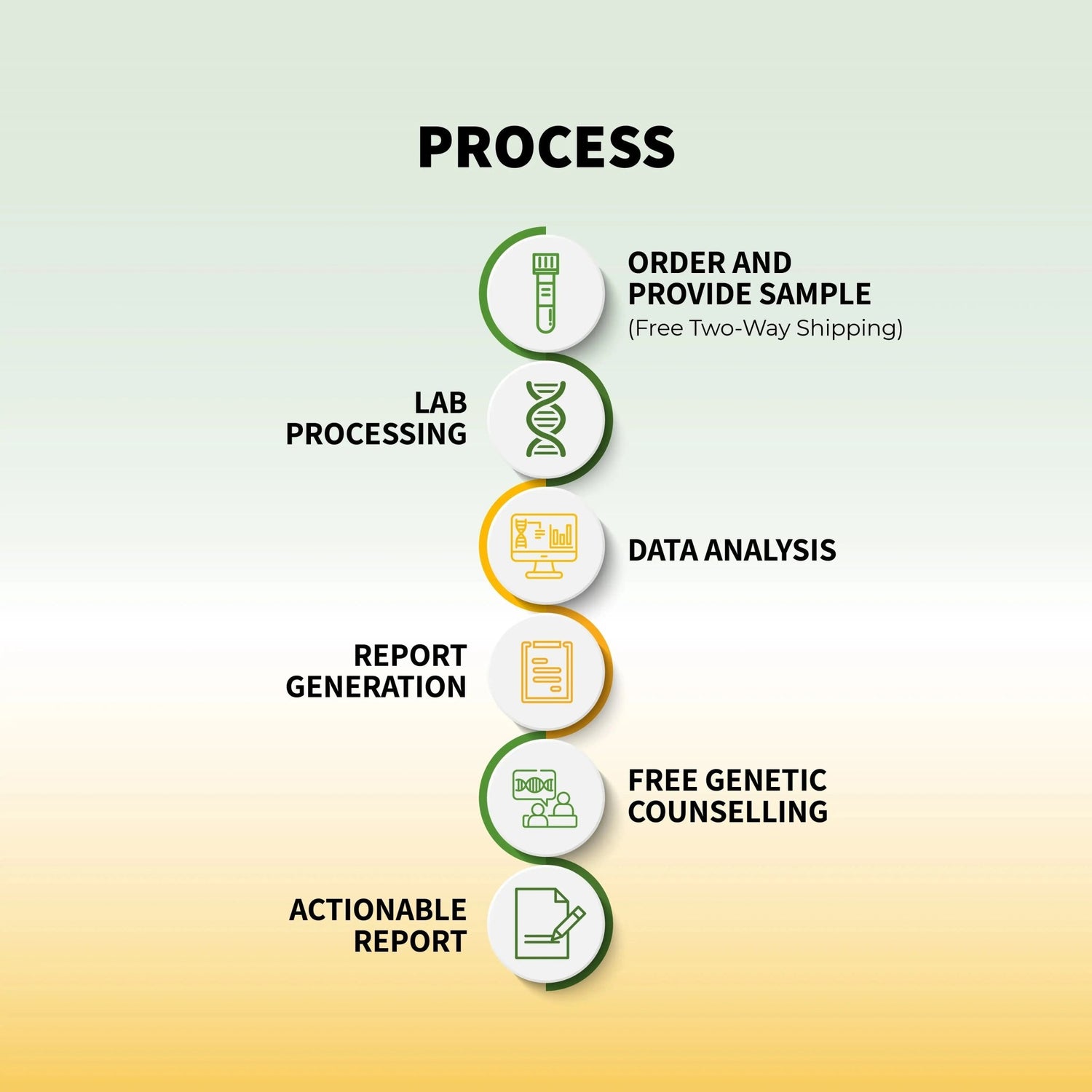
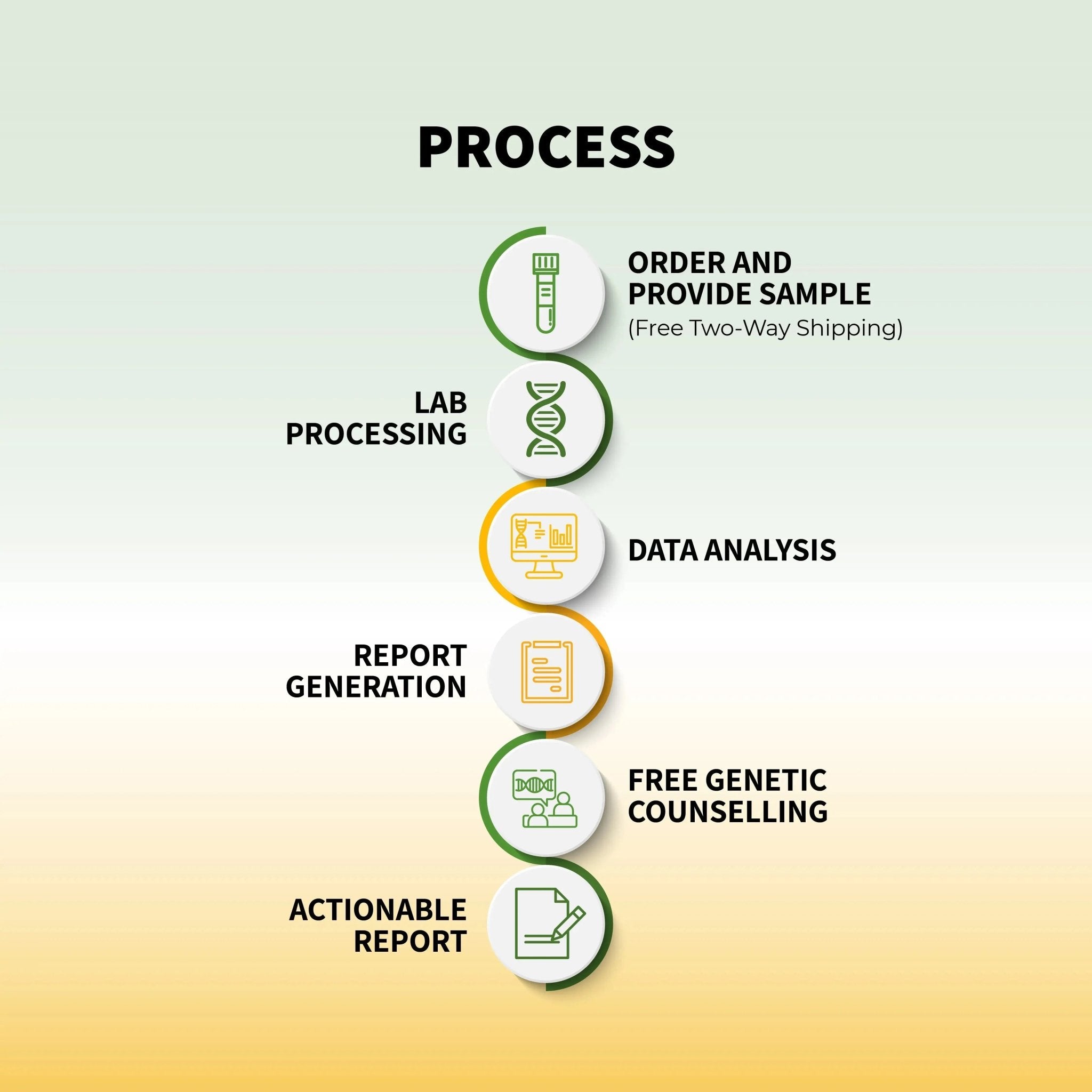
- Pre-test genetic counselling — A genetic counsellor explains the testing options, what results might mean, and the implications for the individual and family
- Sample collection — Usually a blood sample or saliva swab
- Results timeline — Typically 4–8 weeks, depending on the test
- Results interpretation — Results are classified as pathogenic (disease-causing), likely pathogenic, variant of uncertain significance (VUS), or negative. Post-test counselling is essential to interpret results in the context of the individual's clinical picture.
Limitations of Genetic Testing for ASD
Even with the most comprehensive testing, a genetic cause is not identified in approximately 60–70% of ASD cases. A negative result does not mean genetics is not involved — it means the current technology has not identified the specific cause. As genetic knowledge advances, re-analysis of existing data may yield new findings.
FAQs About Genetic Testing for Autism
Should every child with autism have genetic testing?
Most international guidelines recommend genetic evaluation — including CMA and Fragile X testing — for all individuals with ASD. The yield is highest in those with intellectual disability, epilepsy, or dysmorphic features, but testing is valuable across the spectrum.
Can genetic testing predict autism before birth?
Prenatal testing can identify chromosomal abnormalities and some genetic syndromes associated with ASD risk. However, it cannot predict ASD with certainty, as the condition is influenced by many genetic and environmental factors.
Conclusion
Genetic testing is a powerful tool in the evaluation of Autism Spectrum Disorder — providing diagnostic clarity, guiding medical management, informing reproductive decisions, and opening doors to targeted therapies and clinical trials. For families navigating an ASD diagnosis, genetic evaluation — supported by expert genetic counselling — is an important step toward understanding and action.
🧬 Genetic Testing and Counselling for Autism
MapmyGenome offers comprehensive genetic testing for neurodevelopmental conditions including ASD — with expert genetic counsellor support at every step. Our CAP & NABL-accredited laboratory processes all tests to the highest quality standards.