

Imagine a young couple eagerly planning their future, looking forward to starting a family. Amidst the excitement of nesting and choosing baby names, a shadow of worry lingers. In one of their families, a relative lives with a severe, chronic blood disorder requiring monthly hospital visits and blood transfusions. They wonder: Could our future children inherit this? This is the reality for thousands of families across India dealing with Beta Thalassemia—one of the most common inherited blood disorders in the country. It is a condition that places an immense physical, emotional, and financial burden on families. Yet, it is also one of the most preventable.
The key to breaking the cycle of inheritance lies in awareness, genetic carrier screening, and proactive family planning.
Understanding Beta Thalassemia: Major vs. Minor
To understand beta thalassemia, we must look at hemoglobin—the vital protein in red blood cells that carries oxygen from our lungs to the rest of our body. Beta thalassemia occurs due to mutations in the HBB gene, which provides instructions for making a crucial part of hemoglobin (the beta-globin chain).
Depending on how many faulty copies of the gene a person inherits, the condition manifests in two distinct ways:
-
Thalassemia Minor (The Carrier State): Individuals with Thalassemia Minor have inherited one faulty copy of the gene from one parent and one normal copy from the other. They are "carriers." Thalassemia minor is generally harmless. Carriers usually look and feel completely healthy, though they might have mild, asymptomatic anemia that is sometimes mistaken for iron deficiency. Most carriers go their entire lives without ever knowing they have the trait.
-
Thalassemia Major (The Disease State): When a child inherits two faulty copies of the gene—one from each parent—they are born with Thalassemia Major. This is a severe, life-threatening condition. Affected children cannot produce enough functional hemoglobin, leading to severe anemia, bone deformities, and enlarged organs. To survive, they require lifelong, regular blood transfusions (often every 2 to 4 weeks) and iron chelation therapy to remove excess iron build-up caused by the transfusions.
How is Beta Thalassemia Inherited?
Beta thalassemia is inherited in an autosomal recessive pattern. This means a child will only develop Thalassemia Major if both parents are carriers (Thalassemia Minor).
When two beta thalassemia carriers have a child together, every single pregnancy carries the exact same genetic probabilities:
-
25% Chance: The child will inherit two normal genes and be completely unaffected.
-
50% Chance: The child will inherit one normal and one mutated gene, becoming a healthy carrier (Thalassemia Minor), just like the parents.
-
25% Chance: The child will inherit two mutated genes and be born with Thalassemia Major.
Because carriers have no obvious symptoms, many couples only discover their status after their first child is diagnosed with Thalassemia Major.
The Indian Scenario: A Genetic Pockets View
India is often referred to as the "Thalassemia Capital of the World." On average, about 3.3% of the Indian population are carriers of beta thalassemia, and over 10,000 children are born with Thalassemia Major every year.
However, India’s rich history of endogamy (marrying within specific communities) and consanguineous (blood-relative) marriages has created localized genetic pockets where carrier rates are dramatically higher than the national average.
-
Northern India: Highly prevalent in specific communities, particularly among Punjabi, Sindhi, and Bhanushali populations, where carrier frequencies can soar past 10%.
-
Western & Central India: Elevated carrier rates are frequently observed in the Mahlo, Gowli, and certain tribal groups.
-
Southern India: Pockets of high prevalence exist within communities like the Gowda and Lingayat in Karnataka, largely driven by historically higher rates of consanguineous marriages.
-
Tribal Communities: Many tribal populations across Central India, Kerala, and the North-East show a high coexistence of beta thalassemia alongside related hemoglobin disorders, such as Sickle Cell Anemia.
The Role of Genetic Testing and Counseling
Because there is currently no widespread, easily accessible cure for Thalassemia Major (aside from complex, high-risk bone marrow transplants), the clinical focus is heavily on prevention. This is achieved through a three-pronged approach:
-
Preconception or Premarital Carrier Screening: Testing individuals or couples before marriage or pregnancy to see if they carry the HBB gene mutation. If only one partner is a carrier, the children will not get Thalassemia Major. If both are carriers, they can be guided on safe reproductive choices.
-
Prenatal Diagnosis: If an expectant couple discovers they are both carriers, specialized genetic tests (like Chorionic Villus Sampling or Amniocentesis) can be performed early in the pregnancy to check if the fetus has inherited Thalassemia Major.
-
Cascade Screening: When one individual is identified as a carrier, "cascade screening" involves testing their immediate and extended family members (siblings, cousins, aunts, uncles) to identify other hidden carriers within the lineage.
Genetic counseling is an indispensable part of this journey. Certified genetic counselors help families understand their test reports, calculate exact reproductive risks, and guide them through their options with compassion and confidentiality.
Advanced Diagnostic Solutions at Mapmygenome
At Mapmygenome, we use advanced molecular diagnostics to provide clear, actionable insights into your genetic health. For beta thalassemia, we offer specialized testing strategies tailored to the Indian population:
1. Beta Thalassemia Mutation Analysis (Common Panel)
Instead of searching blindly, our common mutation panel targets the 7 most frequent mutations in the HBB gene that are responsible for over 90% of all beta thalassemia cases in India:
-
IVS 1-5 G>C (The most dominant mutation in India)
-
IVS 1-1 G>T
-
619 bp deletion
-
Codon 15 G>A
-
Codon 30 G>A
-
FS 8/9 +G
-
FS 41/42 – CTTT
This targeted approach provides a fast, accurate, and cost-effective way for individuals to screen for the most likely carrier traits.
2. Full HBB Gene Sequencing
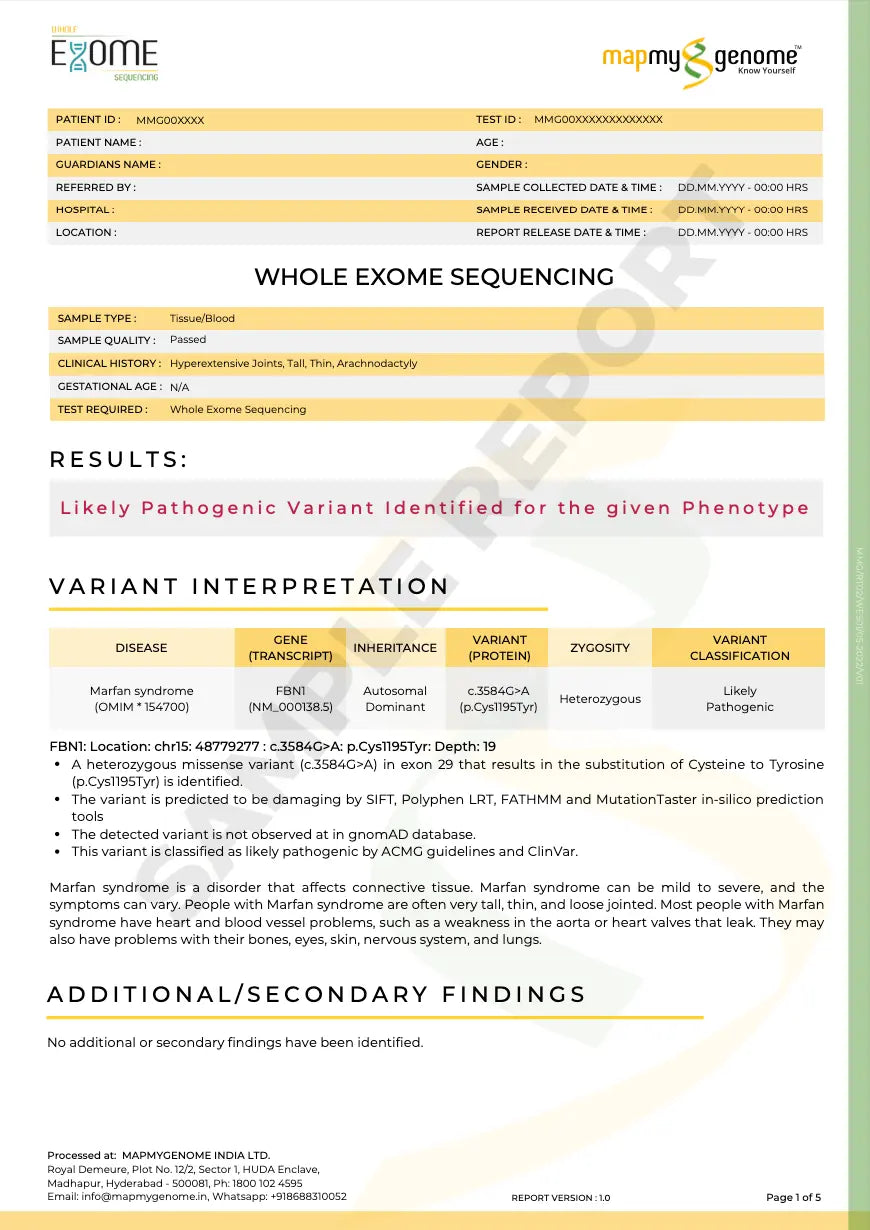
In cases where an individual displays strong clinical signs of being a carrier (such as an abnormal Hb Electrophoresis/HPLC report or unexplained microcytic anemia) but tests negative on the common mutation panel, we perform Full Gene Sequencing. This method reads every single DNA base across the coding regions and critical splice junctions of the HBB gene to catch rare, novel, or regional-specific mutations.
Take Control of Your Family's Health Future
Beta thalassemia is a heavy burden, but it is one we have the scientific power to stop. By encouraging premarital and preconception genetic screening, we can build a future where no child has to suffer from Thalassemia Major.
Knowing your genetic status is an act of responsibility and love for your future family.
Get Tested. Protect Your Family.
Mapmygenome offers comprehensive genetic carrier screening for beta thalassemia, sickle cell anemia, and other inherited conditions. Know your status before family planning—and make informed decisions with the support of our certified genetic counselors.
Get Tested. Protect Your Family.
MapmyGenome offers genetic carrier screening for beta thalassemia and other inherited blood disorders. Know your status before family planning — and make informed decisions with the support of certified genetic counsellors.
Explore Genetic Screening Tests → Contact Us →
Questions? Call us at 1800 102 4595