Quitting tobacco is one of the most consistently recommended health decisions — and also one of the hardest to follow through on, largely because nicotine dependence isn't just a habit, it's a genuine physiological addiction. Understanding why it's hard can make the process of quitting feel less like a failure of willpower and more like a solvable problem.
Why Quitting Is Genuinely Difficult
Nicotine affects dopamine release in the brain's reward pathway, creating a dependence cycle that goes well beyond routine. Genetic variation plays a real role here too — variants in genes like CHRNA5 and CHRNA3, which affect nicotine receptor sensitivity, influence how strongly someone experiences nicotine's rewarding effects and how intense withdrawal symptoms feel. This is part of why some people find quitting relatively manageable while others struggle significantly with the exact same method.
Tricks That Actually Help
- Identify your triggers first. Most cravings are tied to specific routines — a morning coffee, a stressful phone call, a break at work. Naming these ahead of time makes them easier to interrupt.
- Delay, don't deny. Cravings typically peak and pass within 3–5 minutes. Committing to a short delay ("I'll wait 5 minutes") rather than an absolute "never again" makes cravings feel more manageable in the moment.
- Replace the physical habit, not just the nicotine. Much of smoking's pull is behavioral — something to do with your hands, a reason to step outside. Finding a low-effort substitute action (a walk, chewing gum, a stress ball) addresses the habit loop, not just the chemical one.
- Use nicotine replacement strategically. Patches, gum, or lozenges can meaningfully ease withdrawal for many people, and combining a patch (steady background dose) with gum (as-needed relief) tends to outperform either alone.
-
Expect and plan for relapse risk points. Stress, alcohol, and social situations involving other smokers are the most common relapse triggers — having a specific plan for these moments in advance matters more than general willpower.
Here is the list we promised
1 |
day of not smoking and your risk of a heart attack will almost instantly start to reduce. One year of quitting drops your risk of heart disease to half compared to a smoker’s risk. Quitting smoking saves your lungs, your heart, and your money! |
2 |
hours without a cigarette will bring your heart rate and blood pressure close to normal levels again. Two weeks of smoking cessation greatly improves circulation. |
3 |
non-smoking days brings your sense of taste and smell back to that of a non-smoker. Imagine how much better food would taste! |
4 |
times the risk of oesophageal cancer is scary. And avoidable. |
5 |
days and almost all the nicotine is out of your body. Bye bye, withdrawals! |
6 |
months of quitting and you’ll notice an immense improvement in lung capacity. Go hiking, scuba diving, dancing without all the huffing and puffing! |
7 |
000 chemicals exist in the deadly concoction of tobacco smoke. While hundreds are harmful, about 70 are known to cause cancer. These are completely avoidable. |
8 |
hours and the levels of oxygen in your blood return to normal. No more toxic carbon monoxide running through your body! |
9 |
out of 10 smokers say they would like to quit but can’t. If you are one of these 9, don’t be embarrassed to say it out loud. Find smoking cessation help if it’s too hard to go cold turkey. |
10 |
unapologetically vain reasons to quit: no more nicotine-stained teeth, no sagging skin, no age spots, no hair loss, no wrinkles, no yellow nails, no bags under your eyes, no dull skin — beat premature ageing and look younger, longer. |
Your Genes Know Why Quitting Is Hard
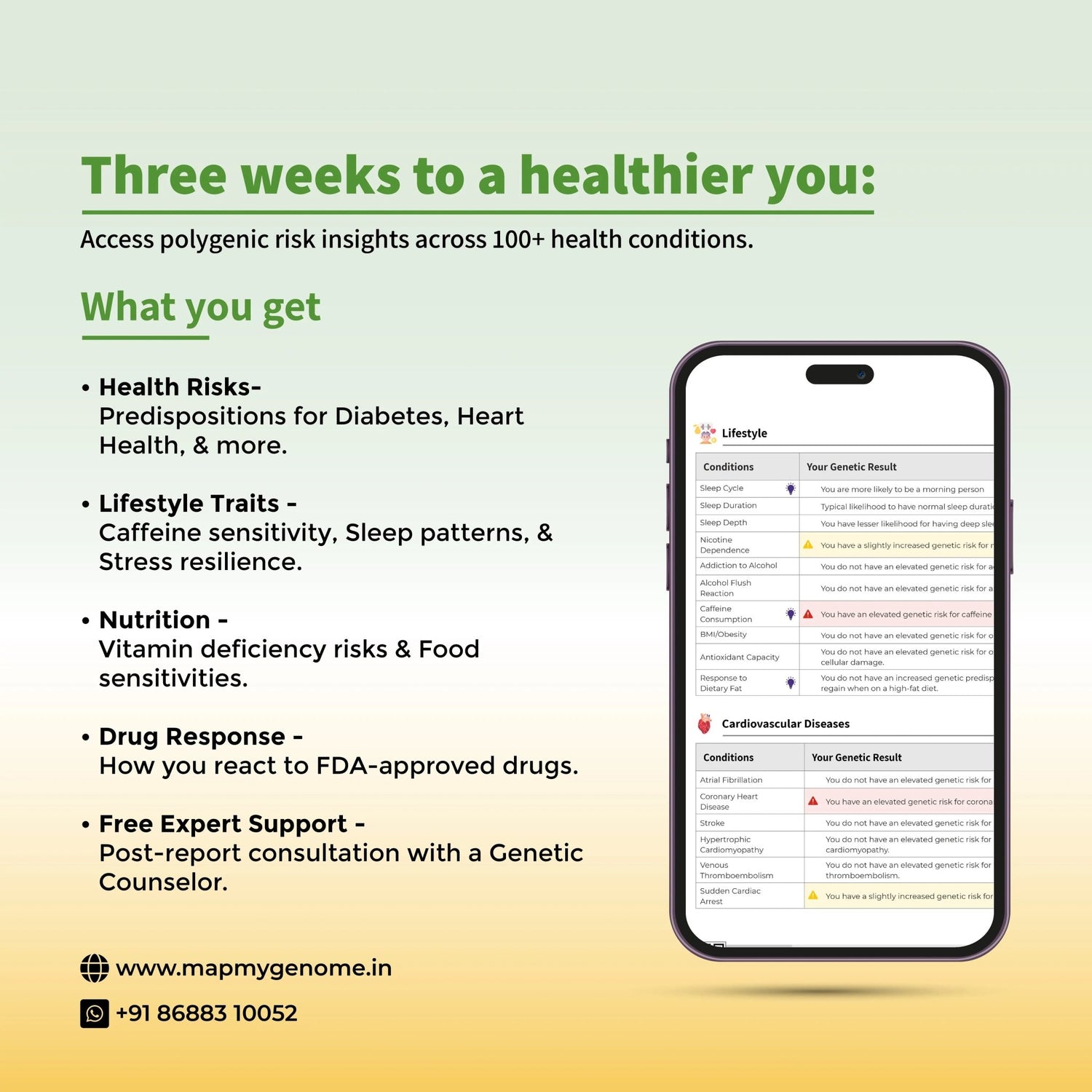
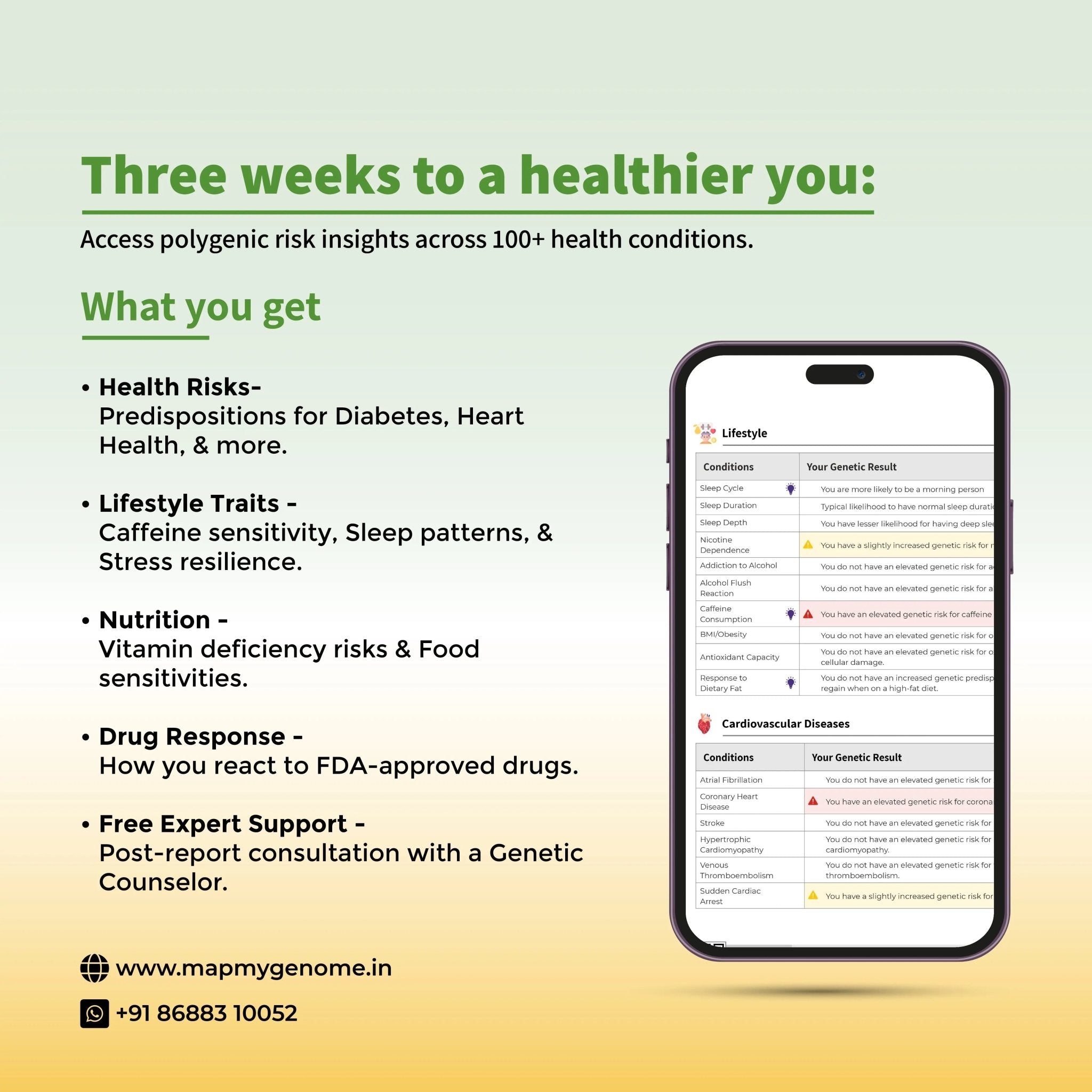
Variants in nicotine receptor genes (CHRNA5, CHRNA3) influence how strongly you become addicted and how difficult withdrawal feels. Genomepatri by MapmyGenome reveals your genetic predisposition to nicotine dependence — helping you and your doctor build a personalised cessation strategy.