

6 Types of Depression: Symptoms, Causes & Genetic Factors
Life is a potpourri of emotions — some days feel lighter, some heavier, and that’s normal. But when sadness, low energy, or loss of interest stop passing and start settling in for weeks at a time, it may not be “just a mood.” Depression is one of the most common mental health conditions worldwide, and one of the most misunderstood — partly because “depression” isn’t one single experience.
The 6 Types of Depression
1. Major Depressive Disorder (MDD) — The most commonly recognised form: persistent low mood, loss of interest in activities once enjoyed, changes in sleep and appetite, and fatigue, lasting at least two weeks and interfering with daily functioning.
2. Persistent Depressive Disorder (Dysthymia) — A lower-grade but longer-lasting form — symptoms are less intense than MDD but persist for two years or more, often making it feel like “just how I am” rather than a treatable condition.
3. Postpartum Depression — Occurs after childbirth, going beyond typical “baby blues.” Symptoms include intense sadness, anxiety, and exhaustion that can interfere with a new parent’s ability to care for themselves or their baby.
4. Seasonal Affective Disorder (SAD) — Tied to seasonal changes, most often appearing in fall and winter as daylight hours shorten. Symptoms include low energy, oversleeping, and carbohydrate cravings, typically lifting in spring.
5. Bipolar Depression — The depressive phase of bipolar disorder, alternating with episodes of mania or hypomania. Distinguishing this from MDD matters because treatment approaches differ significantly.
6. Atypical Depression — Characterised by mood reactivity (mood improves in response to positive events) alongside increased appetite, oversleeping, and a heavy, leaden feeling in the arms or legs.
What Causes Depression?
Depression rarely has a single cause. It typically emerges from a combination of biological factors (neurotransmitter imbalances), psychological factors (chronic stress, trauma), environmental factors (isolation, poor sleep), and genetic factors (family history of depression).
The Genetic Factors
Depression tends to run in families. Having a first-degree relative with depression roughly doubles an individual’s own lifetime risk. This isn’t because of one single “depression gene” — it’s the combined effect of many genetic variants, each contributing a small amount of risk.
Some of the more studied genes include those involved in serotonin transport and regulation (SLC6A4, 5-HTTLPR), which affect how the brain manages mood-related signalling, and genes involved in the body’s stress-response system (FKBP5, BDNF), which influence resilience to chronic stress.
Genetic predisposition is not destiny. It shapes sensitivity, not certainty — understanding your own genetic risk profile is less about prediction and more about awareness: knowing where to pay closer attention, and when to seek support earlier rather than later.
Understand Your Mental Health Genetics
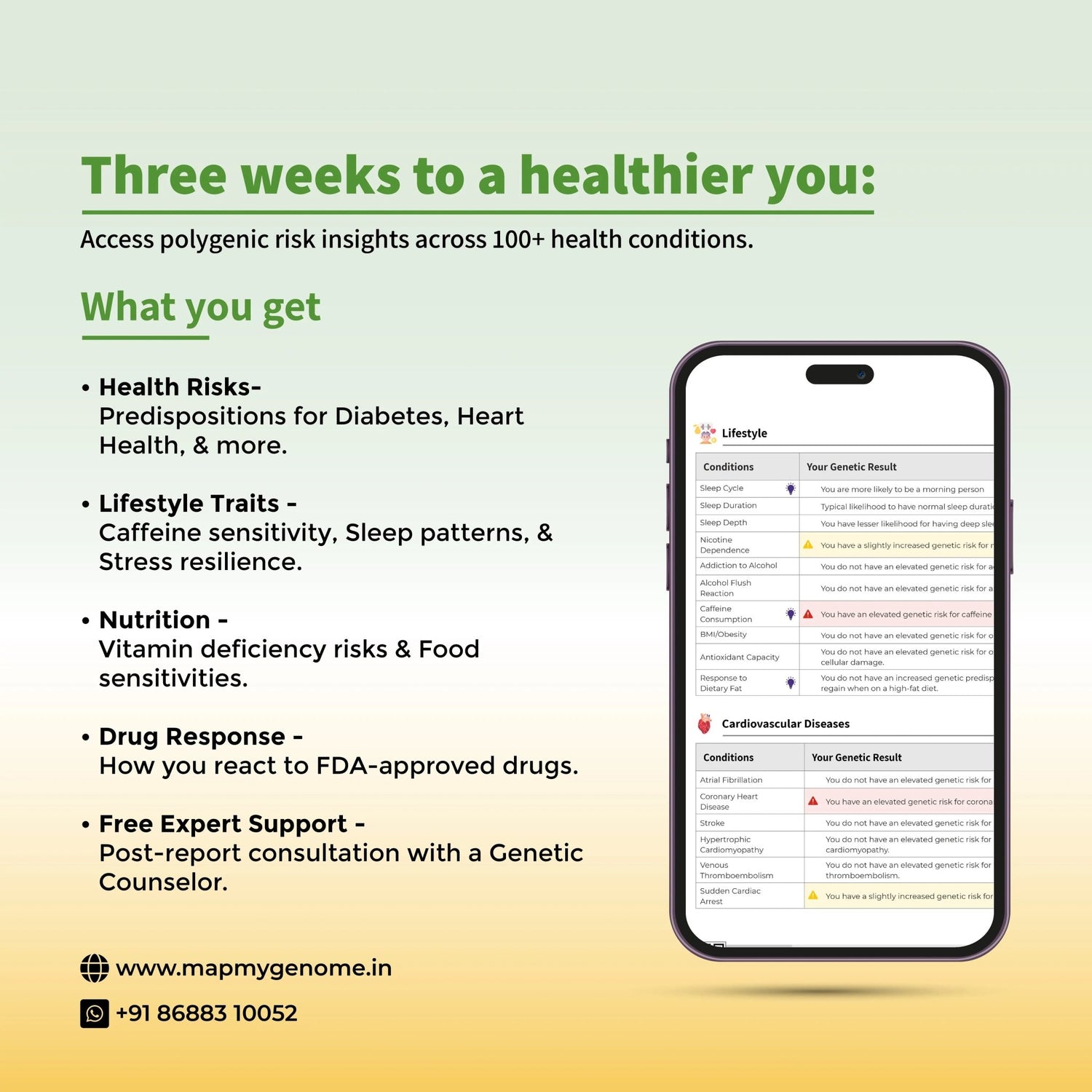
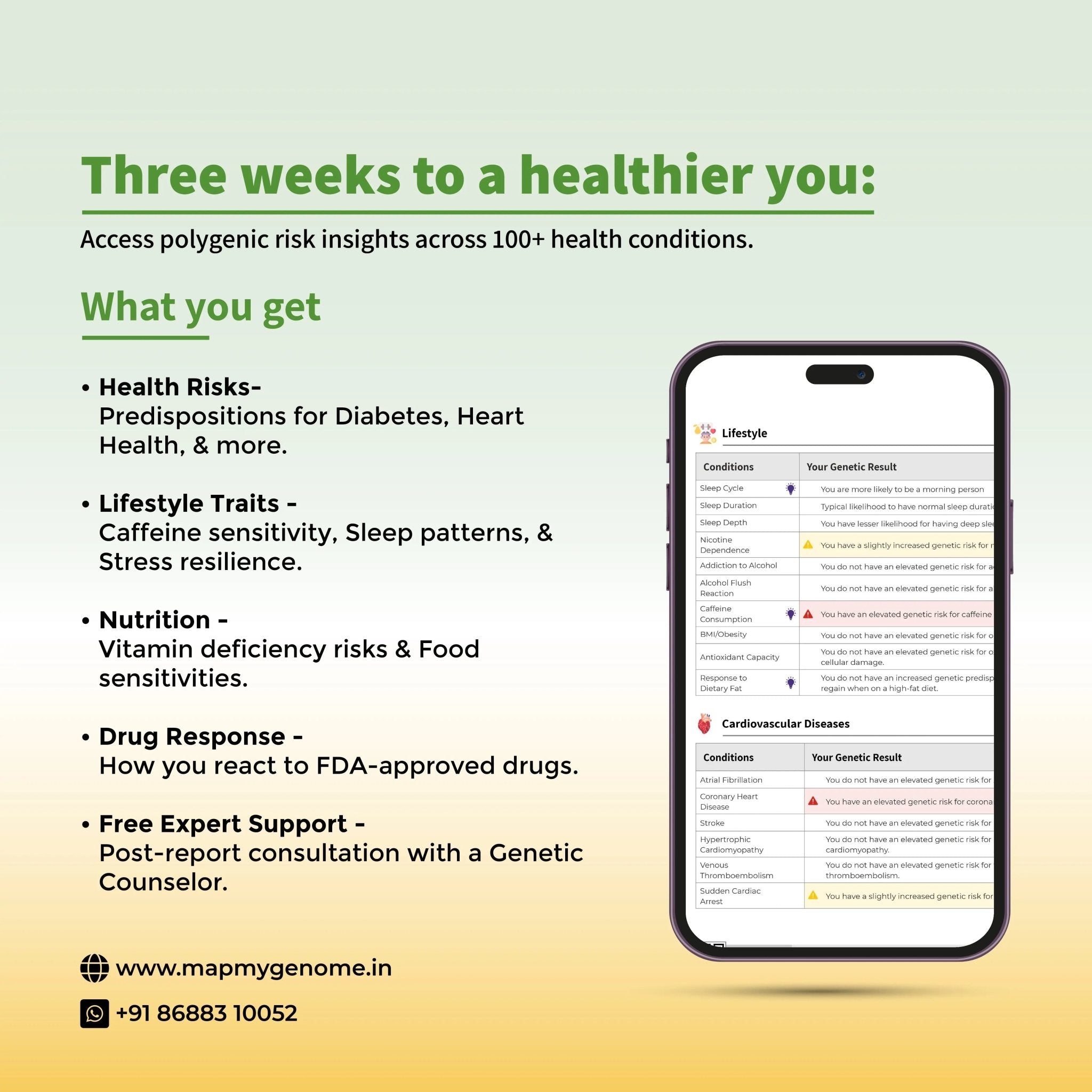
Genomepatri by MapmyGenome includes mental health predisposition traits including depression, anxiety, and stress response — helping you understand your genetic risk and take proactive steps. MedicaMap adds pharmacogenomic guidance for psychiatric medications.