

Genetic testing has gained significant mainstream attention in recent years — but a common and important question remains: how accurate is it, really? Can a DNA test reliably predict whether you'll develop diabetes, heart disease, or cancer? And if so, how should you act on that information?
The answer is nuanced — and understanding it is essential for getting the most value from genetic testing.
What Does "Accuracy" Mean in Genetic Testing?
Accuracy in genetic testing has two distinct dimensions that are often conflated:
- Technical accuracy — How reliably does the test detect the genetic variants it's designed to find? (This is very high for reputable providers.)
- Predictive accuracy — How well do those genetic variants predict whether you'll actually develop a disease? (This varies significantly by condition.)
Most confusion about genetic testing accuracy relates to the second dimension. A test can be technically flawless — correctly identifying every variant in your DNA — while still providing only probabilistic, not certain, predictions about disease risk.
Technical Accuracy: Very High for Reputable Providers
Modern genotyping and sequencing technologies used by established genetic testing companies are highly accurate at the technical level. Reputable providers like MapmyGenome use validated laboratory methods with quality controls that achieve accuracy rates of 99.9%+ for detecting the specific genetic variants they test.
This means: if you have a particular genetic variant, a high-quality test will reliably detect it.
Predictive Accuracy: It Depends on the Condition
The more important question is: how well does a genetic variant predict disease? This varies enormously depending on the condition:
High Predictive Accuracy: Single-Gene (Monogenic) Conditions
For conditions caused by a single gene mutation, genetic testing is highly predictive:
- BRCA1/BRCA2 mutations — Women with these mutations have a 50–85% lifetime risk of breast cancer and 15–45% risk of ovarian cancer — dramatically higher than the general population
- Huntington's disease — If you inherit the HTT gene mutation, you will develop Huntington's disease (nearly 100% penetrance)
- Thalassemia and Sickle Cell Anaemia — Carrier status is definitively identified; inheriting two copies of the mutation causes the disease
- BRCA2, Lynch syndrome — Significantly elevated cancer risks that are well-quantified
For these conditions, genetic testing provides highly actionable, high-confidence information.
Moderate Predictive Accuracy: Polygenic Conditions
Most common diseases — type 2 diabetes, heart disease, depression, obesity — are polygenic, meaning they are influenced by hundreds or thousands of genetic variants, each contributing a small amount of risk. For these conditions:
- Genetic testing identifies your relative risk compared to the general population — not an absolute prediction
- A "high genetic risk" for type 2 diabetes means your risk is elevated, not that you will definitely develop it
- Environmental factors (diet, exercise, stress, sleep) interact with genetic risk to determine actual outcomes
- Polygenic Risk Scores (PRS) — which aggregate many variants into a single risk score — are improving rapidly and becoming increasingly clinically useful
Pharmacogenomics: High Accuracy for Drug Response
Genetic testing for drug response (pharmacogenomics) is among the most clinically validated applications. Variants in genes like CYP2D6, CYP2C19, and TPMT reliably predict how quickly a person metabolizes specific medications — with direct implications for dosing and drug selection. This is an area where genetic testing is already changing clinical practice.
What Genetic Testing Cannot Do
- Predict with certainty — Even high-risk variants don't guarantee disease development; many people with high genetic risk never develop the condition
- Account for all risk factors — Lifestyle, environment, stress, and other non-genetic factors are equally or more important for most common diseases
- Replace clinical diagnosis — Genetic risk assessment is not the same as a medical diagnosis; clinical evaluation is always required
- Capture all genetic variants — Most consumer tests analyze known variants; rare or novel variants may not be detected
How to Interpret Your Genetic Risk Results
The most useful way to think about genetic risk results is as a weather forecast: a 70% chance of rain doesn't mean it will definitely rain, but it's a strong signal to carry an umbrella. Similarly, a high genetic risk for a condition is a strong signal to take preventive action — not a sentence.
Key principles for interpreting results:
- Context matters — Your genetic risk should be interpreted alongside your family history, lifestyle, and clinical health data
- Risk is relative — "2x the average risk" for a rare condition may still mean a low absolute risk
- Action is the goal — The value of genetic testing lies in what you do with the information, not the information itself
- Consult a genetic counsellor — A trained counsellor can help you interpret results accurately and develop an appropriate action plan
FAQs About Genetic Testing Accuracy
Are consumer DNA tests as accurate as clinical genetic tests?
Reputable consumer tests are technically accurate for the variants they test. However, clinical genetic tests ordered by a doctor typically cover a broader range of clinically relevant variants and are interpreted in the context of your full medical history.
Can a negative result mean I have no risk?
No. A negative result means the specific variants tested were not detected — not that you have zero risk. Other genetic variants not covered by the test, plus lifestyle and environmental factors, still contribute to disease risk.
How often do genetic testing results change?
Your DNA doesn't change, but the scientific understanding of which variants are significant does evolve. Reputable providers update their reports as new research emerges.
Conclusion: Accurate, Actionable — But Not a Crystal Ball
Genetic testing is technically highly accurate and scientifically grounded. For single-gene conditions, it provides high-confidence, actionable information. For common polygenic diseases, it provides valuable probabilistic risk insights that — when combined with lifestyle data and clinical evaluation — can meaningfully guide preventive health decisions. The key is understanding what genetic testing can and cannot tell you — and using the information as a tool for action, not anxiety.
🧬 Get Your Personalized Genetic Risk Report
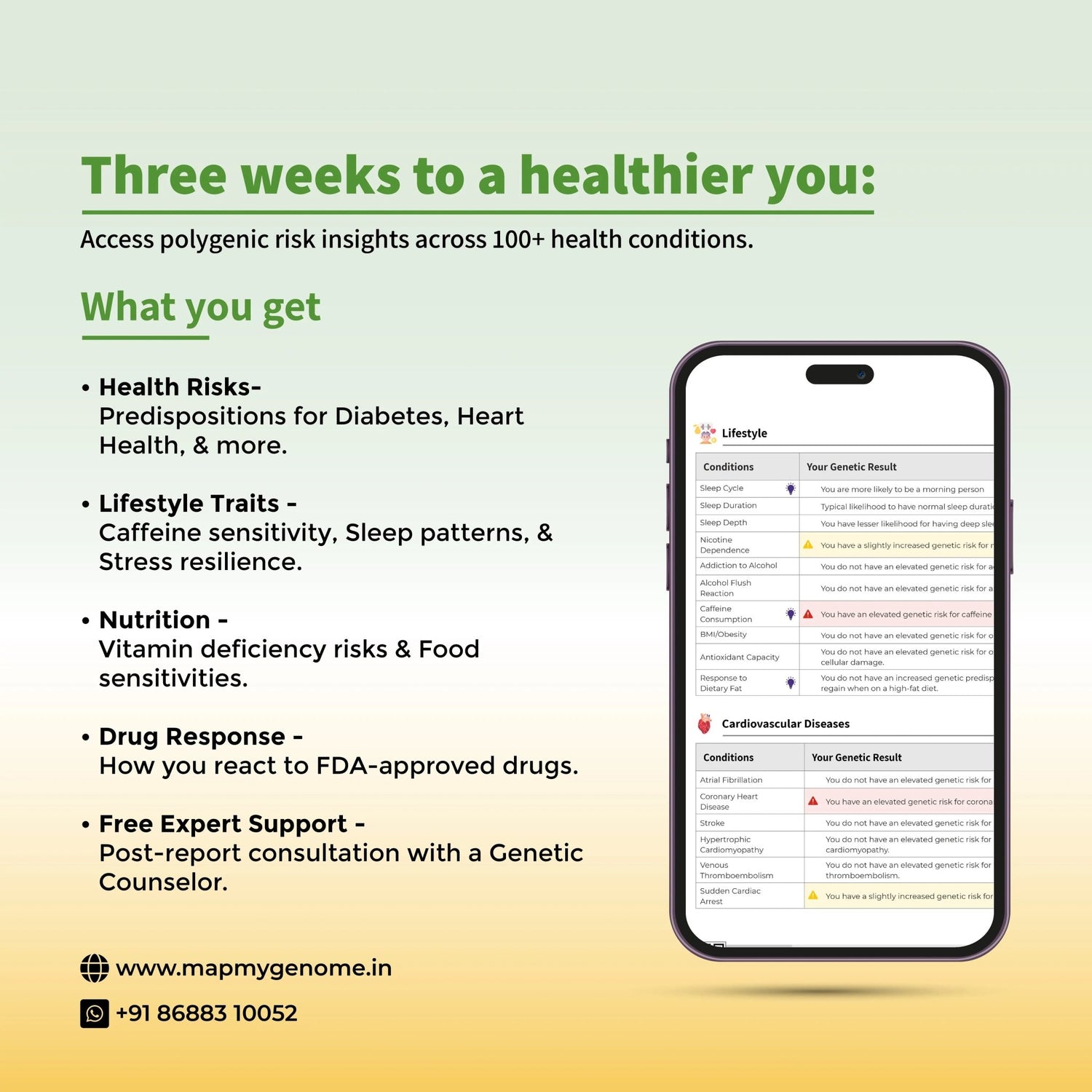
Genomepatri by MapmyGenome is built on peer-reviewed genetic research and validated laboratory methods — providing 100+ health trait reports with clear, actionable insights and access to genetic counselling to help you interpret and act on your results.
⭐⭐⭐⭐⭐ Rated 4.97/5 by 143+ customers
→ Order Genomepatri — India's #1 At-Home DNA Wellness Test (₹7,999)
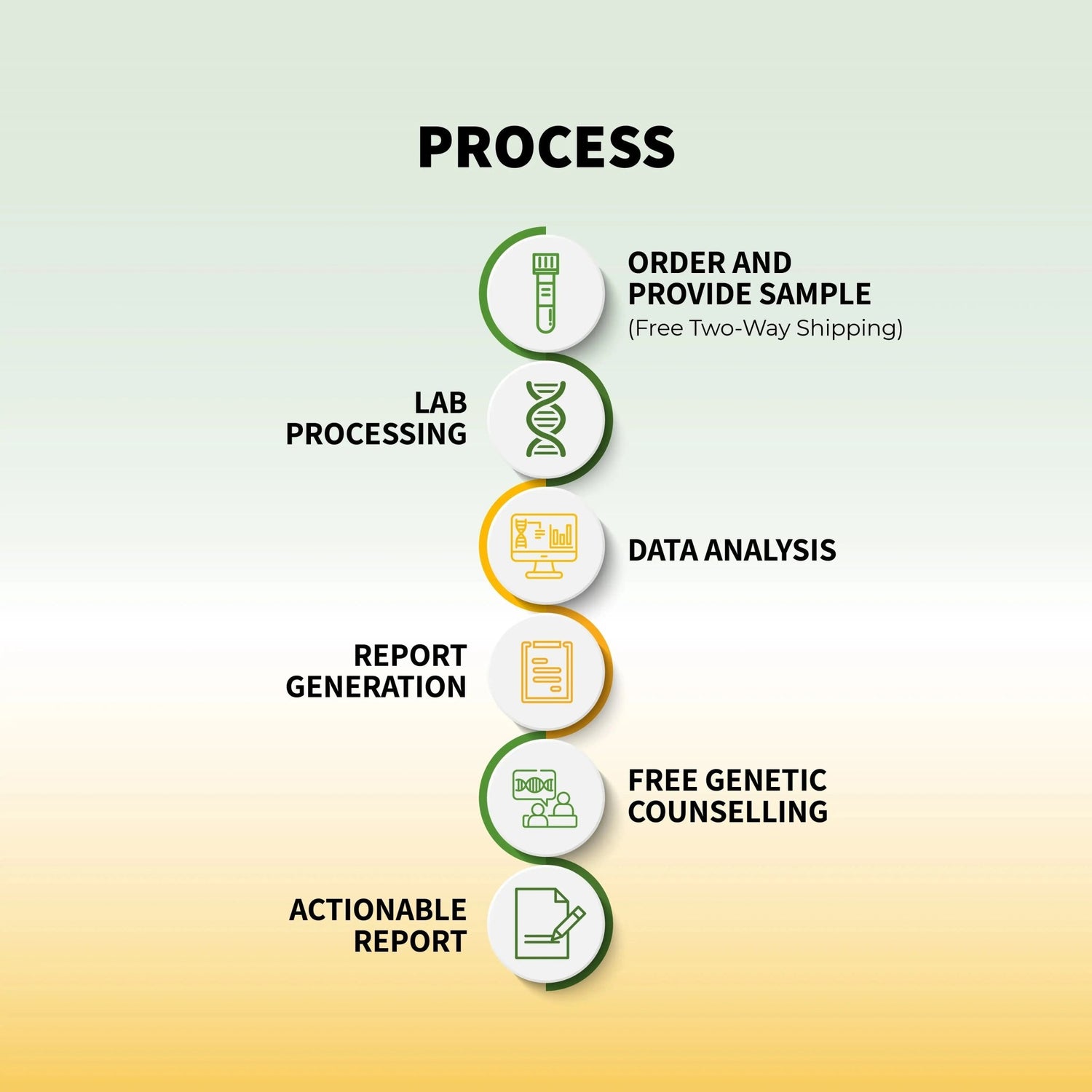
Every Genomepatri report includes access to a certified genetic counsellor who can help you understand your results and build a personalized action plan. Book a counselling session here.