

Lifestyle Disorders: Inflammatory Bowel Disease (IBD)
Inflammatory bowel disease (IBD) is a group of chronic conditions that affects the small intestine and large intestine. The two major types are Ulcerative Colitis (UC) and Crohn’s Disease (CD). UC causes long-standing ulcers in the rectum and large intestine. CD damages the large intestine, small intestine, and lining of the digestive tract. Factors like genetics, mucosal immune responses, weakened immune system, and environmental interactions (smoking, NSAID use, stress) usually lead to IBDs.
How Common Is IBD?
In 2013, a total of 51,000 global deaths occurred due to IBDs. In Asia and the Middle East, 6 in 100,000 people are diagnosed with IBDs annually. In the Indian population, UC is more prevalent than CD. India has seen a significant rise in IBD cases in recent years, calling for better treatment procedures.
Clinical Features
Ulcerative Colitis: Continuous loss of stool, abdominal pain and cramps, decreased appetite and weight, inflammation and swelling to eyes and joints, mouth ulcers
Crohn’s Disease: Decreased appetite and weight, low-grade fever, continuous diarrhoea, abdominal pain, delayed sexual growth in children, inflammation and swelling to eyes and joints, mouth ulcers
Risk Factors and Complications
Risk factors include age, ethnicity, family history, cigarette smoking, and NSAID use. Complications common to both UC and CD include colon cancer, blood clots, inflammation to skin, eyes and joints, and risk of osteoporosis from medication.
The Genetic Dimension
Genetic variation in many regions can increase the risk of Crohn’s disease — including variants in ATG16L1, NKX2-3, IL23R, NOD2, and PTPN22 genes. For ulcerative colitis, associations have been found with chromosome 1p36 and 12q15, and markers in the JAK2 gene region. Understanding your genetic predisposition to IBD can help you take targeted preventive action through diet, lifestyle, and early screening.
Food and diet are important factors in gut microbiome health. Epidemiological studies report that foods containing soluble fibre, vitamin D, potassium, and zinc have a positive effect on CD, while a vegetarian diet has a positive effect on UC.
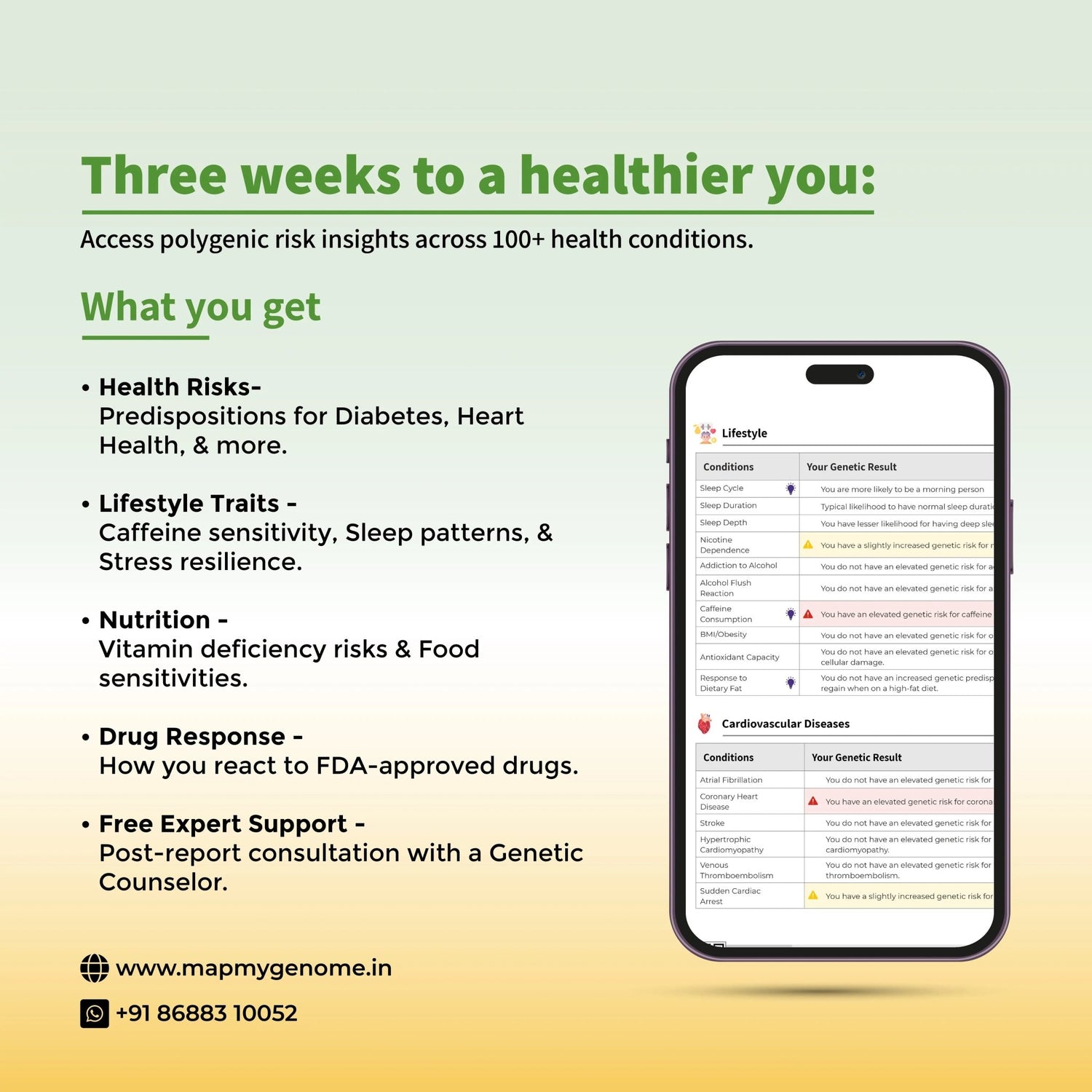
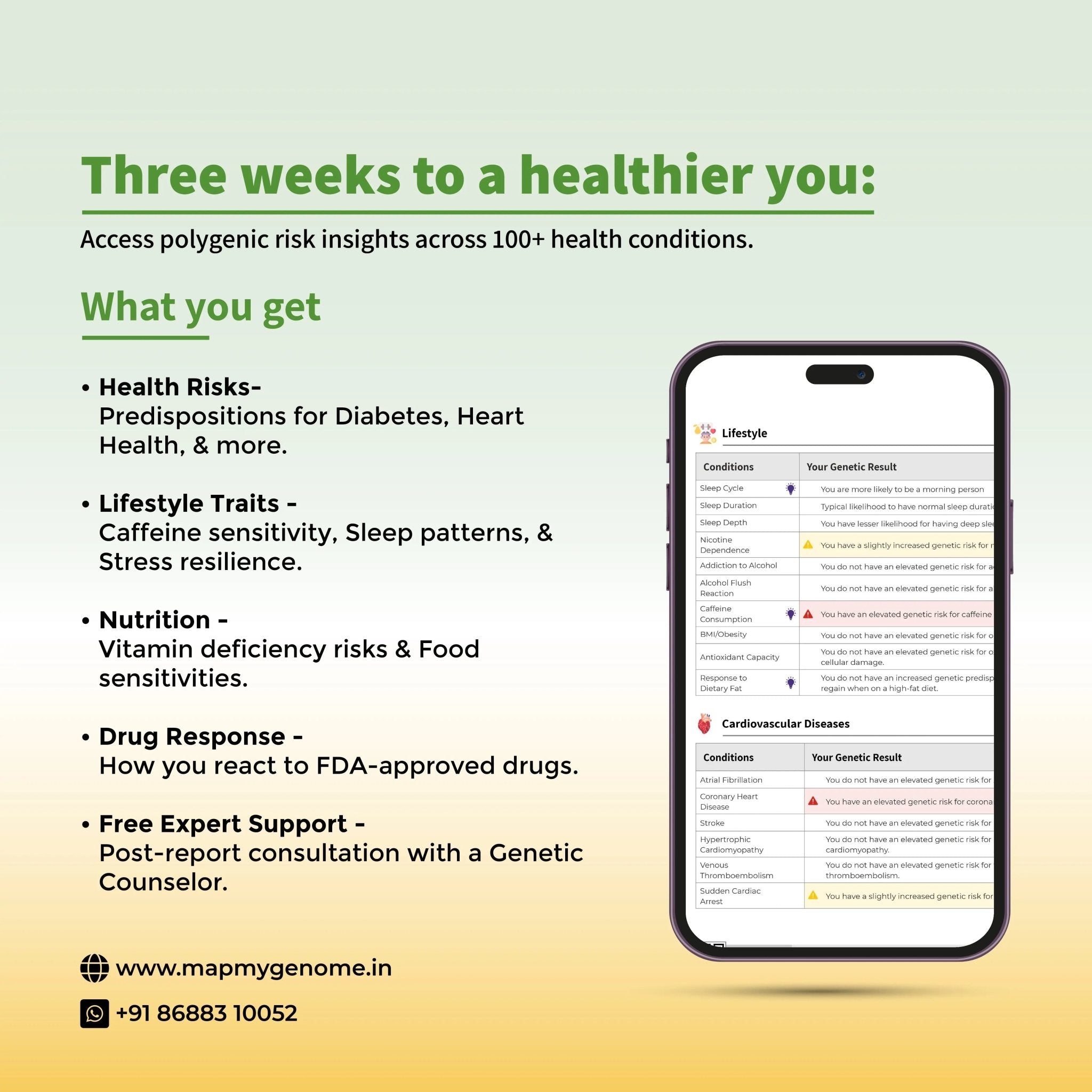
Know Your Genetic Risk for IBD and Gut Conditions
Genomepatri by MapmyGenome screens your genetic predisposition to Crohn’s Disease, Ulcerative Colitis, and other inflammatory conditions. Pair it with MapmyBiome to understand your gut microbiome and how it influences your IBD risk and management.