


"Of course it is happening inside your head, Harry, but why on earth should that mean that it is not real?" — Professor Dumbledore, Harry Potter
Every 10 October, the world observes World Mental Health Day. At MapmyGenome, we believe that your mental health is as important as your physical health — and that the two are more deeply connected than most people realize. Mental health is not a luxury or a weakness. It is a universal human right.
What Is Mental Illness?
Mental illnesses are health conditions involving changes in emotion, thinking, or behaviour — or a combination of these — that cause distress and interfere with daily functioning. They range from mild conditions that affect daily life in limited ways (such as specific phobias or mild anxiety) to severe conditions requiring ongoing medical management (such as bipolar disorder or schizophrenia).
Mental illness does not discriminate. It can affect anyone, regardless of age, gender, geography, income, social status, race, ethnicity, religion, or sexual orientation. Critically, three-quarters of all mental illness begins by age 24 — making early awareness and intervention especially important.
Warning Signs to Watch For
Recognizing the early signs of mental illness is the first step toward getting help:
- Excessive fear, worry, or anxiety
- Persistent sadness, emptiness, or mood fluctuations
- Loss of pleasure or interest in activities you previously enjoyed
- Unusual euphoria or irritability
- Hallucinations or disconnection from reality
- Difficulty concentrating, focusing, or remembering
- Excessive anger or aggression
- Thoughts of self-harm or suicide
- Significant changes in sleep patterns
- Withdrawal from social activities and relationships
If you or someone you know is experiencing these symptoms persistently, please reach out to a mental health professional. If this were a heart attack, you would call an ambulance — mental health deserves the same urgency.
The Genetics of Mental Health
Mental illness has a significant genetic component — but genetics is not destiny. The relationship between genes and mental health is complex, involving multiple genes, environmental factors, and life experiences.
Bipolar Disorder
Research consistently shows that bipolar disorder runs in families. Children with one parent with bipolar disorder have a 10–25% chance of developing the condition; children with two affected parents have a 10–50% chance. However, identical twins — who share 100% of their DNA — do not always both develop bipolar disorder, confirming that environmental factors also play a critical role.
Schizophrenia
Schizophrenia has a heritability of approximately 80% — one of the highest of any psychiatric condition. First-degree relatives of people with schizophrenia have a 10-fold increased risk compared to the general population. Key genetic variants associated with schizophrenia include those in the DISC1, NRG1, DTNBP1, and COMT genes, as well as copy number variations (CNVs) at several chromosomal loci.
Depression and Anxiety
Major depressive disorder and anxiety disorders have heritability estimates of 30–40%. While no single "depression gene" has been identified, variants in genes involved in serotonin signalling (SLC6A4), stress response (FKBP5), and neuroplasticity (BDNF) are associated with increased susceptibility.
The Jar Model: Genes + Environment
Genetic counsellor Jehannine C. Austin describes the interplay between genetics and environment using the "jar model": everyone has a mental illness jar that can be filled with two kinds of vulnerability — genetic and experiential. Genetic vulnerability is fixed; experiential vulnerability accumulates over time. When the jar fills to the top, an episode of illness may occur.
This model has an empowering implication: even if you carry significant genetic vulnerability, reducing experiential stressors — through therapy, lifestyle, social support, and early intervention — can prevent the jar from filling. Knowing your genetic risk enables you to be proactive rather than reactive.
Breaking the Stigma
"Mental illness is nothing to be ashamed of. It is a medical problem, just like heart disease or diabetes."
Many people with mental illness do not seek help because of stigma — the fear of being judged, misunderstood, or labelled. This stigma costs lives. Mental health conditions are treatable. Recovery is possible. And reaching out for help is a sign of strength, not weakness.
If you or a loved one is experiencing symptoms that are interfering with daily life, please reach out to a mental health professional, a trusted person in your life, or a crisis helpline.
From Disease Management to Mental Wellbeing
Positive psychology offers a complementary approach — focusing not just on treating illness but on building the strengths, resilience, and habits that support mental wellbeing:
- Mindfulness and meditation — Evidence-based practices that reduce anxiety, improve mood, and build emotional resilience
- Physical activity — Regular exercise is one of the most effective interventions for depression and anxiety
- Social connection — Strong relationships are one of the most powerful protective factors for mental health
- Purpose and meaning — Engaging in work, hobbies, or service that aligns with your values supports psychological wellbeing
- Sleep — Adequate, quality sleep is foundational to mental health; sleep disorders and mental illness are bidirectionally linked
FAQs
Can a genetic test diagnose mental illness?
No. Genetic testing cannot diagnose mental illness — diagnosis requires clinical assessment by a qualified mental health professional. However, genetic testing can reveal predispositions to neuropsychiatric conditions, enabling earlier awareness and proactive support.
If mental illness runs in my family, will I definitely develop it?
No. Having a genetic predisposition increases risk but does not guarantee illness. Many people with strong family histories of mental illness never develop a condition — particularly with appropriate lifestyle, stress management, and early support.
References
- Depression and Bipolar Support Alliance: "Bipolar Statistics"
- Austin JC. Evidence-Based Genetic Counseling for Psychiatric Disorders: A Road Map. Cold Spring Harb Perspect Med. 2020;10(6):a036608.
🧬 Understand Your Neuropsychiatric Genetic Predisposition
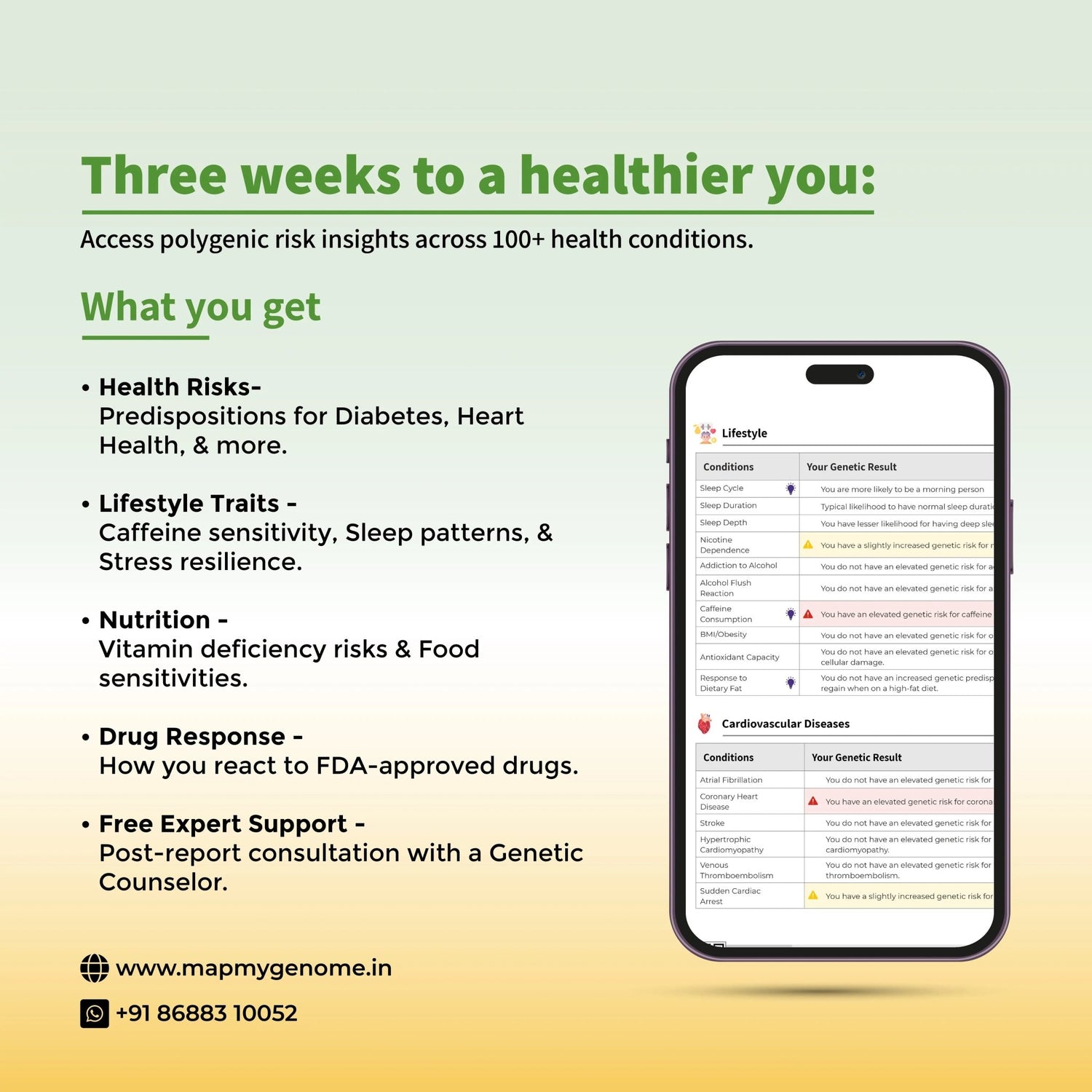
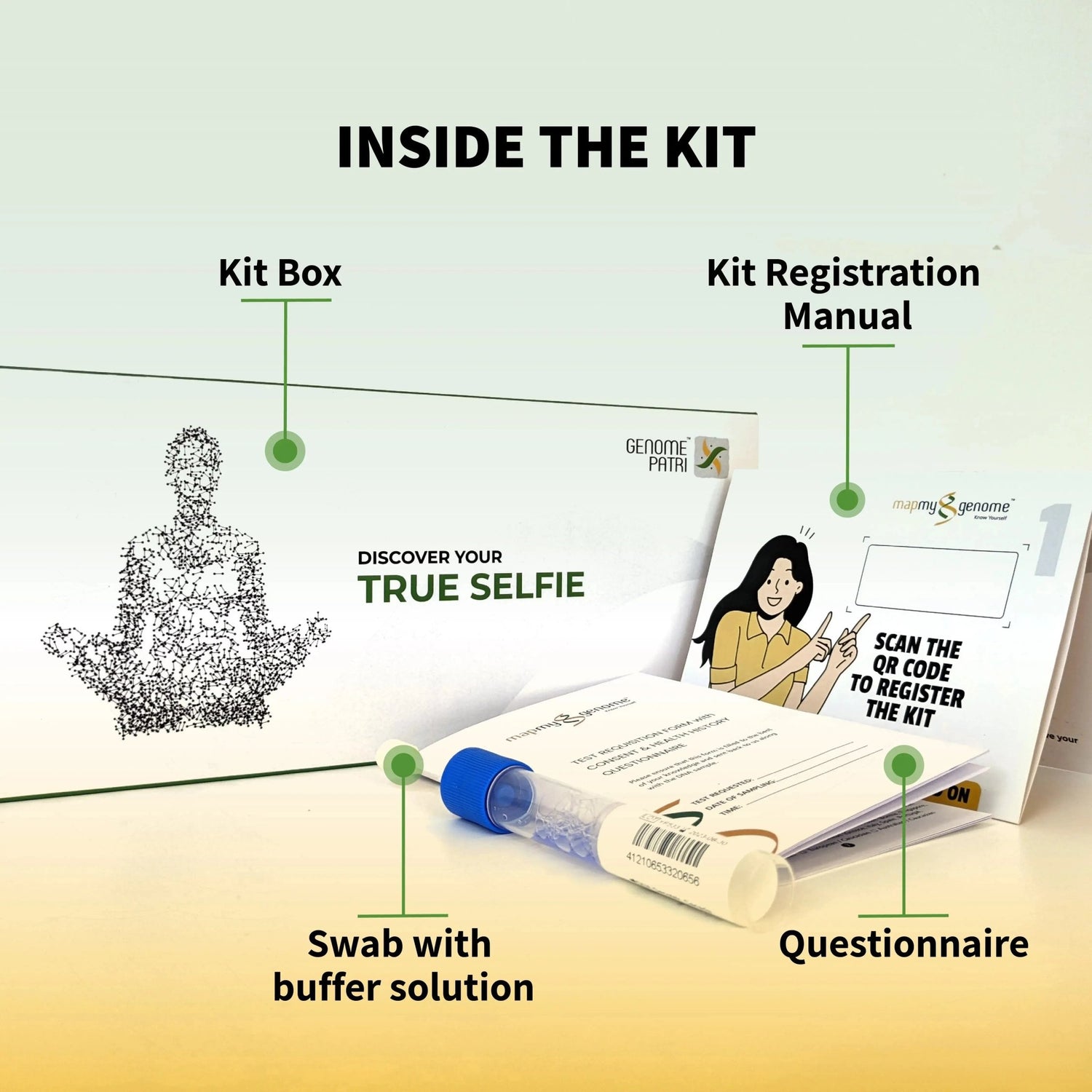
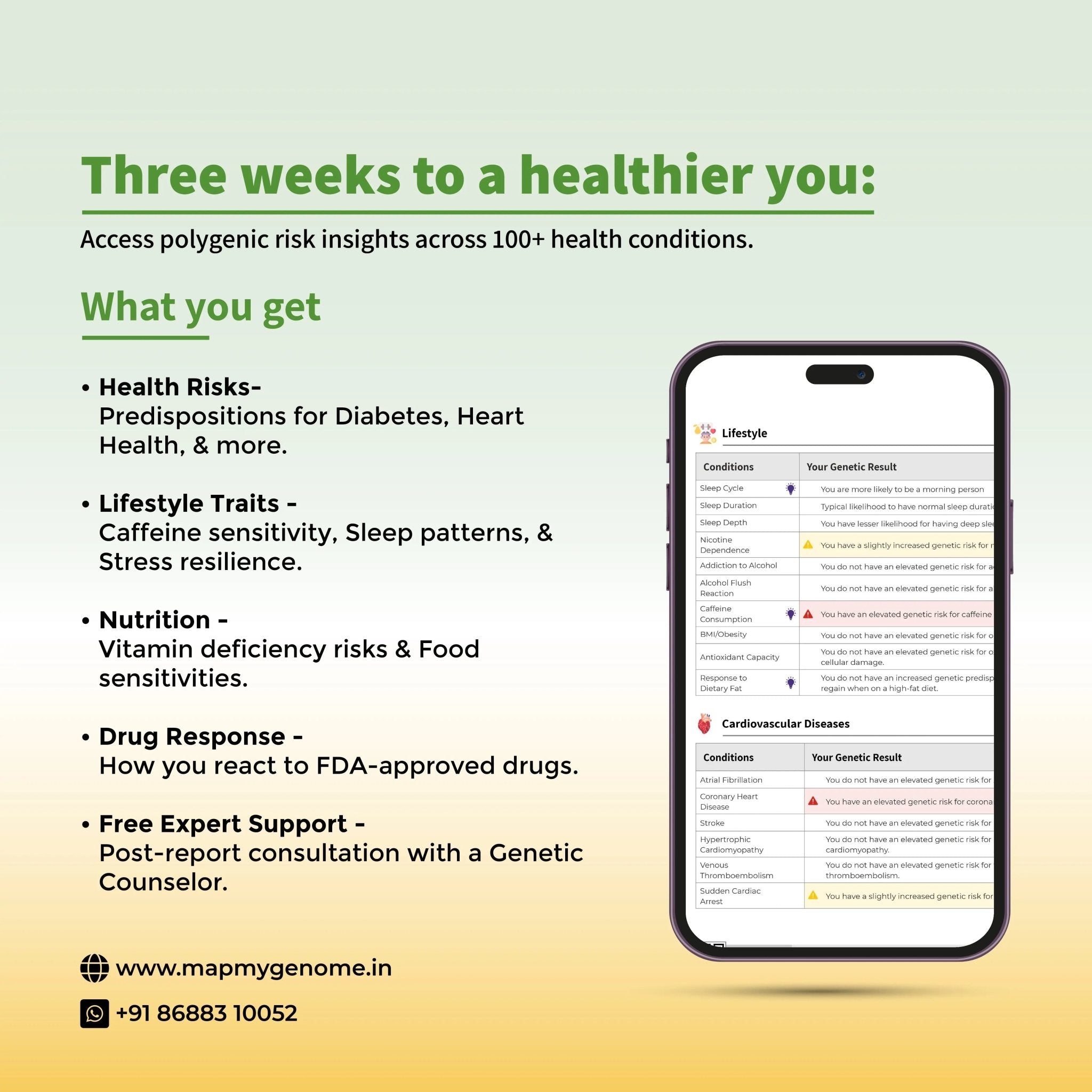
Genomepatri by MapmyGenome includes genetic susceptibility insights for neuropsychiatric conditions — including schizophrenia, bipolar disorder, depression, and anxiety — alongside 100+ health and wellness traits.
→ Order Genomepatri — India's #1 At-Home DNA Wellness Test (₹7,999)








1 comment
Mental health is truly a universal human right, and everyone deserves care, understanding, and support. Prioritizing mental well-being helps people live healthier and more balanced lives. Conversations and awareness shared by communities and platforms like Peaceful Mind Wellness play an important role in encouraging a more compassionate and supportive world.