


If you've ever stood in a pharmacy staring at a wall of probiotic supplements, you've probably noticed that CFU counts vary wildly — from 1 billion to 500 billion. More must be better, right? Not necessarily. Here's what the science actually says about CFU counts and how to choose the right probiotic for your needs.
What Is a CFU?
CFU stands for Colony-Forming Unit — a measure of the number of viable (live) bacteria in a probiotic supplement. A higher CFU count means more live bacteria per dose. However, CFU count is just one factor in probiotic effectiveness; strain specificity, survivability, and delivery mechanism matter equally or more.
What CFU Count Do You Actually Need?
Most clinical research on probiotics has used doses in the range of 1 billion to 10 billion CFUs per day for general gut health maintenance. Higher doses (10–100 billion CFUs) are typically used for specific therapeutic purposes, such as antibiotic-associated diarrhea, IBS, or IBD. Very high doses (100+ billion CFUs) are generally used in clinical settings for specific conditions and are not necessary for most people.
General Guidelines by Purpose
- General gut health maintenance: 1–10 billion CFUs/day
- During or after antibiotic use: 10–50 billion CFUs/day (taken 2+ hours apart from antibiotics)
- IBS symptom management: 10–50 billion CFUs/day of specific strains (L. rhamnosus GG, B. infantis 35624)
- Traveler's diarrhea prevention: 5–10 billion CFUs/day of Saccharomyces boulardii
- Children: 1–5 billion CFUs/day (strain-specific; consult a paediatrician)
Why Strain Matters More Than CFU Count
Different probiotic strains have completely different effects. Lactobacillus rhamnosus GG is well-evidenced for diarrhea prevention; Bifidobacterium longum 35624 for IBS; Saccharomyces boulardii for antibiotic-associated diarrhea. A supplement with 100 billion CFUs of the wrong strain will be less effective than 5 billion CFUs of the right strain for your specific condition.
Survivability: Can the Bacteria Reach Your Gut?
Probiotic bacteria must survive stomach acid and bile to reach the colon where they exert their effects. Look for supplements with enteric coating or acid-resistant capsules, and check that CFU counts are guaranteed at the time of expiry (not just at manufacture).
Food vs. Supplements
Fermented foods like yogurt, kefir, and idli typically contain 1–100 billion CFUs per serving — comparable to many supplements. They also come packaged with prebiotic fibers and other bioactive compounds that enhance probiotic effectiveness. For most healthy people, a diet rich in fermented foods provides adequate probiotic support without supplementation.
FAQs
Can you take too many probiotics?
For most healthy people, excess probiotics are simply excreted. However, very high doses can cause temporary bloating and gas. People with compromised immune systems should consult a doctor before taking high-dose probiotics.
How do I know which probiotic strains I actually need?
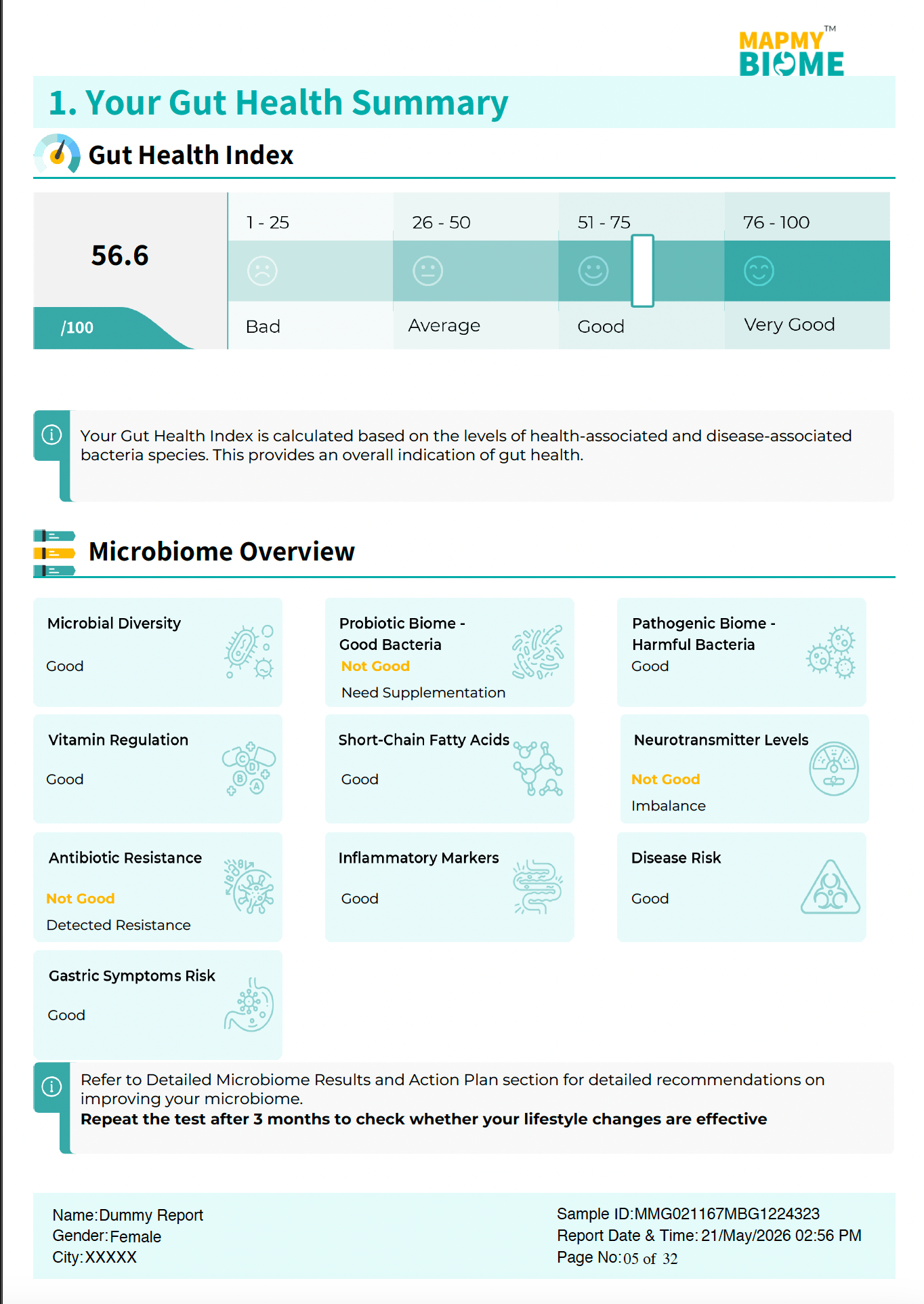
Gut microbiome testing can identify which beneficial bacteria are deficient in your gut, allowing you to choose targeted probiotic strains rather than a generic supplement.
Stop Guessing — Find Out Which Probiotics Your Gut Actually Needs
MapmyBiome uses advanced shotgun sequencing to identify your specific gut bacterial composition — so you can choose targeted probiotic strains that address your actual imbalances, not just take a generic supplement.














1 comment
I am a CKD Patient can I take 30 billion CFUs instead of 45 billion CFUs Capsule.