Ask around at any Indian dinner table and you'll hear it sooner or later: "It's in our family." Someone's father was diagnosed in his 40s. A grandmother has managed it for thirty years. A cousin who eats home-cooked meals and has never been overweight a day in her life gets the same diagnosis at 34.
For a lot of Indian families, Type 2 Diabetes doesn't feel like a disease you catch — it feels like something you inherit, the way you inherit a surname or a mother tongue.
There's real science behind that feeling. India is now home to more people living with diabetes than almost any country on earth — an estimated 89.8 million adults, second only to China, and roughly 1 in every 7 people with diabetes worldwide lives in India. The age-adjusted prevalence here already sits among the five highest in the world, and it's still climbing.
What's harder to explain with diet and lifestyle alone is who gets it. Indians tend to develop Type 2 Diabetes younger, and at a lower body weight, than people in the West. That gap is exactly where genetics comes in — and where a newer tool, the Polygenic Risk Score (PRS), is starting to change how we think about prevention.
The "Thin Outside, Fat Inside" Problem
Most people picture diabetes risk as a weight problem. But a lot of Indians who develop Type 2 Diabetes don't fit that picture at all — normal BMI, no visible weight to lose, nothing that would raise a doctor's eyebrow on a scale.
Researchers have a name for this: TOFI, or "Thin Outside, Fat Inside." A person can look lean while carrying a disproportionate amount of visceral fat — the kind packed around the liver, pancreas, and intestines rather than sitting under the skin. Visceral fat isn't inert; it releases inflammatory compounds and fatty acids that interfere with insulin signaling, and over years that steadily pushes the body toward insulin resistance.
This isn't just an Indian anecdote — it's measurable. Studies on South Asians consistently find higher visceral fat and a different body-fat distribution than in white Europeans at the same BMI, which is why global health bodies treat "normal weight" differently here. The WHO's 2004 guidance lowered the overweight threshold for South Asian populations to a BMI of 23 (versus 25 elsewhere), and later UK cohort research put the "true" obesity-equivalent cutoff for South Asians closer to 24 — nearly six points below the standard 30. In that same study, South Asians developed Type 2 Diabetes roughly a decade earlier, on average, than white Europeans.
In other words: the BMI chart most of us grew up trusting was calibrated on a different population. That's not a diet failure. It's biology.
Why It Runs in Families
Type 2 Diabetes isn't caused by one gene going wrong. It's shaped by hundreds — possibly thousands — of small genetic variations scattered across the genome, each nudging things like insulin secretion, how efficiently your cells respond to insulin, where your body stores fat, appetite regulation, and glucose metabolism.
No single variant does much on its own. But added together across a genome, they can meaningfully shift a person's lifetime risk — which is a big part of why diabetes clusters so visibly in families. If your father, aunt, and grandmother all have it, it's not just that you grew up eating the same food. You may be sharing a lot of the same underlying genetic risk.
A Simpler Way to Think About Polygenic Risk Scores
Older genetic tests looked for single "faulty" genes — useful for rare inherited disorders, but Type 2 Diabetes doesn't work that way.
A Polygenic Risk Score (PRS) takes a different approach: it looks across thousands of genetic markers at once and combines them into a single score that estimates your inherited susceptibility. Think of it less like a single red flag and more like a weather forecast built from hundreds of small data points — no one variable tells you much, but together they say something real about the odds.
The question a PRS answers isn't "do I have the diabetes gene" (there isn't one) — it's closer to "taken together, how much does my DNA load the dice?"
| A Blood Test (HbA1c, fasting glucose) | A Polygenic Risk Score | |
|---|---|---|
| What it measures | Your metabolic status right now | Risk you were born with |
| When it's useful | Detecting changes already underway | Flagging risk before symptoms appear |
| What it's good for | Diagnosis and monitoring | Planning ahead |
Neither replaces the other — they answer different questions. A PRS doesn't diagnose diabetes and can't predict with certainty who will or won't develop it. What it can do is help identify, well before any blood test would show a problem, who might benefit from earlier and more frequent screening.
What the Research Says
Large studies across global populations have shown that polygenic risk meaningfully affects the likelihood of developing Type 2 Diabetes, and research specific to South Asian populations has found that risk patterns here don't map neatly onto scores built primarily from European genetic data — which is part of why population-specific genomic research matters. Mapmygenome's own research has contributed to that picture, studying how genetic pathways tied to metabolism, glucose regulation, and energy use play out specifically in Indian populations.
Knowing Your Risk Isn't a Diagnosis — It's a Head Start
Genetic risk is not fate. It's information — and information you can act on.
Someone with an elevated genetic risk for Type 2 Diabetes still has real levers to pull, often years before any symptoms would show up on a routine check-up:
- Screening earlier and more often, rather than waiting for the standard age-based schedule
- Building strength and muscle mass, which improves insulin sensitivity independent of weight
- Paying attention to visceral fat and waist circumference, not just BMI or the number on a scale
- Prioritizing sleep and stress management, both of which affect blood sugar regulation
- Working with a doctor or genetic counselor to build a plan suited to your specific risk profile
That's really the shift PRS makes possible: moving diabetes prevention from something reactive — responding after a blood test flags a problem — to something you can start on years earlier.
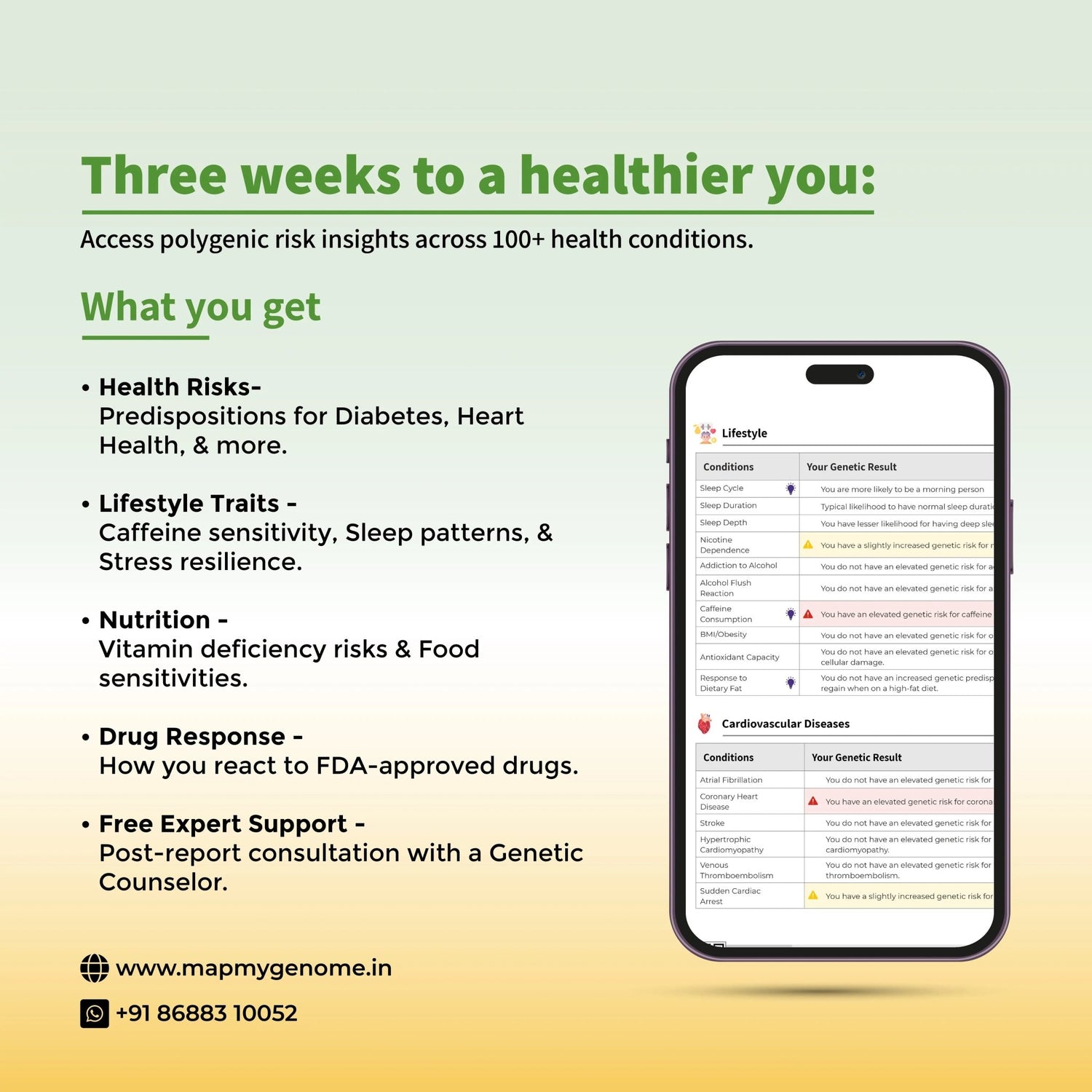
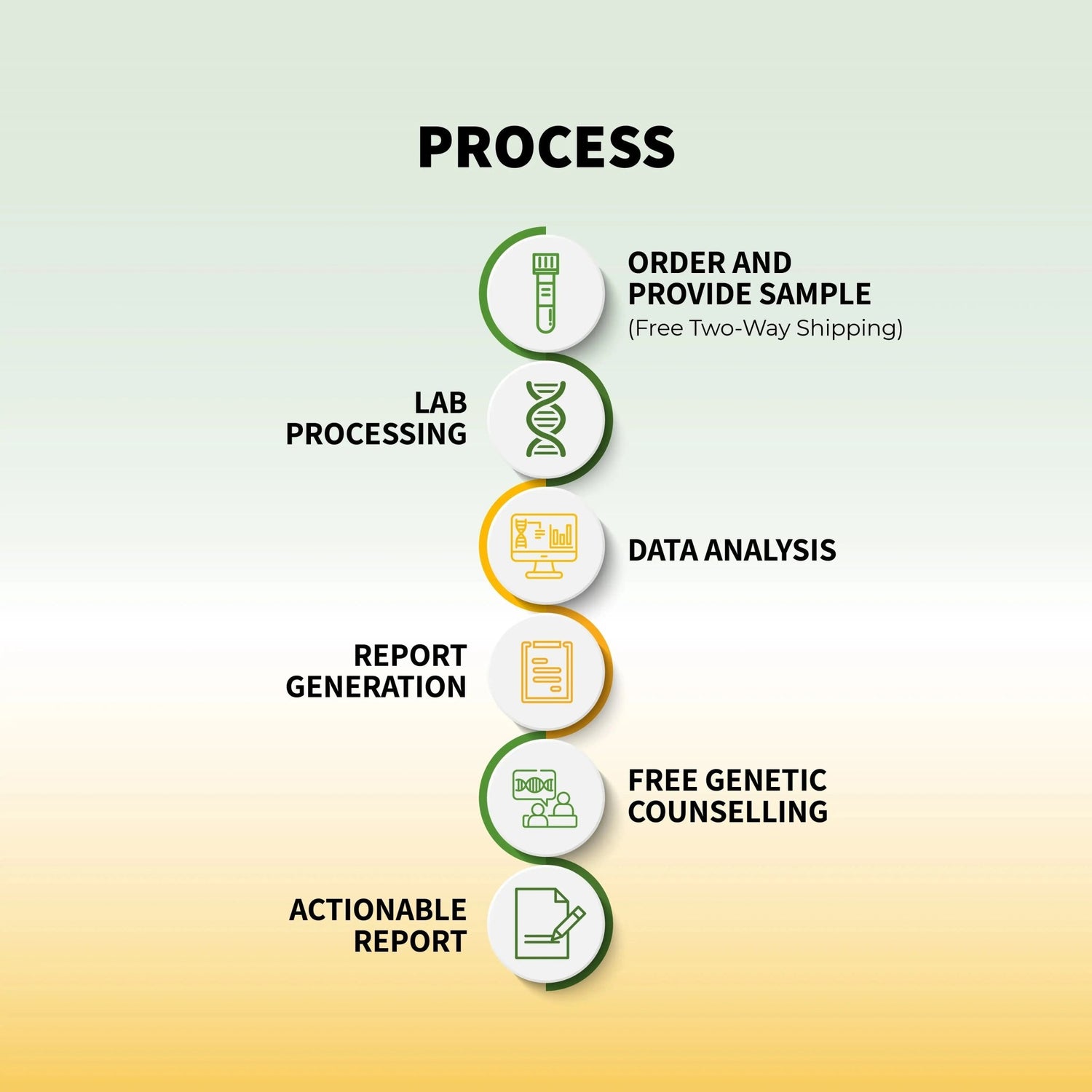
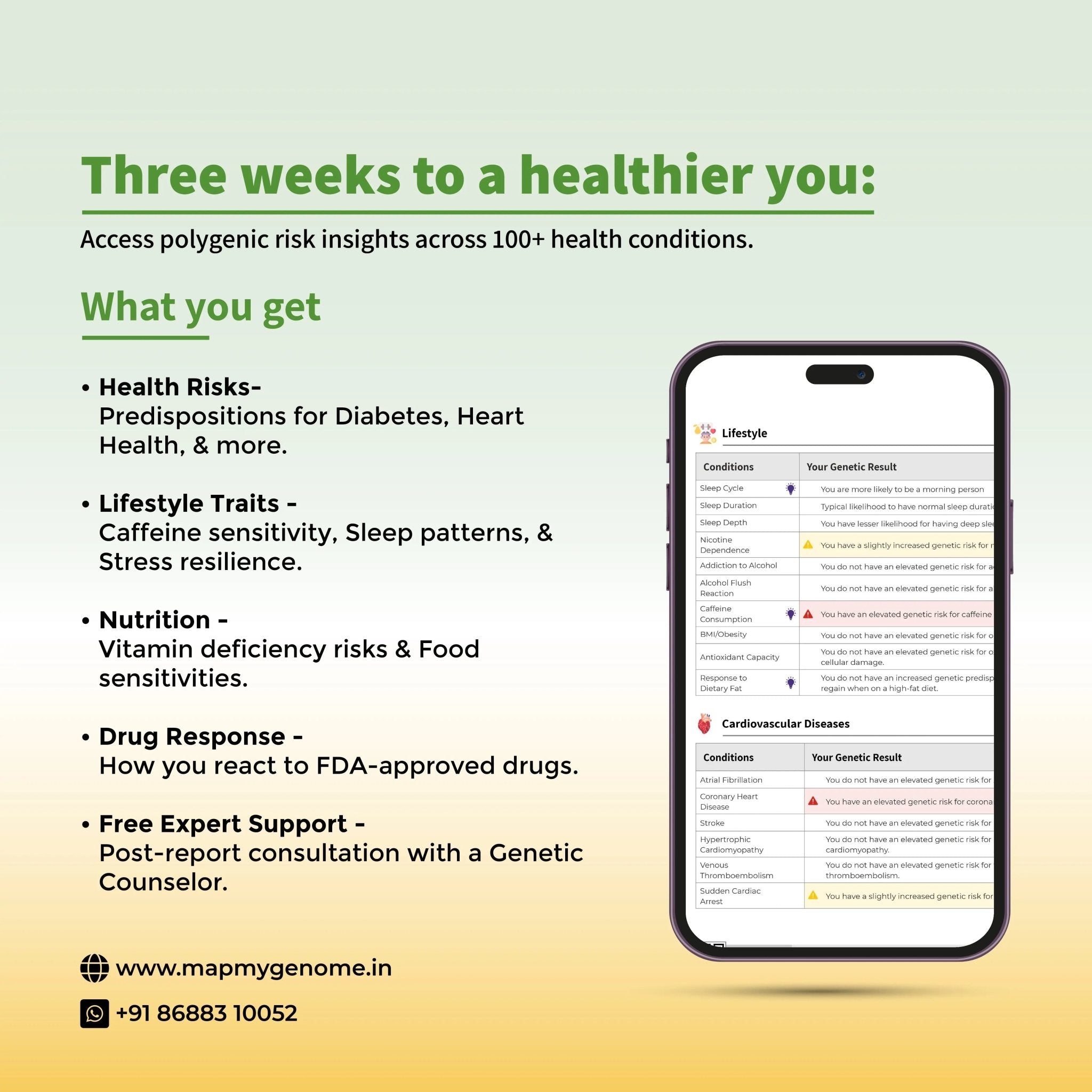
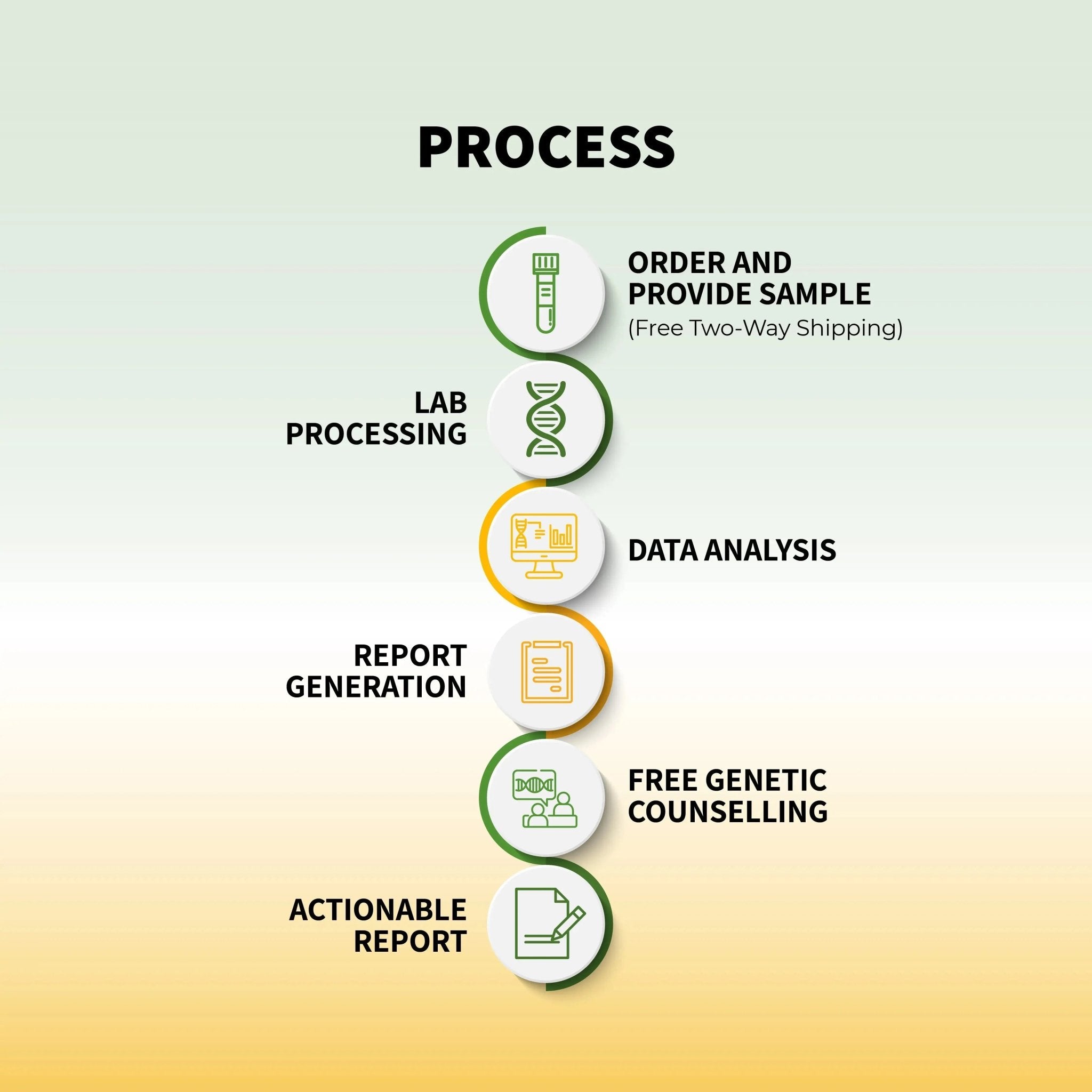
If you're curious where to start, Mapmygenome's Genomepatri test looks at genetic predisposition across 100+ health traits, including Type 2 Diabetes and metabolic health, and CardioMap dives deeper into cardiovascular and metabolic genetics specifically. Both come with access to certified genetic counselors who can walk you through what your results actually mean for your day-to-day choices — not just hand you a printout.
The Bottom Line
For a lot of Indian families, diabetes can feel like something that was always going to happen — a family trait as fixed as height or eye color. But genetics isn't a script you're locked into; it's a set of odds you can influence, especially the earlier you understand them.
The families where diabetes "runs" aren't powerless against it. They're often just the families with the most reason to start looking early — and now, for the first time, the tools to actually do it.
Know Your Genetic Risk for Type 2 Diabetes — Before a Blood Test Flags It
Genomepatri covers Type 2 Diabetes, insulin resistance, and 100+ other health traits — with a certified genetic counselling session included to help you act on your results. Rated 4.97/5 from 143 reviews. For a deeper dive into cardiovascular and metabolic risk, CardioMap goes further.