

Obesity: Your Genes Are More Responsible Than You Think
We live in a world that loves to blame willpower for weight gain. But the science tells a very different story. Your genes play a far more significant role in your weight than most people realise — influencing your appetite, your metabolism, your fat storage, and even your response to exercise and diet.
The Genetics of Obesity
Twin studies consistently show that 40–70% of the variation in BMI between individuals is attributable to genetic factors. This means that for most people, genetics is the single largest determinant of their weight — larger than diet, exercise, or lifestyle choices alone.
Key genetic factors that influence weight include:
FTO gene — the most well-studied obesity gene; variants in FTO are associated with increased appetite, reduced satiety, and higher BMI
MC4R gene — mutations in MC4R are the most common cause of monogenic (single-gene) obesity
ADRB2 and ADRB3 genes — influence fat metabolism and the body’s response to exercise
PPARG gene — influences fat cell development and insulin sensitivity
Leptin and leptin receptor genes — regulate appetite and energy balance
Genes Are Not Destiny
Having a genetic predisposition to obesity does not mean you are destined to be overweight. But it does mean that the same diet and exercise plan will not work equally well for everyone. Understanding your genetic profile allows you to:
Choose the dietary pattern that best suits your metabolism (low-carb, Mediterranean, high-protein, etc.)
Select the exercise type that is most effective for your muscle fibre composition and fat metabolism
Understand your appetite regulation and develop strategies to manage hunger
Identify any nutrient deficiencies that may be contributing to weight gain
Understand Your Weight — It’s in Your Genes
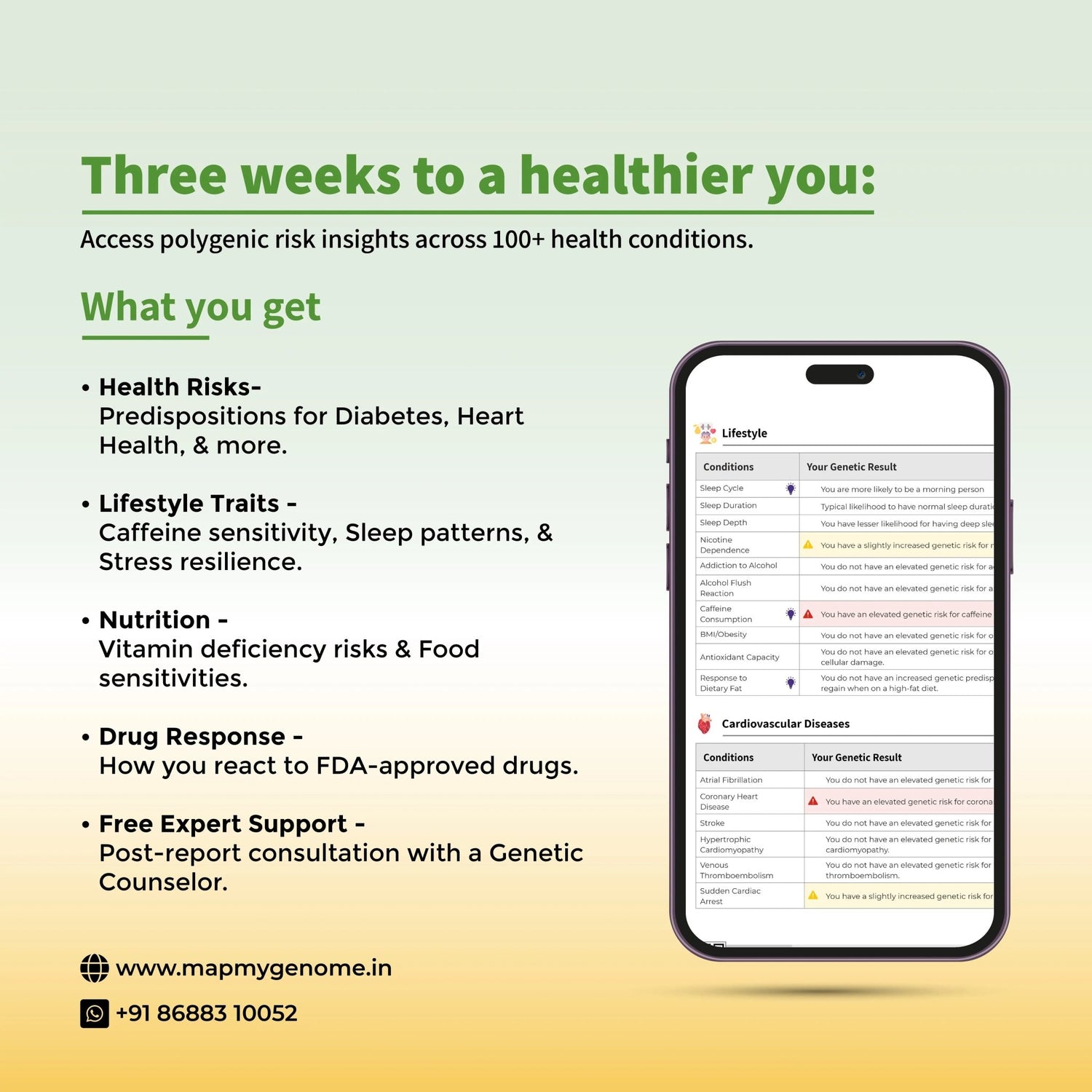
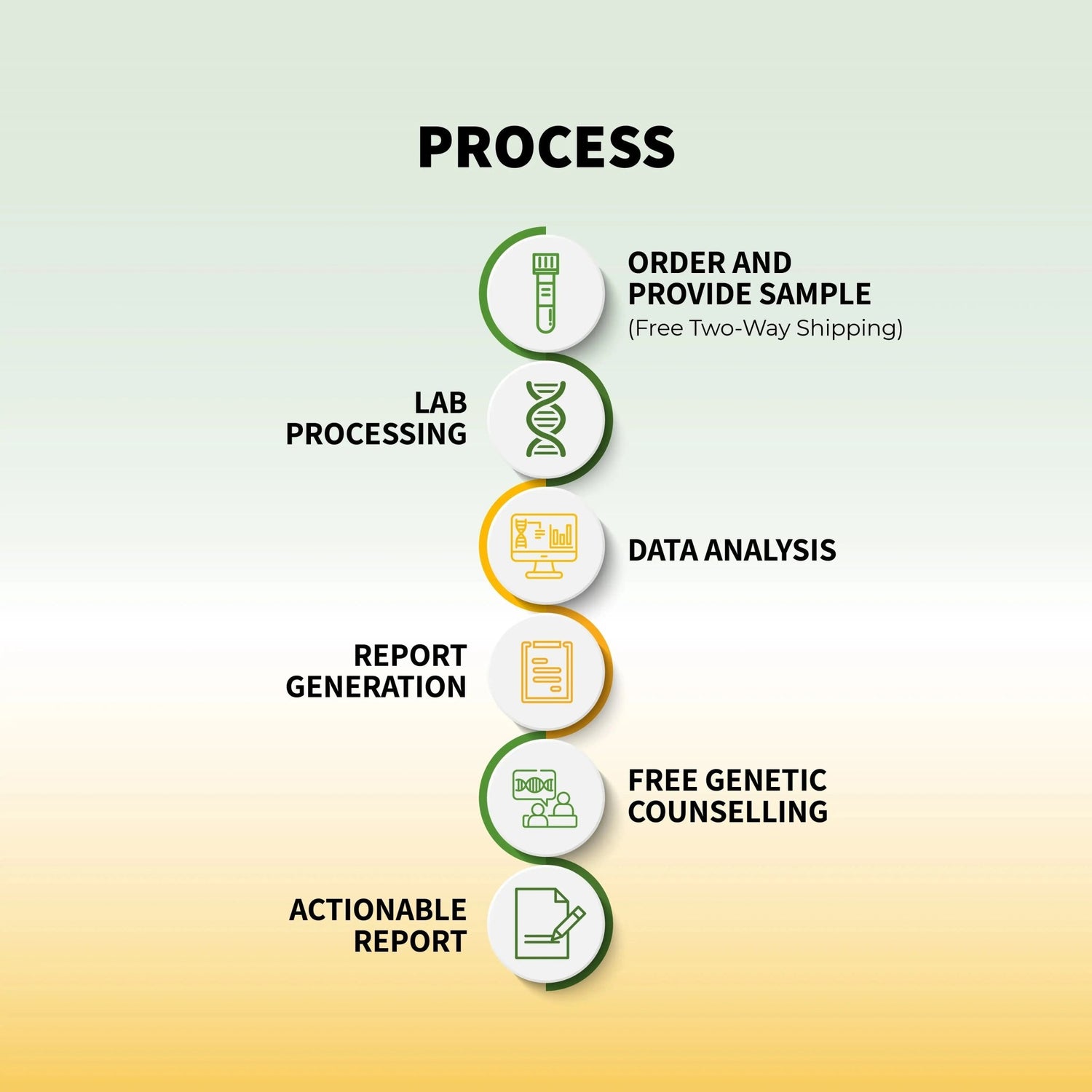
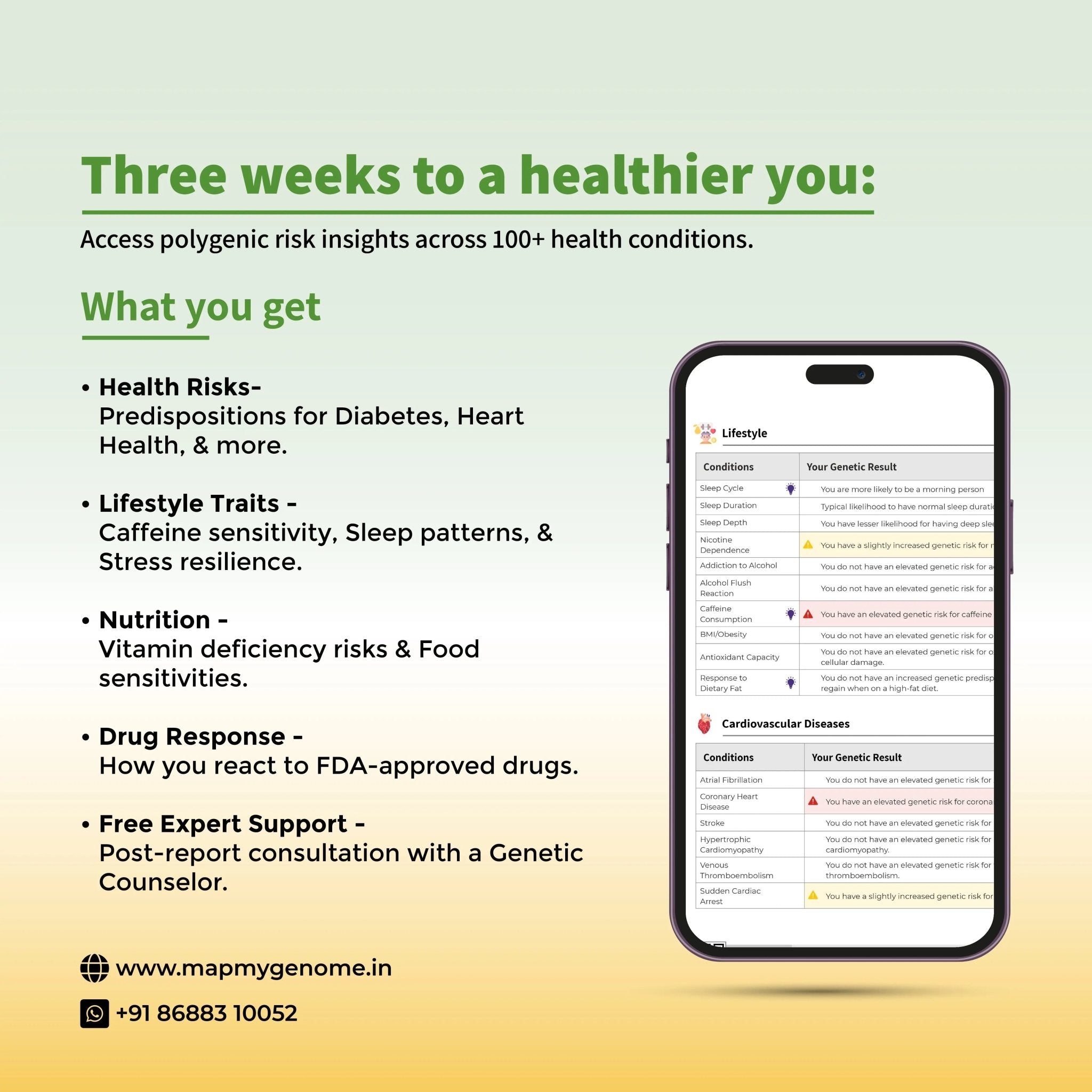
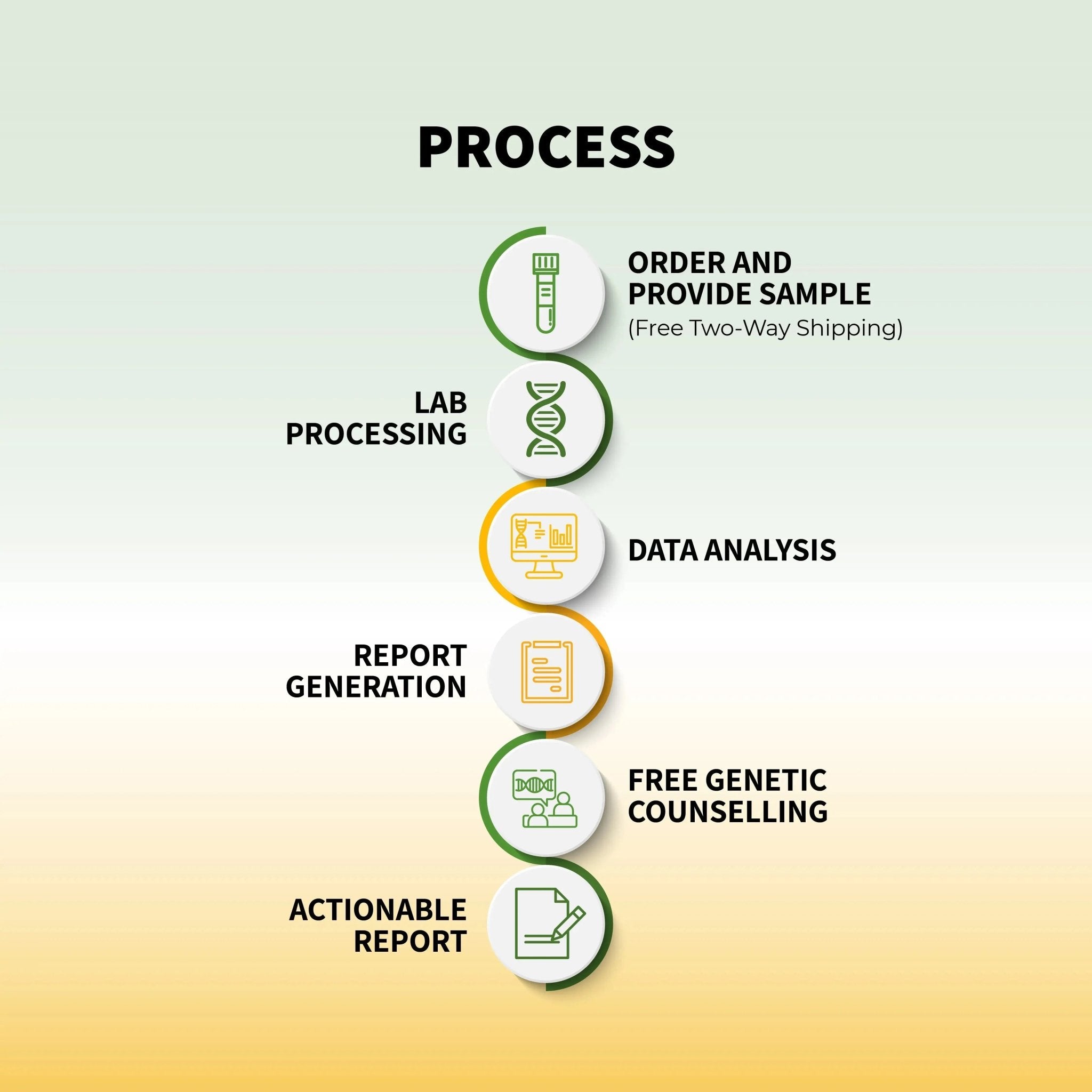
Genomepatri by MapmyGenome reveals your genetic predispositions for weight management, metabolism, nutrition, and fitness — with certified genetic counselling to help you build a personalised, evidence-based plan that works with your biology.