

Arthritis — inflammation of the joints — is one of the most common causes of disability globally, affecting over 180 million people in India alone. Despite its prevalence, arthritis is frequently dismissed as an inevitable part of aging or ignored until significant joint damage has occurred. Recognizing the early signs and symptoms of arthritis is critical — because early intervention can slow progression, preserve joint function, and dramatically improve quality of life.
Types of Arthritis
Osteoarthritis (OA)
The most common form, caused by wear and tear of joint cartilage. Primarily affects weight-bearing joints (knees, hips) and the hands. Risk increases with age, obesity, previous joint injury, and genetic predisposition.
Rheumatoid Arthritis (RA)
An autoimmune condition in which the immune system attacks the synovial lining of joints. Causes symmetric joint inflammation, morning stiffness, and — if untreated — progressive joint destruction. Has significant genetic and environmental components.
Psoriatic Arthritis
Inflammatory arthritis associated with psoriasis. Affects approximately 30% of people with psoriasis. Can affect any joint and may cause significant disability if untreated.
Gout
Caused by uric acid crystal deposition in joints. Presents as sudden, severe joint pain — most commonly in the big toe. Has strong genetic components (SLC2A9, ABCG2 variants affect uric acid metabolism).
Ankylosing Spondylitis
Inflammatory arthritis primarily affecting the spine. Strongly associated with HLA-B27 — present in approximately 90% of affected individuals. Causes progressive spinal stiffness and fusion if untreated.
Early Signs and Symptoms You Should Not Ignore
- Joint pain: Persistent pain in one or more joints, particularly if it's worse in the morning or after rest
- Morning stiffness: Stiffness lasting more than 30 minutes after waking is a hallmark of inflammatory arthritis (RA, psoriatic arthritis, ankylosing spondylitis)
- Joint swelling: Visible swelling, warmth, or redness around a joint
- Reduced range of motion: Difficulty fully bending or straightening a joint
- Fatigue: Unexplained fatigue is common in inflammatory arthritis and often precedes joint symptoms
- Symmetric joint involvement: Pain and swelling in the same joints on both sides of the body is characteristic of RA
- Back pain in young adults: Inflammatory back pain (worse at rest, better with movement) in people under 45 warrants evaluation for ankylosing spondylitis
The Genetics of Arthritis
Genetics plays a significant role in arthritis susceptibility. HLA-DRB1 variants (the "shared epitope") are the strongest genetic risk factors for rheumatoid arthritis. HLA-B27 is strongly associated with ankylosing spondylitis. PTPN22 variants increase risk of multiple autoimmune conditions including RA. For gout, variants in SLC2A9 and ABCG2 affect uric acid excretion and serum uric acid levels. Understanding your genetic arthritis risk allows for earlier monitoring and lifestyle interventions.
FAQs
Is arthritis hereditary?
Yes — most forms of arthritis have significant genetic components. Having a first-degree relative with RA approximately doubles your risk. For ankylosing spondylitis, HLA-B27 testing can identify those at elevated risk. Genetic testing can quantify your inherited arthritis risk and guide preventive monitoring.
Can arthritis be prevented?
While genetic predisposition cannot be changed, lifestyle factors significantly influence arthritis risk and progression. Maintaining a healthy weight reduces stress on weight-bearing joints. Regular low-impact exercise maintains joint health. Anti-inflammatory dietary patterns (Mediterranean diet) may reduce inflammatory arthritis risk. Early treatment of inflammatory arthritis prevents joint destruction.
Know Your Genetic Autoimmune and Joint Health Risk
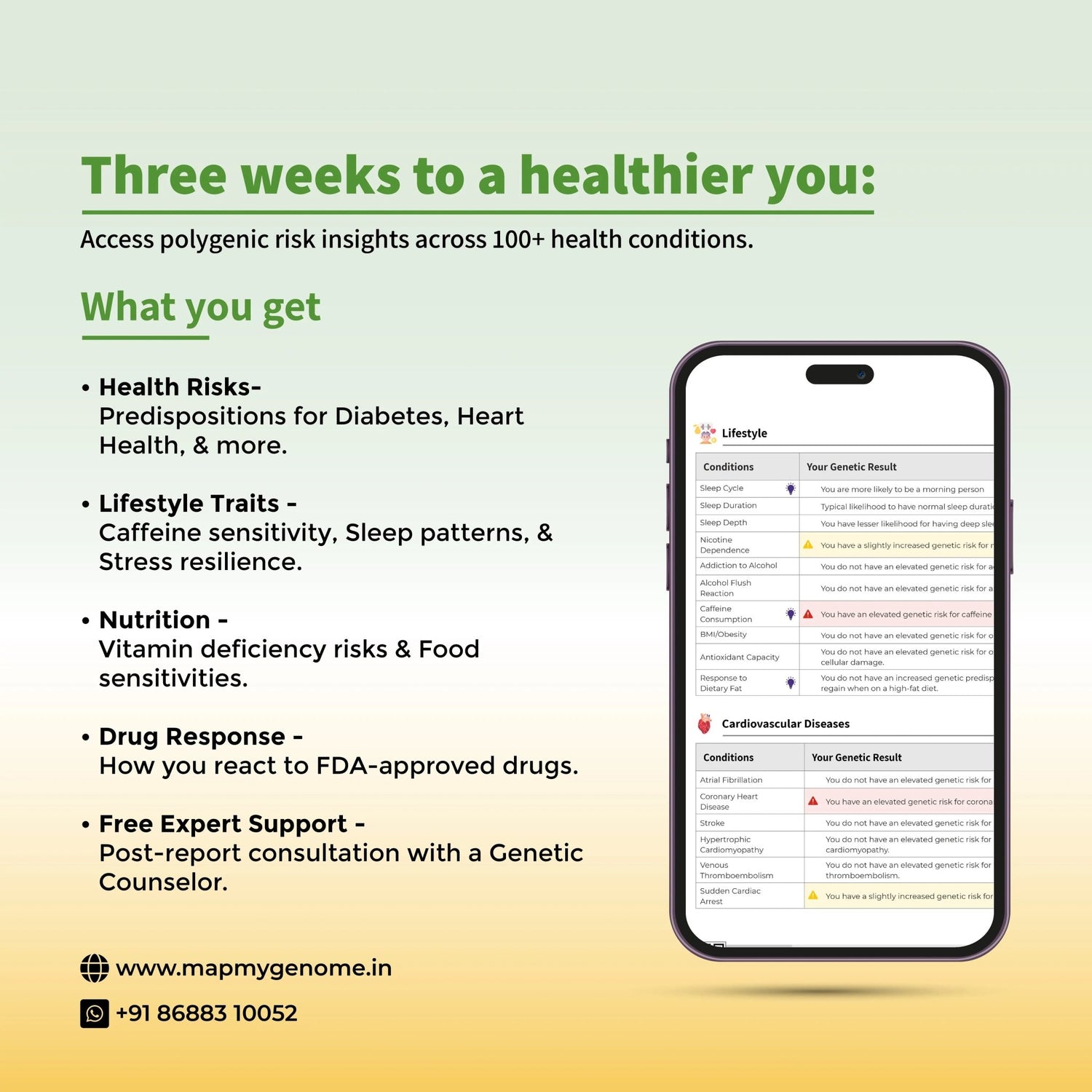
Genomepatri by MapmyGenome includes genetic insights into autoimmune conditions including rheumatoid arthritis, ankylosing spondylitis, and gout — backed by NABL-certified labs and expert genetic counsellors who help you build a personalised prevention plan.