Know your genetic makeup – why beauty is beyond skin deep
Unless you are Rapunzel, live in a tower and stay away from the outside world, odds are that your skin and hair are subject to harsh environmental stress and damage every day. It takes more than an overnight cream and almond milk to get healthy skin and hair.
Genetics has a profound effect on traits such as skin pigmentation, freckling, sun sensitivity, keratosis and acne development. A majority of these conditions manifest during puberty and/or adulthood, and sometimes pre-menopause. Today, the young and the old — especially women — are constantly on the lookout for quick fixes and treatment options for dermatological issues.
Skin disorders have a complex physiology and broad spectrum of symptoms. As multiple factors such as microbial action, overactive glands and hormones contribute to one's skin profile, the genetic component generates a lot of curiosity. Understanding the complete aetiology of a condition will help in reducing its severity through customised therapy and long-lasting management of symptoms.
Getting the right skincare regime in place is not rocket science. But there is some science in it. Read on to find out!
Blemish Bloopers
Acne, flaring, rosacea and blemished skin are major skin concerns for many. Acne vulgaris is triggered by higher androgen receptor (AR) activity — the AR genes are regulators of sebum production and comedogenesis. In such cases, therapy that targets these molecules would be more effective than topical creams or oral antibiotics. Androgen receptor molecules are also involved in hirsutism (excess facial and/or body hair).
Tumour Necrosis Factor (TNF) genes mediate inflammation, one of the primary responses in acne development. Lesions formed during acne contain higher deposits of TNF transcripts, indicating a strong association with the mechanism.
Colour Me Pretty
Skin pigmentation and melanin index: Individuals from different ethnicities have been studied to elucidate the genetic determinants for hair and eye colour. The blue eyes of the Irish, darker visage of Africans and the mixed complexion of South Asians are classic examples of natural selection and genetic variance. The melanin index of an individual is determined by key genes such as SLCA24A5, MC1R (melanocortin receptor) and TYR (tyrosinase) genes.
Talking Tresses
Hair morphology: You get curly, wavy or straight hair from your parents — but you knew that already. The texture and sheen of your hair is also deeply linked with your DNA and underlying physiology. The trichohyalin (TCHH) gene maintains the structure and strength of the hair follicle's sheath and determines hair curliness.
Hair loss (alopecia): That baldness is genetic is a well-known fact. Surprisingly, maternal inheritance is an important factor for alopecia, due to X chromosome DNA.
Guess My Age
The skin's outermost layer, the epidermis, and deeper layers undergo major changes during different biological phases in a person's life. Age spots, laugh lines, wrinkles, and sagging around the jawline are classic signs of premature ageing. Multiple biological systems work in accord to replenish lost vitamins, minerals and cells in the body. The body's response to external stimuli (sun damage and ageing) and internal changes (stretch marks, love handles, and cellulite) is controlled by genes that execute functions such as:
- Production of free radicals and their neutralisation
- Maintenance of skin elasticity and suppleness
- Hydration of the skin
- Anti-glycation in the skin (excess sugar in the body can cause skin damage)
- Vitamin D absorption
- Omega-3 and Omega-6 fatty acid metabolism
Scientists are coming up with novel tests to predict your skin profile, from sunburn to age spots. A visit to your dermatologist can help you learn more about how skin and related organ systems function through genes and protein signalling. A combination of informed testing, one-to-one consulting and effective products can get you that flawless look.
Your Skin, Hair & Ageing — Written in Your DNA
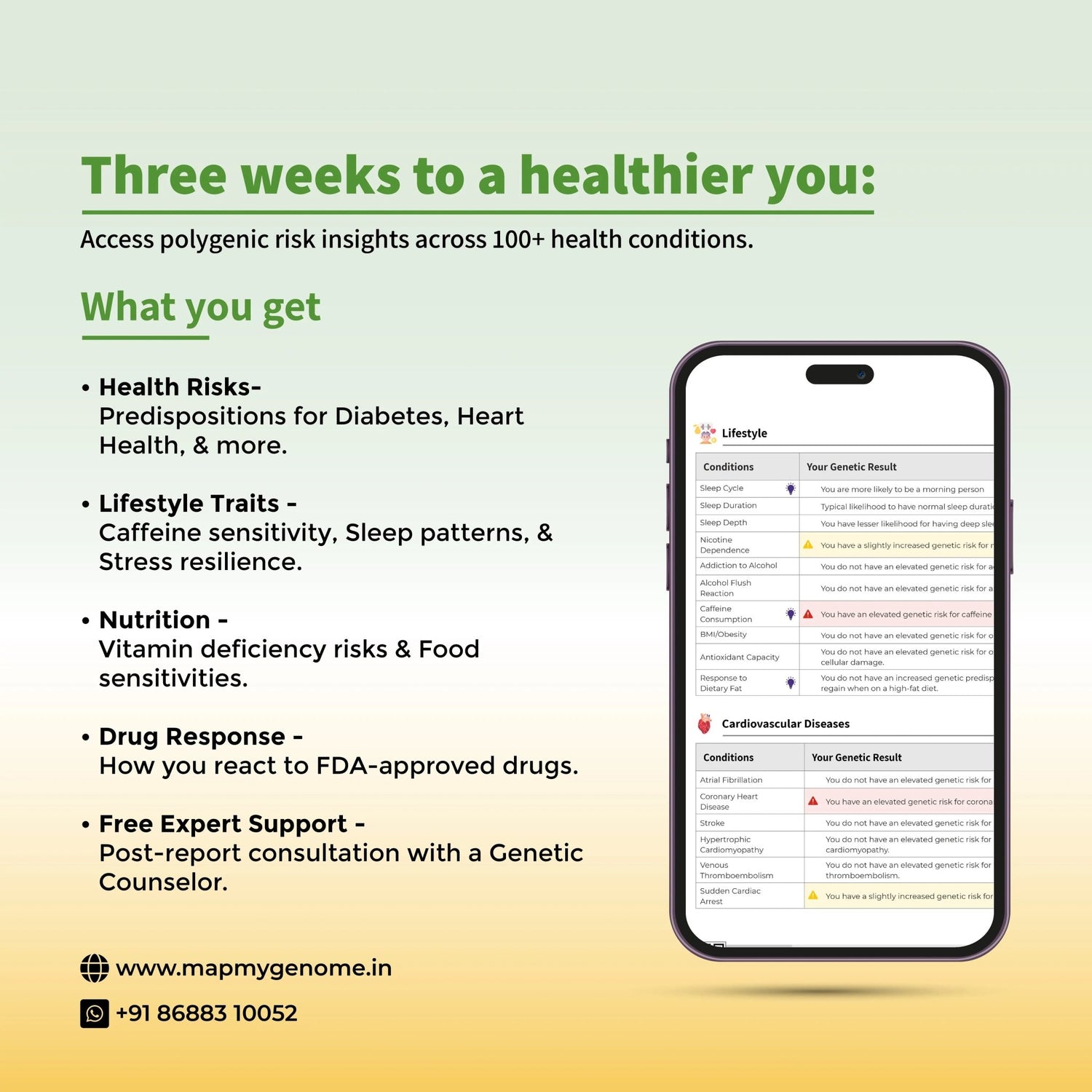
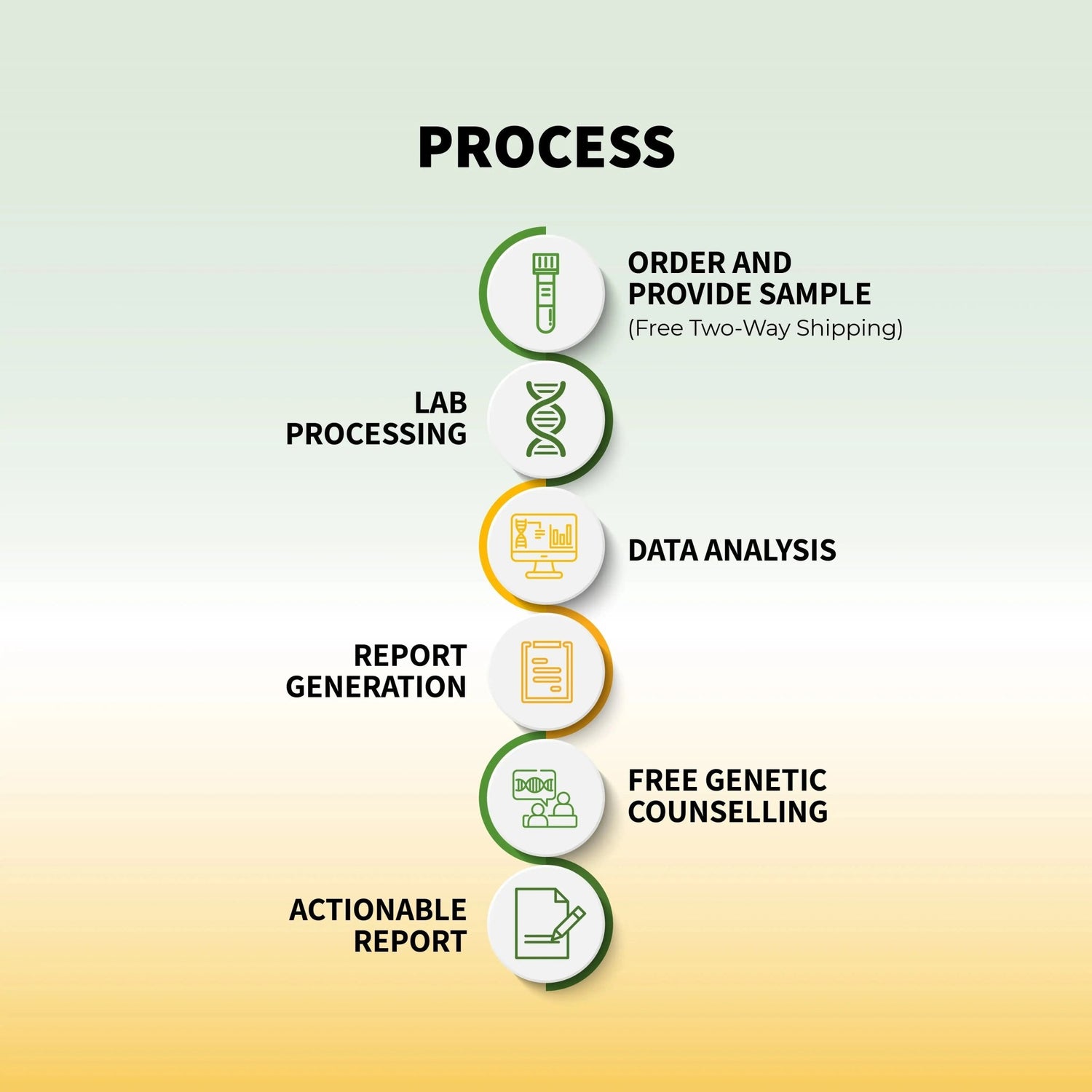
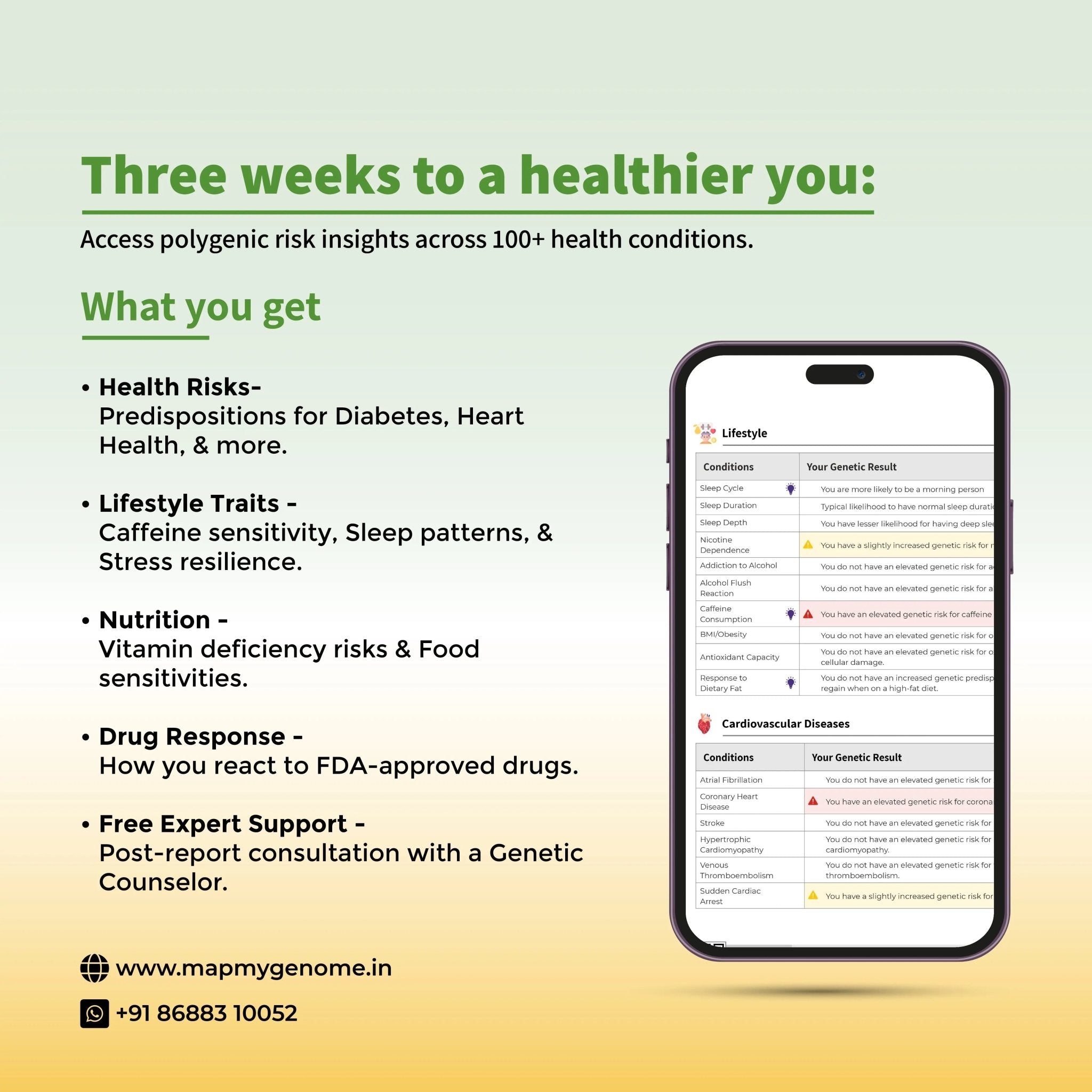
Genomepatri by MapmyGenome reveals your genetic predispositions for skin health, pigmentation, hair traits, and ageing markers — so your skincare and wellness routine can be truly personalised to your biology.