

Beyond BRCA and the Angelina Jolie Effect
On May 14, 2013, Angelina Jolie wrote a piece in the New York Times titled ‘My Medical Choice’ — describing her experience of learning about a change in the BRCA1 gene that made her more susceptible to breast and ovarian cancers, and her decision to undergo risk-reducing surgeries. This brought attention to the BRCA gene and, along with it, a large pool of women worried about hereditary cancer risk. In the field of cancer genetics, we fondly call this the Angelina Jolie Effect.
BRCA1 and BRCA2: What You Need to Know
BRCA1 and BRCA2 are the two genes most commonly associated with hereditary breast and ovarian cancers. About 1 in 400 people may have a disease-causing mutation in one of these genes. The lifetime risk of developing breast cancer in women with a BRCA1 or BRCA2 mutation can be up to 60–80%, and the lifetime risk of ovarian cancer can be up to 20–45%. There is also a small increased risk for pancreatic cancer, prostate cancer, and melanoma.
Beyond BRCA: The New Players in Cancer Genetics
BRCA1 and BRCA2 are not the only genes associated with hereditary cancer. Other important genes include:
High-risk genes — PALB2, PTEN, TP53, CDH1, STK11 (lifetime breast cancer risk over 50%)
Moderate-risk genes — ATM, CHEK2 (lifetime risk up to 30–40%)
Lynch Syndrome genes — MLH1, MSH2, MSH6, PMS2, EPCAM (associated with colorectal, endometrial, ovarian, and other cancers)
Red Flags for Hereditary Cancer
Early onset cancers, under age 50
Personal or family history of ovarian cancer
Males with breast cancer
Multiple cancer diagnoses or bilateral cancers in the same individual
Multiple generations affected with cancers
Rare types of cancers (adrenal cortical cancer, retinoblastoma)
Yes, Males Can Have Hereditary Cancer Risk Too
Both males and females are equally at risk of inheriting changes in BRCA genes from a parent. Males who inherit mutations in BRCA1 or BRCA2 have an increased lifetime risk of developing breast cancers (up to 5–10% compared against less than 1% population risk), as well as prostate and pancreatic cancers. It is strongly recommended that males with a personal or family history of cancers suspicious for hereditary cancer syndromes seek genetic counselling.
The Benefits of Genetic Testing
Ability to predict the risk of cancers and types of cancers more accurately
Personalised screening and management recommendations
Help to make decisions about ongoing treatments
Information for other at-risk family members
Go Beyond BRCA — Know Your Full Hereditary Cancer Risk
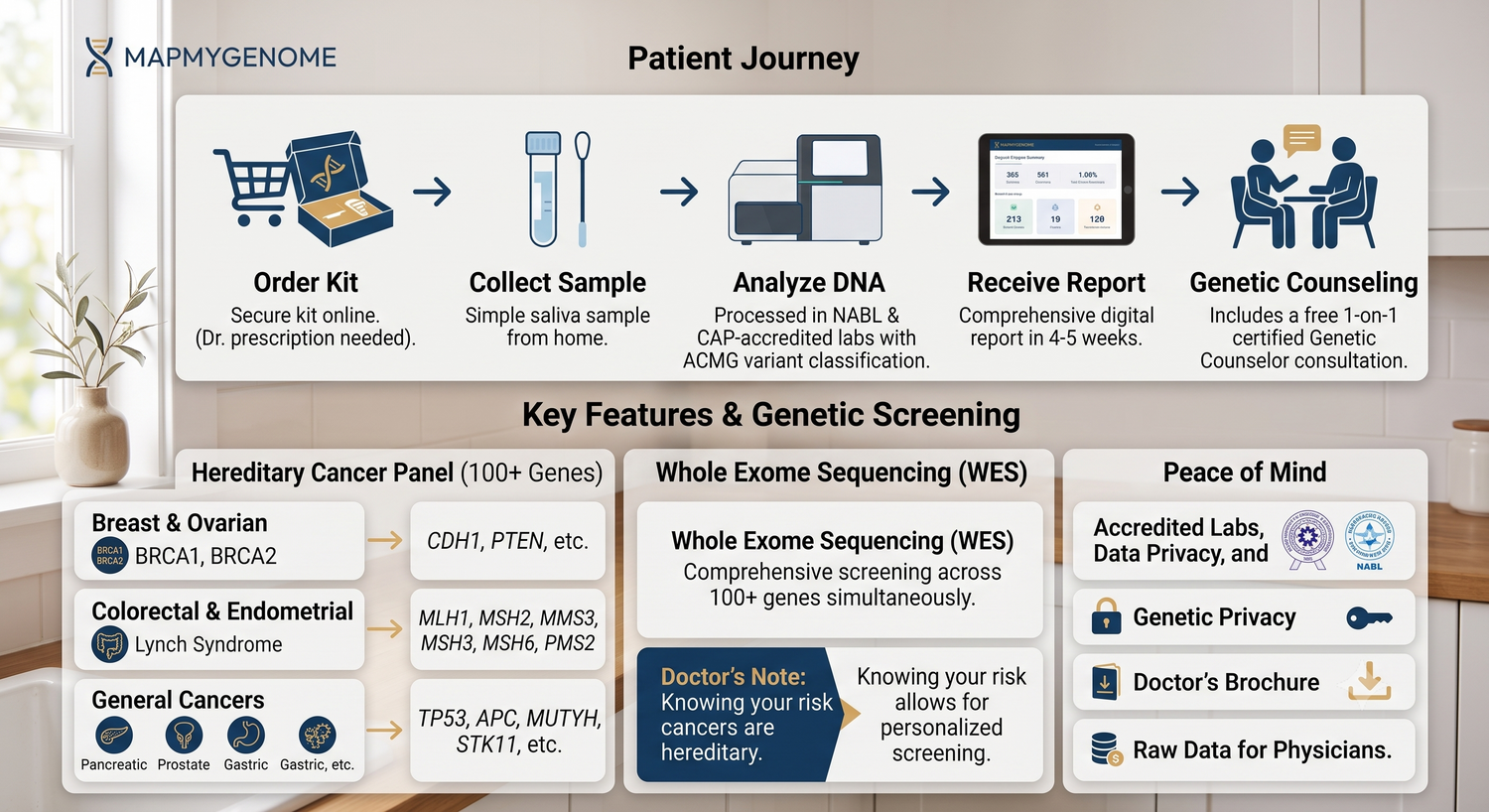
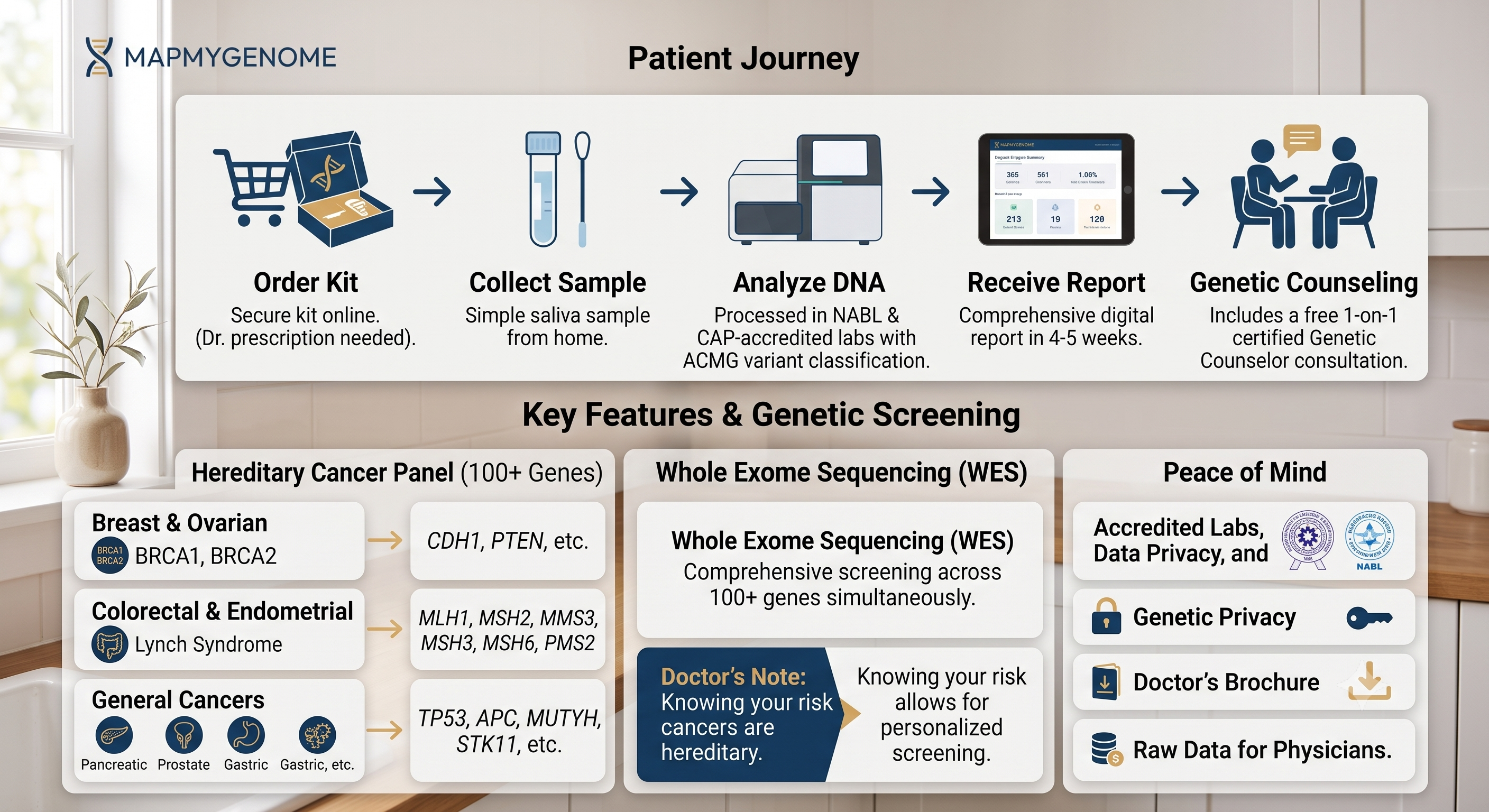
Oncomap by MapmyGenome screens for hereditary risk across BRCA1/2 and dozens of other cancer predisposition genes — with certified genetic counselling from India’s most experienced team. CAP & NABL-accredited laboratory.