

Exercise Regimes for Senior Citizens and Ageing Adults
Global population reports have the final verdict — we are now amidst a rapidly ageing population. India is home to one of the largest ageing populations globally. Medical science has worked wonders and drastically increased the average individual’s lifespan. However, this calls attention to the fact that a major chunk of the population consists of older adults who are living with a range of health conditions that limit, and in some cases prevent them from living their lives to the fullest.
For a few lucky folks, age is truly just a number — they retain their fitness levels for longer. For the rest, plenty of physiological changes greet them in every decade. While there is no universal age for when one sees a considerable drop in functional fitness and strength, medical experts agree that for most men and women, physical fitness peaks during the second and third decades of life.
Why Exercise Matters More as You Age
Maintains muscle mass and bone density, reducing risk of falls and fractures
Improves cardiovascular health and reduces risk of heart disease, diabetes, and stroke
Supports cognitive function and reduces risk of dementia
Improves mood, sleep quality, and overall quality of life
Helps manage chronic conditions like arthritis, hypertension, and osteoporosis
Recommended Exercise Types for Seniors
Aerobic exercise — walking, swimming, cycling; at least 150 minutes of moderate intensity per week
Strength training — resistance bands, light weights, bodyweight exercises; at least 2 days per week
Balance and flexibility — yoga, tai chi, stretching; helps prevent falls
Low-impact options — aqua aerobics, chair exercises for those with joint or mobility limitations
The Genetic Angle
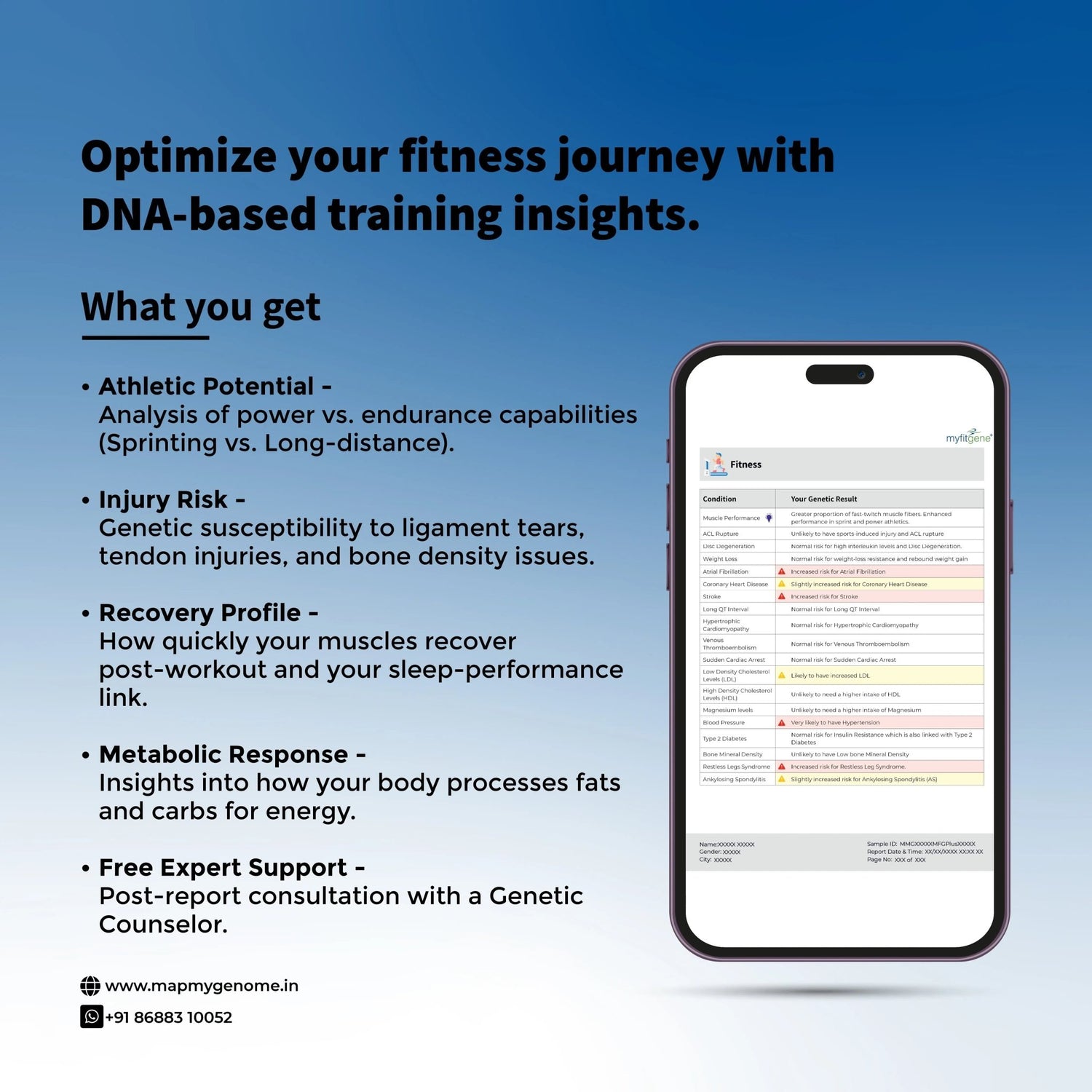
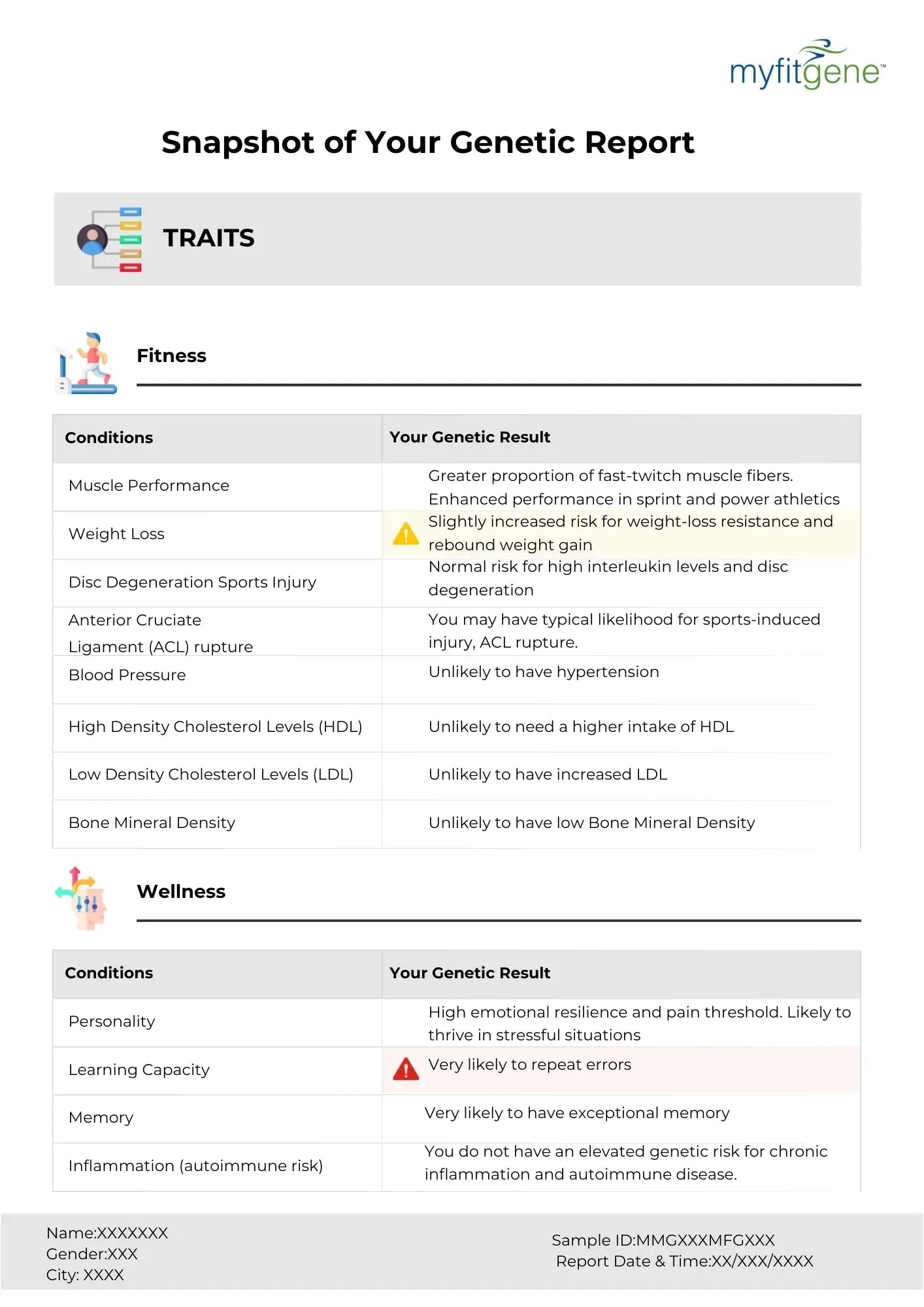
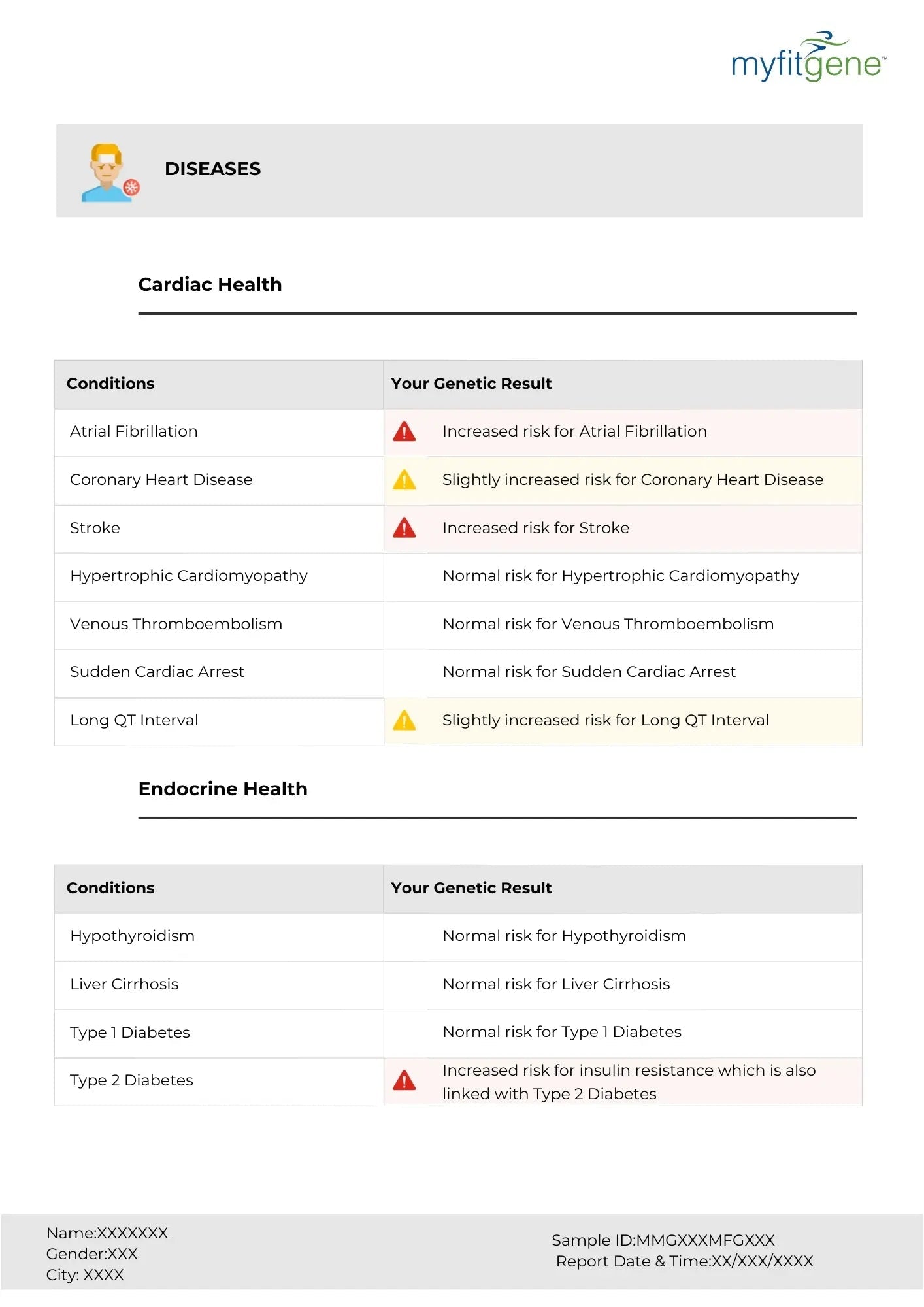
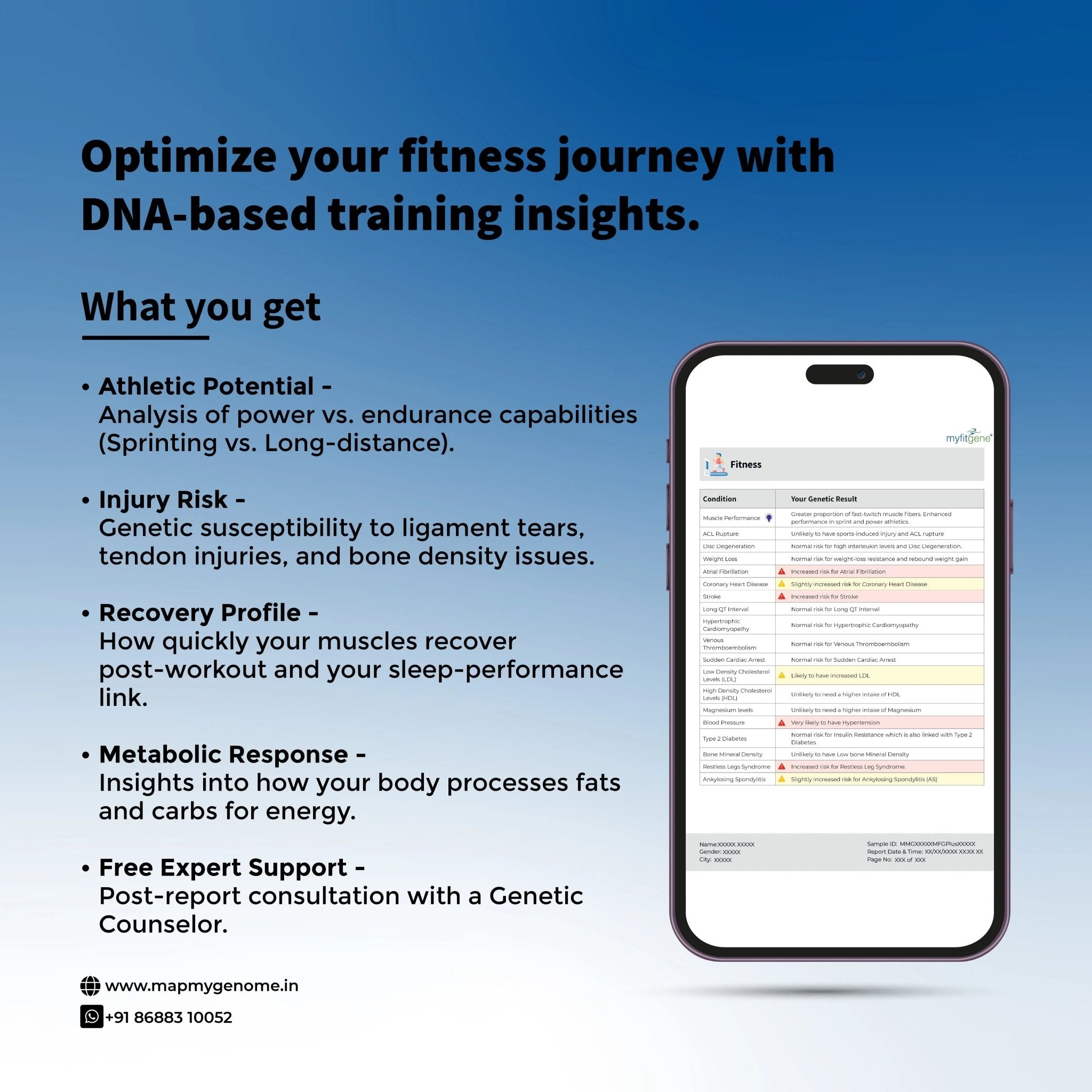
Your genetic profile influences how you respond to exercise, your natural muscle fibre composition, your injury risk, and your recovery capacity. Understanding your genetic fitness profile can help you and your physician choose the exercise types and intensities that are most effective and safest for your unique biology — at any age.
Exercise Smarter at Every Age — Know Your Genetic Fitness Profile
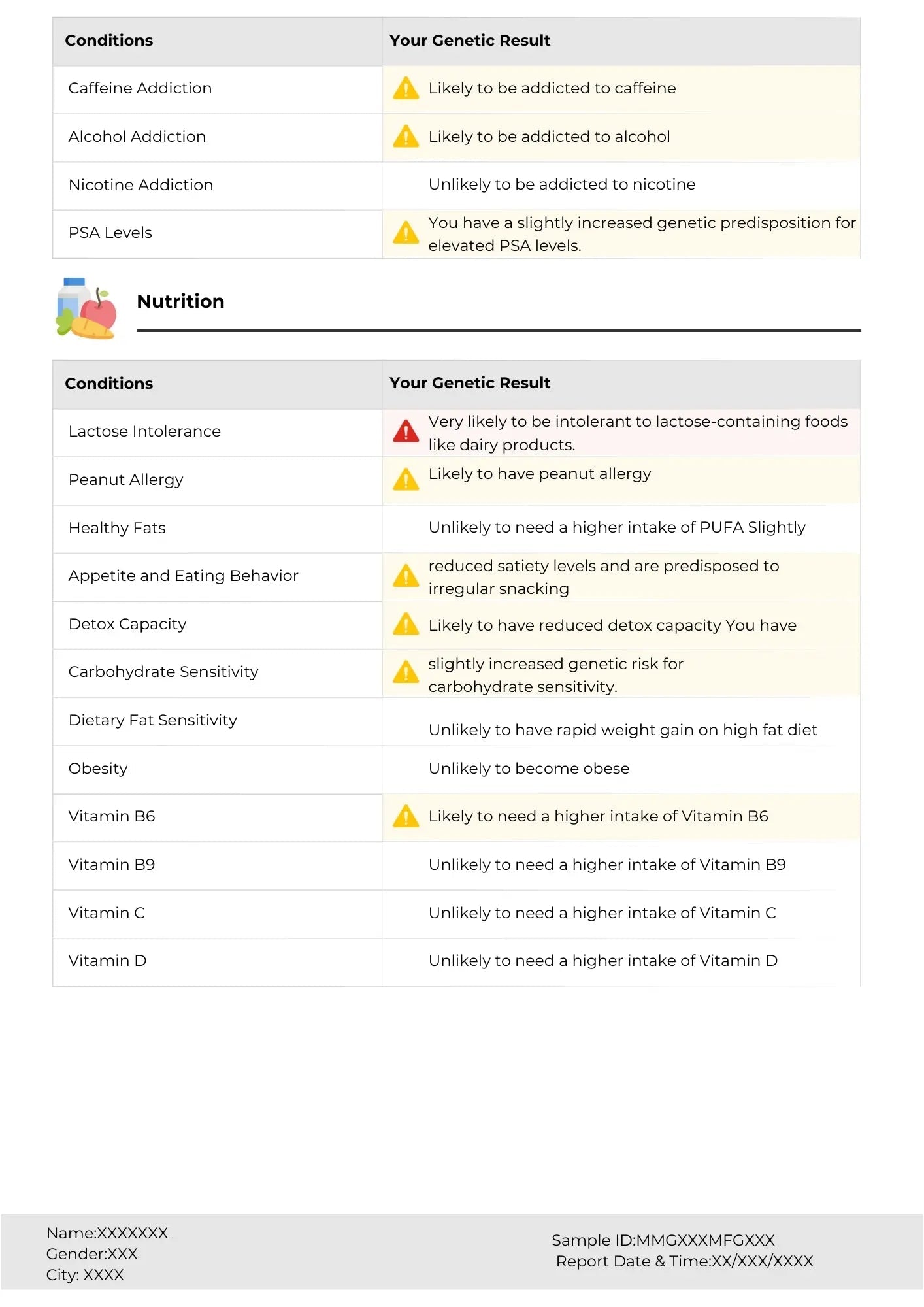
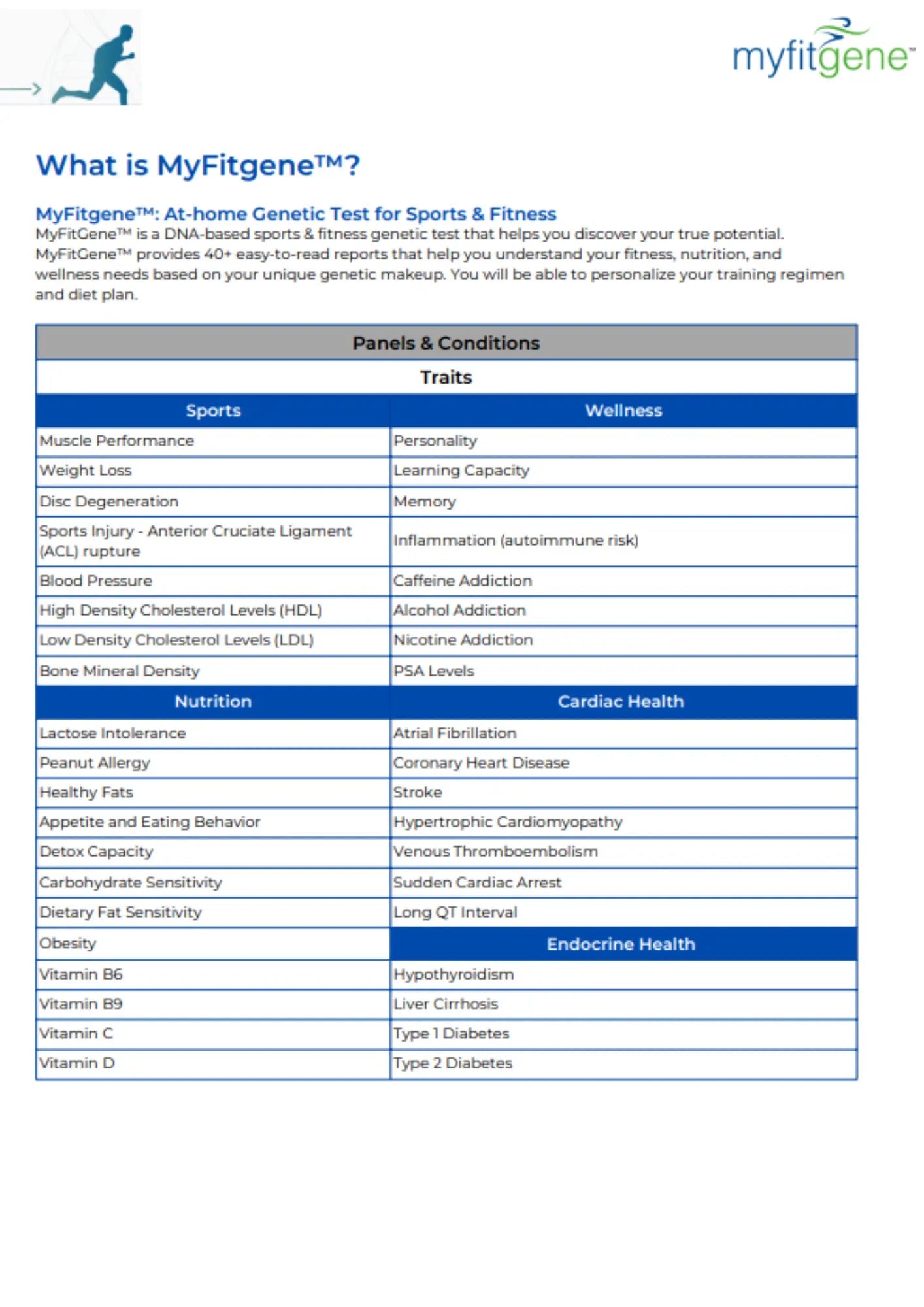
Myfitgene by MapmyGenome reveals your genetic predispositions for fitness, endurance, strength, injury risk, and recovery — helping you choose the exercise types that are most effective for your unique biology. Genomepatri covers 100+ health and lifestyle traits.