

Rare diseases are, by definition, uncommon — but collectively they affect hundreds of millions of people worldwide. In India, an estimated 70 million people live with a rare disease, and the vast majority go undiagnosed or misdiagnosed for years. Genetic testing is transforming this landscape, offering the possibility of early, accurate diagnosis — and with it, the chance for earlier intervention and better outcomes.
What Are Rare Diseases?
A disease is classified as "rare" when it affects fewer than 1 in 2,000 people (EU definition) or fewer than 200,000 people in total (US definition). There are over 7,000 known rare diseases, and approximately 80% have a genetic origin. Many are serious, chronic, and life-threatening — and most have limited or no approved treatments.
The Diagnostic Odyssey
People with rare diseases often experience what's called a "diagnostic odyssey" — years of consultations with multiple specialists, misdiagnoses, and inappropriate treatments before a correct diagnosis is reached. The average time to diagnosis for a rare disease is 4–7 years. During this time, patients may receive treatments for the wrong condition, experience disease progression, and suffer significant psychological and financial burden.
How Genetic Testing Helps
Whole Exome Sequencing (WES)
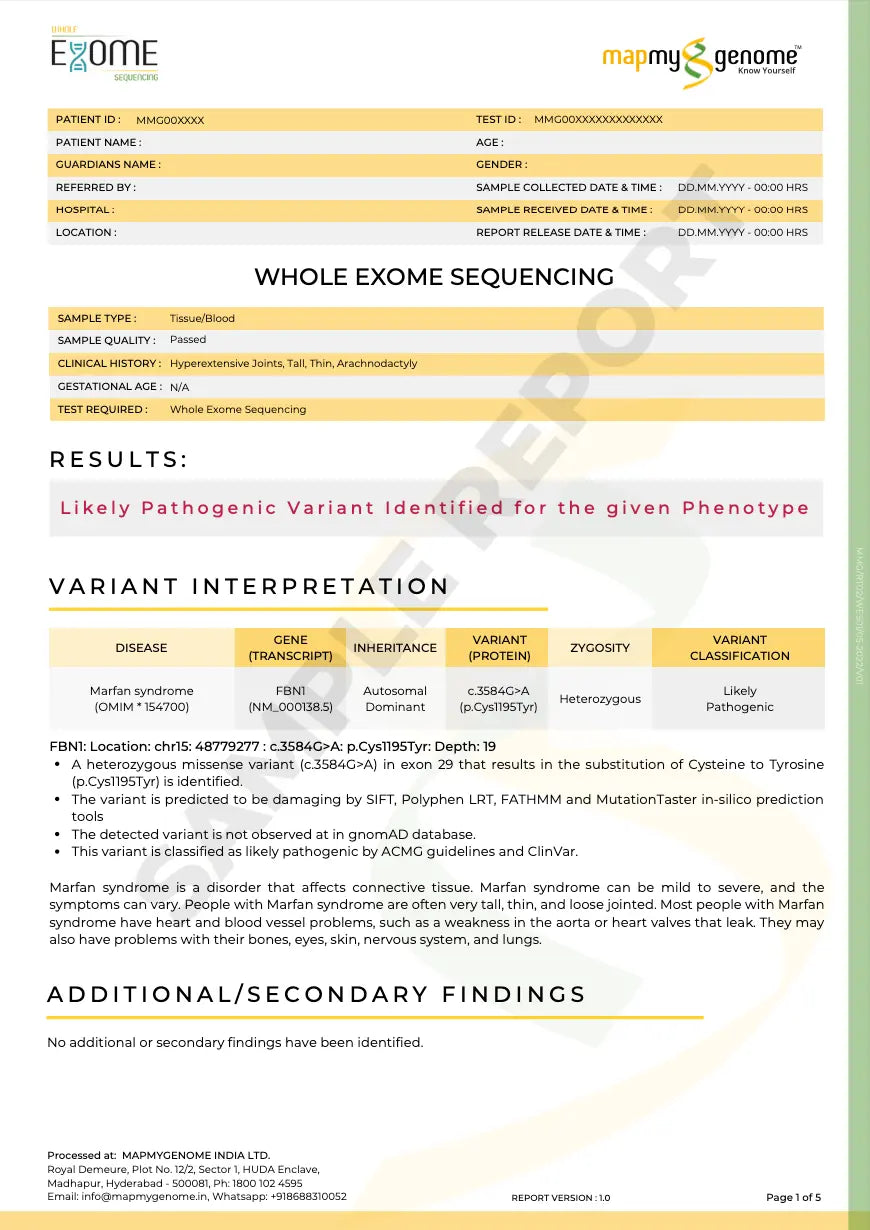
WES analyzes all protein-coding regions of the genome — approximately 1–2% of the total genome, but containing ~85% of known disease-causing mutations. It's the most widely used genetic test for diagnosing rare diseases, with a diagnostic yield of 25–40% in patients with suspected genetic conditions.
Whole Genome Sequencing (WGS)
WGS analyzes the entire genome, including non-coding regions. It has a higher diagnostic yield than WES for complex cases and is increasingly used when WES is inconclusive.
Targeted Gene Panels
For conditions with a known genetic basis, targeted panels analyze specific genes associated with that condition. They're faster and more cost-effective than WES or WGS for specific clinical presentations.
Chromosomal Microarray
Detects copy number variants (CNVs) — deletions or duplications of chromosomal segments — that are too small to be seen on standard karyotyping but can cause significant developmental and health conditions.
The Impact of Early Diagnosis
Early genetic diagnosis of a rare disease can enable targeted treatment where available, avoidance of harmful treatments for the wrong diagnosis, access to clinical trials and emerging therapies, informed family planning decisions, and connection to patient communities and support networks.
FAQs
How do I know if genetic testing is right for my child's symptoms?
If your child has unexplained developmental delay, multiple congenital anomalies, or symptoms that don't fit a common diagnosis, genetic testing — particularly WES — is worth discussing with a geneticist or genetic counsellor.
Is genetic testing for rare diseases available in India?
Yes. MapmyGenome offers Whole Exome Sequencing and other genetic testing options for rare disease diagnosis, backed by NABL-certified labs and expert genetic counsellors.
End the Diagnostic Odyssey — Get Answers from Your DNA
MapmyGenome's Whole Exome Sequencing and genetic testing panels help identify the genetic cause of rare and undiagnosed conditions — backed by NABL-certified labs and expert genetic counsellors who guide you through every step of the diagnostic journey.