

Your gut is constantly sending you signals. The challenge is knowing how to read them — and what to do about each one. Here's a practical action plan for the most common signs of an unhealthy gut.
Warning Sign 1: Chronic Bloating and Gas
What it means: An overgrowth of gas-producing bacteria, poor motility, or food intolerances may be disrupting your gut ecosystem.
Action plan: Reduce ultra-processed foods and refined sugar. Introduce fiber gradually to avoid overwhelming your gut bacteria. Add fermented foods (curd, idli, kefir) to rebuild beneficial bacteria. Consider a gut microbiome test to identify specific imbalances.
Warning Sign 2: Irregular Bowel Movements
What it means: Chronic constipation, diarrhea, or alternating between the two often signals dysbiosis (microbial imbalance) or low fiber intake.
Action plan: Increase water intake to 8–10 glasses daily. Eat a diverse range of plant foods (aim for 30+ different plants per week). Manage stress through regular movement and adequate sleep. Avoid unnecessary antibiotic use.
Warning Sign 3: Persistent Fatigue and Brain Fog
What it means: The gut-brain axis means microbial imbalances directly affect neurotransmitter production, including serotonin and dopamine. Poor gut health can also impair nutrient absorption.
Action plan: Prioritize sleep (7–9 hours). Address potential nutrient deficiencies (B12, iron, vitamin D). Add omega-3 rich foods (fatty fish, walnuts, flaxseeds). Consider a gut microbiome test to identify root causes.
Warning Sign 4: Food Intolerances That Keep Growing
What it means: A compromised gut lining (leaky gut) and reduced microbiome diversity can cause your body to react to foods it previously tolerated.
Action plan: Temporarily eliminate the most reactive foods while healing the gut lining. Add gut-lining repair nutrients: L-glutamine, zinc, vitamin D, and turmeric. Reintroduce foods gradually once symptoms improve.
Warning Sign 5: Frequent Illness or Slow Recovery
What it means: About 70% of your immune system lives in your gut. A disrupted microbiome weakens your immune defenses.
Action plan: Increase prebiotic foods (onions, garlic, oats, bananas) to feed beneficial bacteria. Add probiotic-rich fermented foods. Reduce chronic stress, which suppresses immune function. Get adequate sleep.
Warning Sign 6: Skin Conditions (Acne, Eczema, Rosacea)
What it means: The gut-skin axis means gut inflammation often manifests on the skin. Inflammatory molecules from a leaky gut can trigger immune reactions that appear as skin flare-ups.
Action plan: Reduce inflammatory foods (refined sugar, alcohol, processed oils). Increase anti-inflammatory foods (leafy greens, berries, omega-3 rich fish). Support gut lining repair with zinc and vitamin D.
The Foundation: Know Your Gut
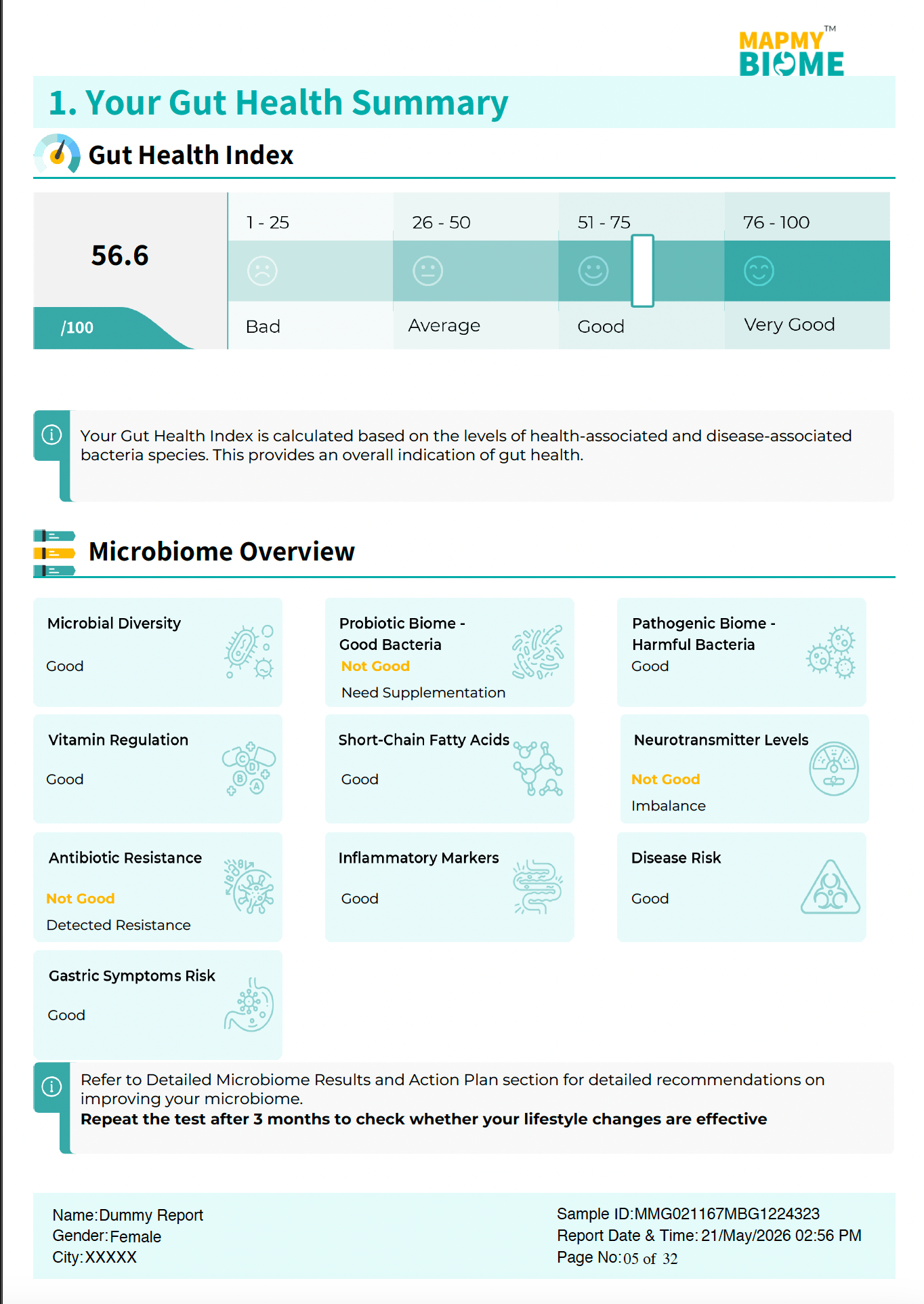
Generic advice can only take you so far. Because every person's microbiome is unique, the most effective action plan is one built around your specific gut profile — which bacteria are present, which are missing, and what your gut needs to restore balance.
Build Your Personalised Gut Action Plan
MapmyBiome uses advanced shotgun sequencing to map your unique gut microbiome — identifying imbalances, missing bacterial communities, and giving you personalised food, probiotic, and lifestyle recommendations to restore digestive health.