

Miss Keerti was 24 when her family first noticed something had changed. She'd stopped returning calls, skipped meals for days at a stretch, and struggled to get out of bed even on weekends she used to look forward to. For months, everyone around her assumed it was "just a phase" or "just her personality" — she'd always been the quiet, sensitive one in the family. It wasn't until a doctor sat her down and asked about her family history that a different picture started to emerge: an aunt with a similar pattern in her twenties, a grandparent who was "never quite the same" after a difficult year. Miss Keerti was eventually diagnosed with major depressive disorder.
Her story raises the question at the heart of mental health science: was this written into her genes, or was it something that happened to her? The honest answer is — both. And understanding how nature and nurture actually work together, rather than compete, is what makes early identification and prevention possible.
What Nature Contributes
Mental health conditions rarely come from a single "depression gene" or "anxiety gene." Instead, they're influenced by many genetic variants working together, each nudging risk up or down slightly. Some of the better-studied examples include:
- Serotonin transporter gene (SLC6A4) — affects how serotonin, a key mood-regulating chemical, is recycled in the brain. Certain variants are linked to higher sensitivity to stress.
- COMT gene — influences how quickly the brain clears dopamine, which affects stress resilience and emotional regulation.
- BDNF gene — involved in the growth and repair of neurons; some variants are associated with reduced stress resilience.
Studies of twins and families consistently show that mood and anxiety disorders have a heritable component — first-degree relatives of someone with depression have a meaningfully higher lifetime risk than the general population. This is likely what was showing up in Miss Keerti's family history: not a guarantee, but a predisposition passed down.
What Nurture Contributes
Genetics loads the gun, but environment often pulls the trigger — and for mental health, "environment" covers more ground than most people expect:
- Early life experiences — childhood stress, trauma, or instability can permanently shape how the stress-response system develops.
- Chronic stress and sleep — poor sleep and prolonged stress don't just feel bad, they measurably alter cortisol regulation and neurotransmitter balance over time.
- Diet and the gut-brain axis — the gut produces a large share of the body's serotonin, and emerging research links gut microbiome composition to mood and anxiety symptoms.
- Social support — isolation is one of the most consistently identified risk multipliers across mood disorders, while strong social connection is protective even in genetically predisposed individuals.
For Miss Keerti, a demanding new job, a recent breakup, and a habit of skipping meals and sleep during stressful weeks likely combined with her underlying predisposition to tip things from "vulnerable" to "symptomatic."
Why It's Never Just One
This is the part most people miss: genes don't determine outcomes on their own — they determine sensitivity. Someone with a genetic predisposition toward stress sensitivity might go their whole life without a mood disorder if their environment is stable and supportive. Someone with the same predisposition who faces chronic stress, poor sleep, or trauma may develop symptoms much more easily than someone without that genetic background facing the same circumstances.
This gene-environment interaction is why two siblings raised in the same house can have completely different mental health outcomes, and why the same stressful life event can derail one person and barely register for another.
Back to Miss Keerti
Knowing her family history earlier wouldn't have prevented her depression outright — but it could have changed the timeline. A genetic predisposition profile could have flagged her elevated sensitivity to stress years before symptoms appeared, prompting earlier attention to sleep, stress management, and support systems, and faster recognition of symptoms when they did show up, rather than months of "it's just a phase."
That's the real value of understanding the genetic link in mental health: not fatalism, but foresight — knowing where your starting sensitivity is, so environment and lifestyle choices can be adjusted accordingly.
Understand the Genetic Side of Your Mental Health
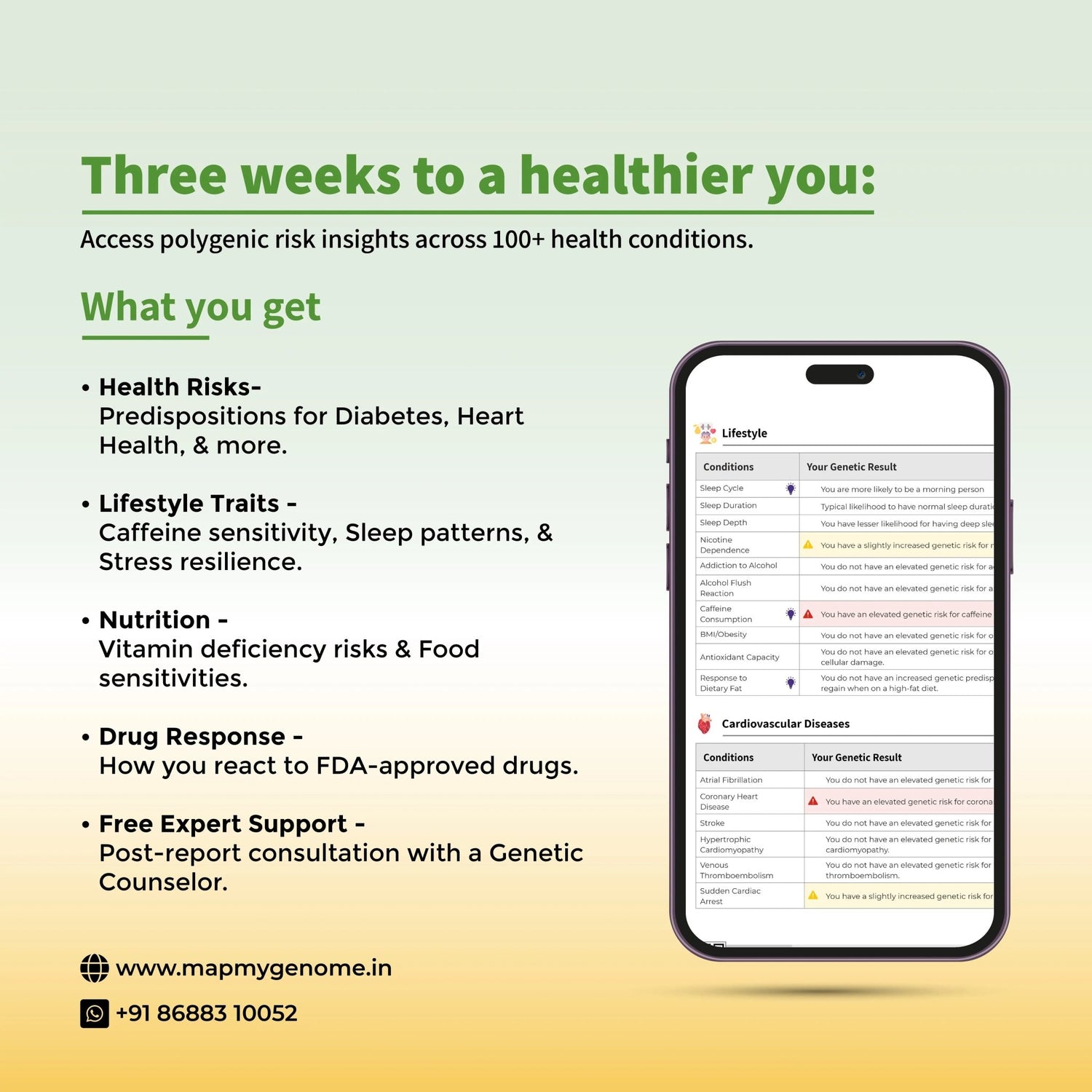
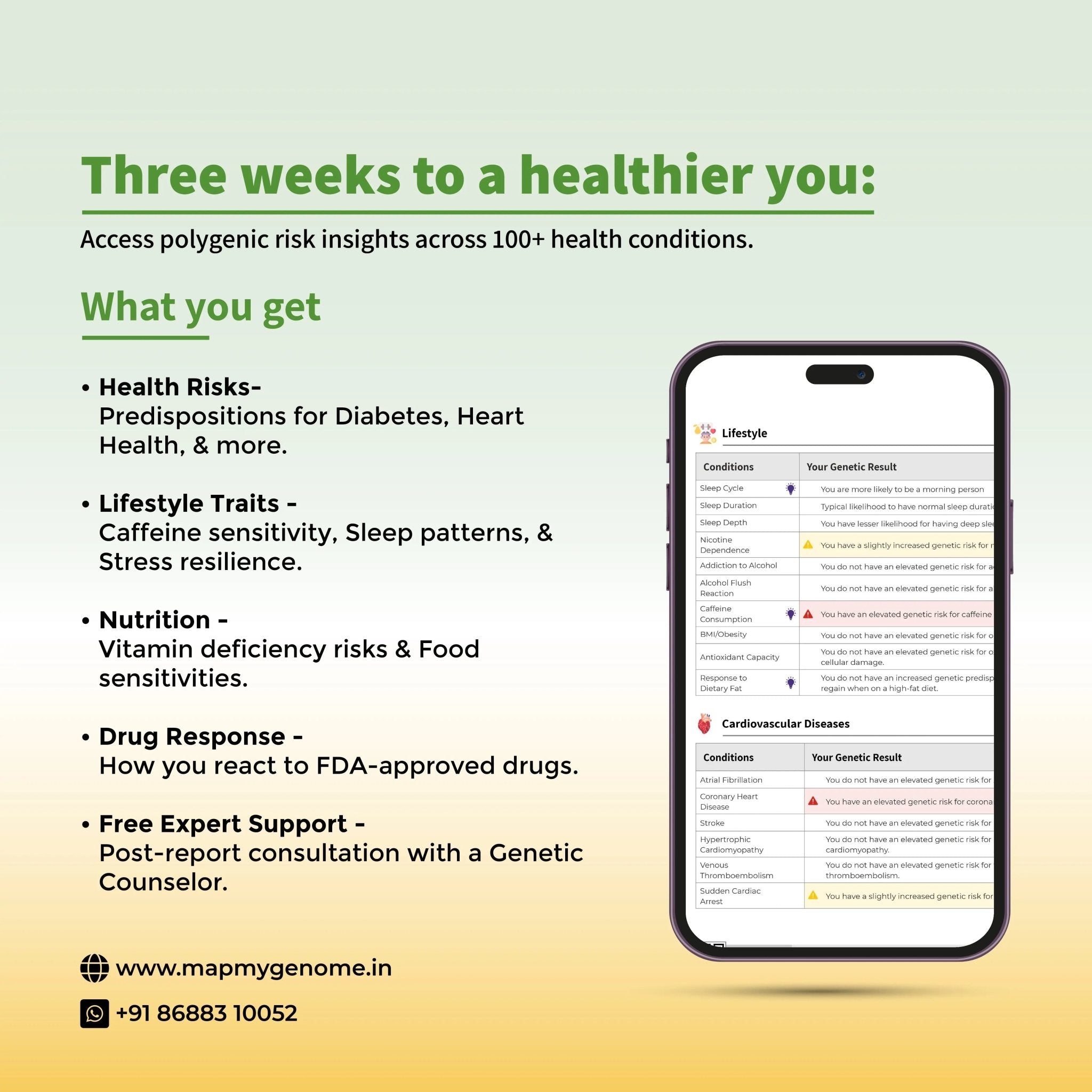
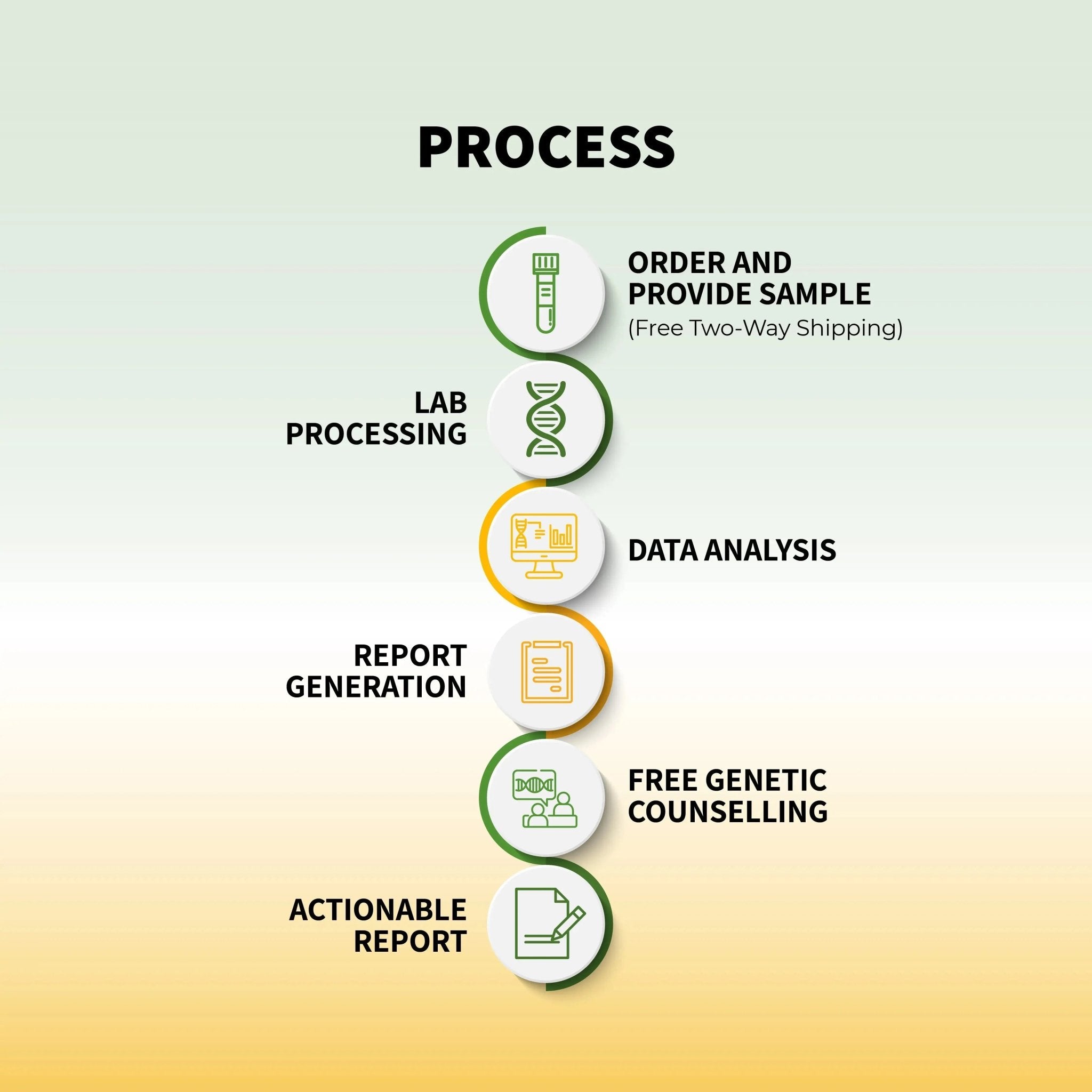
Genomepatri reveals your neurological and mental health genetic markers. Combined with MapmyBiome's gut-brain axis insights, the Stay Young Bundle helps you address mental wellness from both your DNA and your microbiome.