

Runaway Heart: The Long and Short of Long QT Syndrome
Imagine a young, apparently healthy person — an athlete, a teenager, someone in the prime of life — suddenly collapsing without warning. In many such cases, the culprit is a condition called Long QT Syndrome (LQTS) — a disorder of the heart’s electrical system that can cause fast, chaotic heartbeats, leading to fainting, seizures, or sudden cardiac death.
What Is Long QT Syndrome?
The QT interval is a measurement on an electrocardiogram (ECG) that represents the time it takes for the heart’s electrical system to recharge between beats. In Long QT Syndrome, this interval is prolonged — meaning the heart takes longer than normal to recharge. This creates a window of vulnerability during which a dangerous arrhythmia called torsades de pointes can occur, potentially degenerating into ventricular fibrillation and sudden cardiac arrest.
Congenital vs. Acquired LQTS
Congenital LQTS — caused by inherited mutations in genes that encode cardiac ion channels (most commonly KCNQ1, KCNH2, and SCN5A). It is estimated to affect 1 in 2,000 people
Acquired LQTS — caused by medications (including certain antibiotics, antipsychotics, and antihistamines), electrolyte imbalances, or other medical conditions
Warning Signs
Unexplained fainting (syncope), especially during exercise or emotional stress
Seizures
Sudden cardiac arrest (sometimes the first and only symptom)
Family history of unexplained sudden death, especially in young people
The Role of Genetic Testing
Genetic testing for LQTS can identify the specific mutation causing the condition — which has important implications for treatment (different LQTS subtypes respond differently to beta-blockers and other therapies), risk stratification, and family cascade testing. If a mutation is identified in one family member, other relatives can be tested to determine their own risk — potentially saving lives.
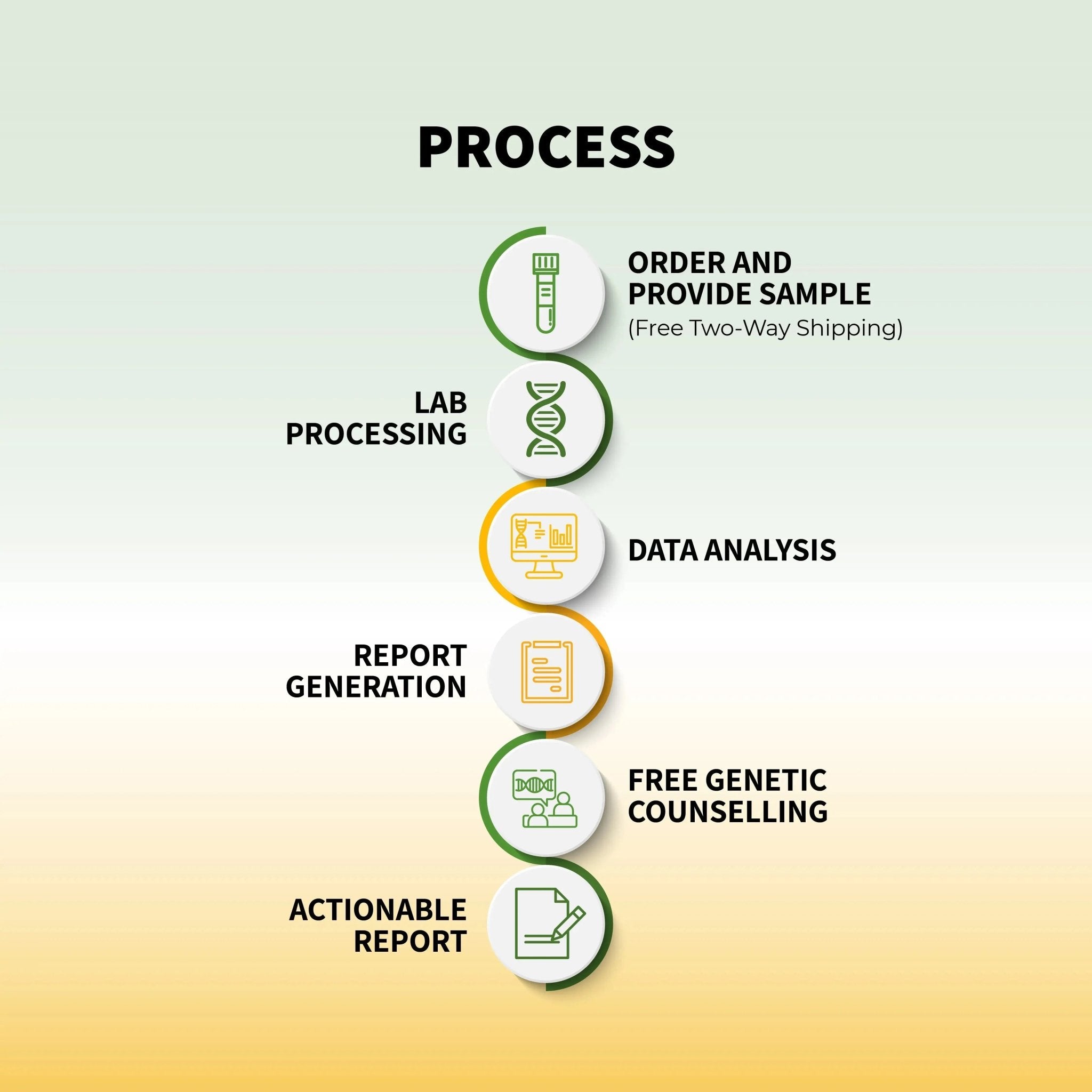
Genetic Testing for Hereditary Heart Conditions
MapmyGenome offers Cardiomap — a comprehensive hereditary cardiovascular risk panel — as well as Whole Exome Sequencing and certified genetic counselling for individuals and families with a history of unexplained cardiac events or hereditary heart conditions.