

Cardiovascular disease (CVD) remains the leading cause of death globally, and India bears a disproportionately high burden — with Indians developing heart disease a decade earlier than Western populations and at lower BMI thresholds. While lifestyle factors play a significant role, genetics is a critical and often underappreciated contributor to cardiovascular risk.
Why Cardiovascular Genetics Matters
A significant proportion of cardiovascular conditions have a strong hereditary component. Identifying genetic risk factors allows clinicians to stratify patients more accurately, initiate preventive interventions earlier, guide medication selection (pharmacogenomics), and counsel family members who may share the same risk.
Key Genes in Cardiovascular Risk
Familial Hypercholesterolaemia (FH)
FH is one of the most common inherited disorders, affecting approximately 1 in 250 individuals. Caused primarily by mutations in LDLR, APOB, and PCSK9, FH leads to severely elevated LDL cholesterol from birth and dramatically increases the risk of premature coronary artery disease. Early genetic diagnosis enables aggressive lipid-lowering therapy before atherosclerosis becomes irreversible.
Hypertrophic Cardiomyopathy (HCM)
HCM is the most common inherited heart muscle disease, caused by mutations in sarcomere genes including MYH7 and MYBPC3. It is a leading cause of sudden cardiac death in young athletes. Genetic testing enables cascade screening of first-degree relatives and guides decisions around implantable defibrillators and activity restrictions.
Arrhythmia Syndromes
Inherited arrhythmia syndromes — including Long QT Syndrome (KCNQ1, KCNH2, SCN5A), Brugada Syndrome (SCN5A), and Catecholaminergic Polymorphic Ventricular Tachycardia (RYR2) — can cause sudden cardiac death, often in otherwise healthy young individuals. Genetic diagnosis is essential for risk stratification and family screening.
Dilated Cardiomyopathy (DCM)
DCM has a genetic basis in approximately 30–35% of cases. The most commonly implicated gene is TTN (titin), followed by LMNA, SCN5A, and others. LMNA mutations in particular carry a high risk of malignant arrhythmias and warrant early consideration of ICD implantation.
Polygenic Risk
Beyond single-gene disorders, polygenic risk scores (PRS) aggregate the effects of hundreds of common genetic variants to estimate an individual's overall cardiovascular risk. PRS can identify high-risk individuals who would not be flagged by traditional risk calculators, enabling earlier preventive intervention.
Cardiovascular Genetic Panels: What to Test
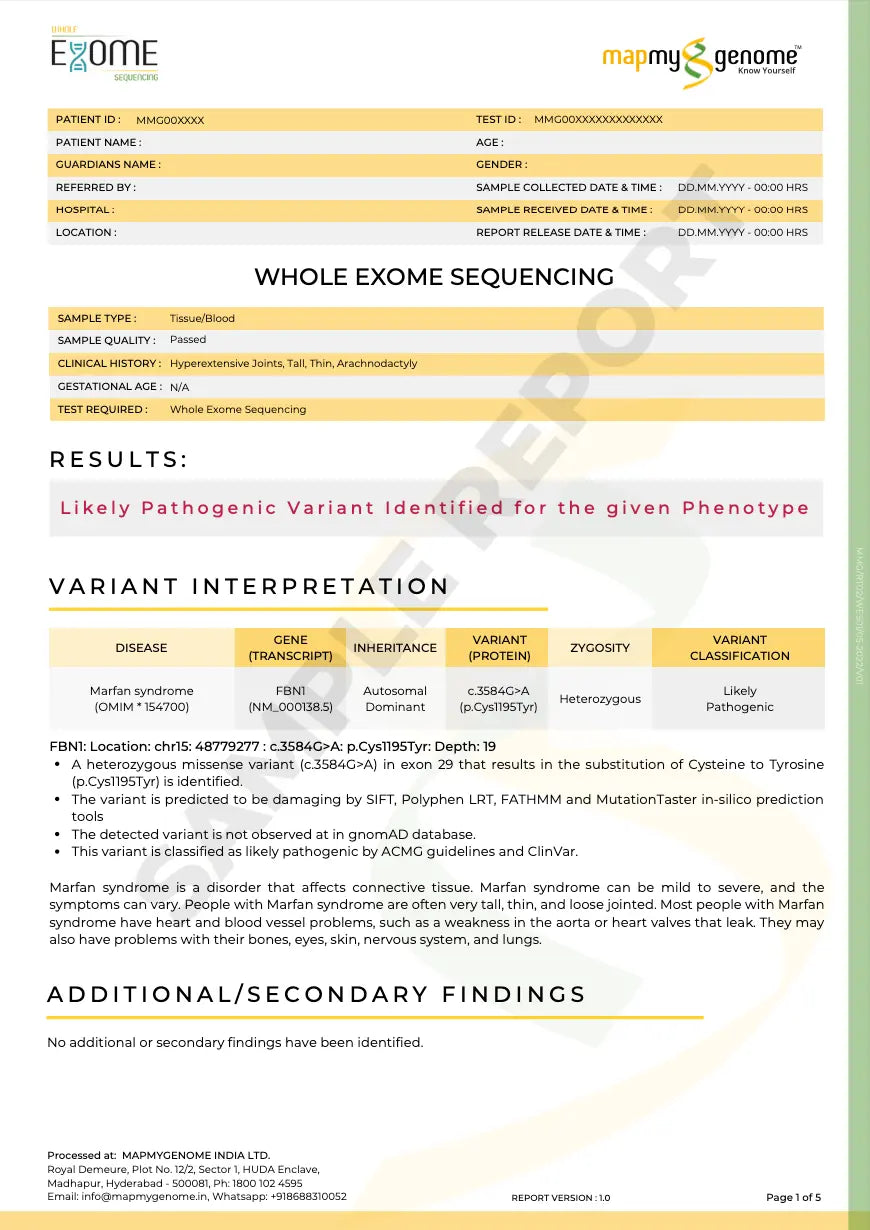
Comprehensive cardiovascular genetic panels typically include genes associated with cardiomyopathies, channelopathies, familial hypercholesterolaemia, aortopathies (e.g., FBN1 for Marfan syndrome), and thrombophilia. Panel selection should be guided by the clinical phenotype and family history.
The Role of Genetic Counselling
Cardiovascular genetic testing should always be accompanied by pre- and post-test genetic counselling. Counsellors help patients and families understand the implications of results, coordinate cascade testing of at-risk relatives, and navigate the psychological impact of a hereditary diagnosis.
Assess Your Genetic Cardiovascular Risk
Genomepatri by MapmyGenome includes genetic risk assessment for heart disease, hypertension, and lipid disorders — backed by NABL-certified labs and expert genetic counsellors who help you build a personalised cardiovascular prevention plan.