

Understanding Fragile X Syndrome
July is National Fragile X Syndrome Awareness Month. Early intervention is critical to the effective management of Fragile X syndrome — yet the vast majority of children go undiagnosed due to lack of awareness and limited access to genetics experts. Let us all come together to spread awareness so families can make informed decisions.
What Is Fragile X Syndrome?
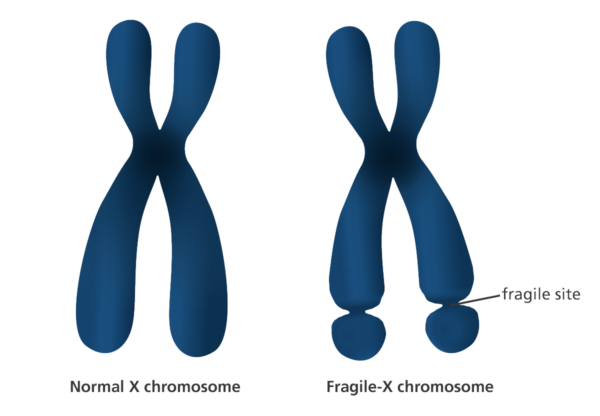
Fragile X Syndrome (FXS) is the most common inherited cause of intellectual disability in boys, and one of the well-known single gene causes of Autism Spectrum Disorder (ASD). It is caused by a gene change in the FMR1 gene on the X chromosome, characterised by CGG trinucleotide repeats exceeding 200 (full mutation). Research shows that 1 in 4,000 males and 1 in 8,000 females have FXS.

How Is FXS Inherited?
The FMR1 gene is located on the X chromosome and is passed in families through an X-linked dominant pattern of inheritance. FXS is severe in males (who have only one X chromosome) and milder or absent in females (who have two X chromosomes, providing a backup copy). Females with one mutated copy are typically carriers.
Signs and Symptoms
Developmental delays (rolling, sitting, walking)
Intellectual disabilities and poor expressive language skills
Autism spectrum features (30–60% of children with FXS also have ASD)
Characteristic facial features: long face, prominent ears, flat feet
Associated Conditions in Premutation Carriers
FXTAS (Fragile X-Associated Tremor/Ataxia Syndrome) — a neurodegenerative condition affecting older adults with premutations, causing tremors and balance problems
FXPOI (Fragile X-Associated Primary Ovarian Insufficiency) — affects women with premutations, causing irregular menstrual cycles, infertility, and early menopause
Diagnosis and Management
Diagnosis is confirmed through molecular testing (MLPA) measuring CGG repeats on the X chromosome. There is currently no cure for FXS, but multidisciplinary care — including occupational therapy, speech therapy, and behavioural therapy — can significantly improve outcomes. Genetic counselling is essential for families to understand recurrence risk and make informed reproductive decisions.

Genetic Counselling for Fragile X and Inherited Conditions
MapmyGenome’s certified genetic counsellors provide expert, compassionate guidance for families navigating Fragile X syndrome, carrier screening, and reproductive decision-making. Available online across India.