

As children, most of us played sports freely — cricket, kho-kho, kabaddi, football, or simply running. Our young bodies were agile and resilient. But as we grow older and try to maintain or build fitness, the results vary dramatically between individuals. Some people transform their bodies with consistent training; others follow the same programme for months with minimal results. Some recover quickly from injuries; others seem perpetually sidelined. Why?
The answer, in significant part, is written in your DNA. While all humans share 99.9% of their genetic sequence, the 0.1% variation is enough to create profound differences in how our bodies respond to exercise, build muscle, process oxygen, and recover from physical stress. Understanding your genetic athletic profile is the key to training smarter — not just harder.
We Are Different at the Genetic Level
The Human Genome Project, completed in 2003, opened the door to understanding how genes influence athletic performance. Research has since shown that a high percentage of the variance in athletic ability — including VO2 max, muscle strength, endurance capacity, and injury susceptibility — can be explained by genetic factors (known as heritability).
This means that a weight loss programme, training regimen, or recovery protocol that works brilliantly for one person may produce minimal results for another — not because of effort or discipline, but because of genetic differences in how their bodies respond.
How Genes Influence Your Athletic Performance
Response to Exercise
Research into genes that code for physiological processes — including circulation, blood pressure control, muscle fibre type specialization, cardiac output, and adaptability to training — shows that these genes determine an individual's response to different types of exercise. The ratio of endurance to power training that produces optimal results is not the same for any two individuals, even if their fitness goals are identical.
Muscle Fibre Type (ACTN3)
The ACTN3 gene determines the composition of your fast-twitch muscle fibres — the fibres responsible for explosive power, sprinting, and weightlifting. A functional ACTN3 gene is strongly associated with power and sprint performance; a common variant leads to better endurance performance instead. Knowing your ACTN3 status helps you understand whether you're naturally suited to power sports or endurance activities.
Cardiovascular Efficiency (ACE)
The ACE gene influences cardiovascular efficiency and oxygen delivery to muscles. The I allele is associated with endurance performance and efficient oxygen utilization; the D allele is associated with power and strength. ACE genotype influences how much your VO2 max improves with aerobic training.
Injury Risk
Genes including COL5A1 (collagen type V) and MMP3 influence the structural integrity of tendons, ligaments, and cartilage. Variants in these genes are associated with increased risk of soft tissue injuries — particularly Achilles tendon injuries and ACL tears. Knowing your injury risk profile allows you to take targeted preventive measures: specific warm-up protocols, strength training to support vulnerable joints, and appropriate training load management.
Recovery Rate
Genes influencing inflammation (IL6, TNF-alpha) and oxidative stress response determine how quickly your muscles recover after intense exercise. Slow recoverers need more rest between sessions; fast recoverers can train more frequently. Matching your training frequency to your genetic recovery rate prevents overtraining and reduces injury risk.
Optimal Training Time
Not everyone is a "morning person" — and this is partly genetic. Circadian rhythm genes (CLOCK, PER3) influence your chronotype — whether you perform best in the morning, afternoon, or evening. Training at your genetically optimal time can meaningfully improve performance and recovery.
Practical Applications of Genetic Athletic Insights
- Training type — Optimize the ratio of power to endurance training based on your muscle fibre genetics
- Training frequency — Match rest periods to your genetic recovery rate
- Training time — Schedule workouts at your chronobiologically optimal time
- Injury prevention — Target preventive exercises for your specific injury risk profile
- Nutrition — Align pre- and post-workout nutrition to your metabolic genetics
- Weight management — Choose exercise types most effective for your fat metabolism genetics
FAQs
Can genetic testing make me a better athlete?
Genetic testing gives you the information to train more intelligently. By understanding your genetic strengths and limitations, you can focus your training where it will have the greatest impact — and avoid approaches that are poorly suited to your biology. The result is better outcomes with less wasted effort.
Is genetic athletic testing only for elite athletes?
Not at all. The insights are equally valuable for recreational athletes, fitness enthusiasts, and anyone trying to manage their weight or improve their health through exercise. Whether your goal is to run your first 5K or compete at a national level, genetic insights help you train smarter.
Conclusion
Your genetic blueprint is a powerful guide to athletic performance — not a limitation. Understanding how your body is wired to respond to exercise, recover from training, and handle physical stress allows you to build a training programme that works with your biology rather than against it. The result: better performance, fewer injuries, and more sustainable fitness.
🏃 Unlock Your Genetic Athletic Potential with Myfitgene
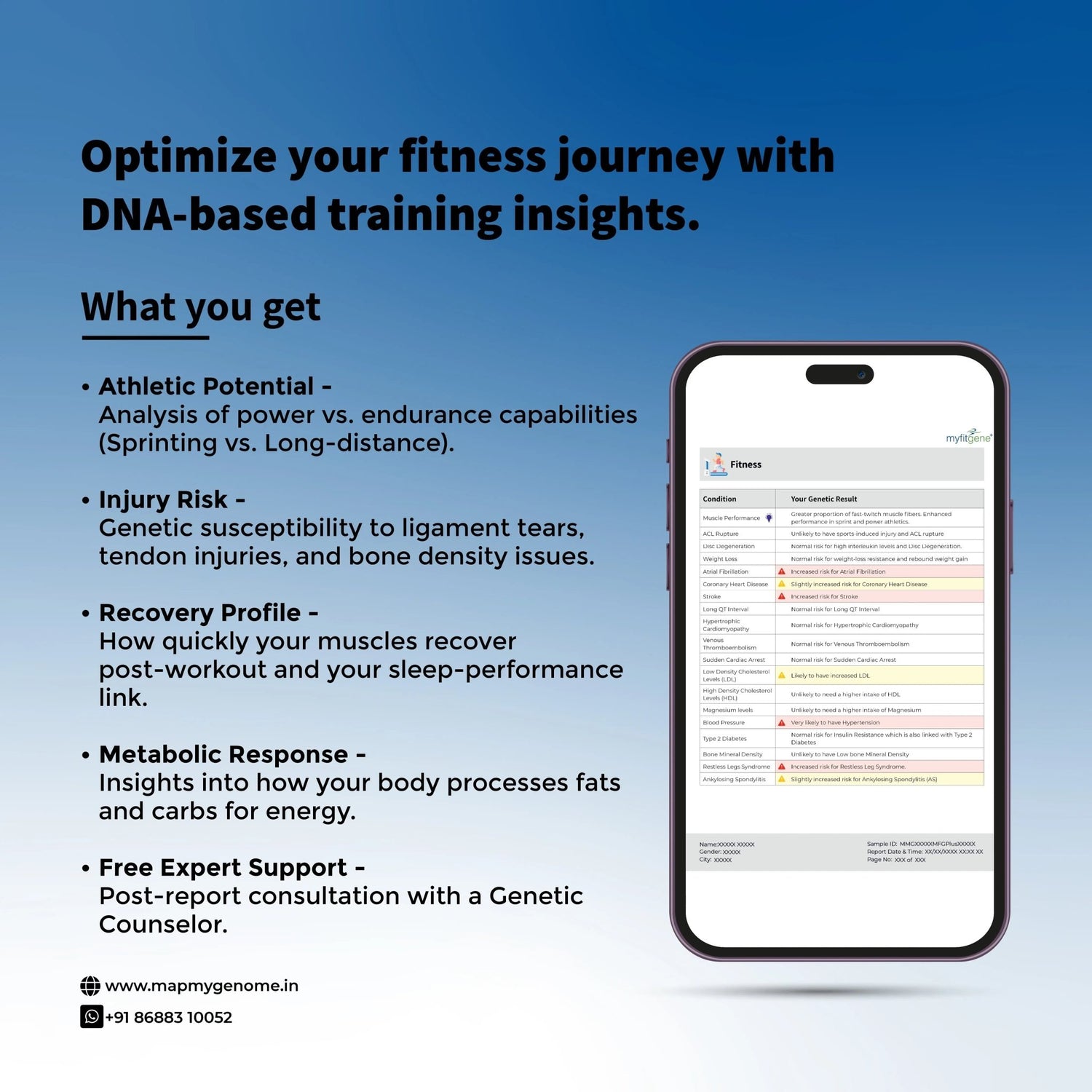
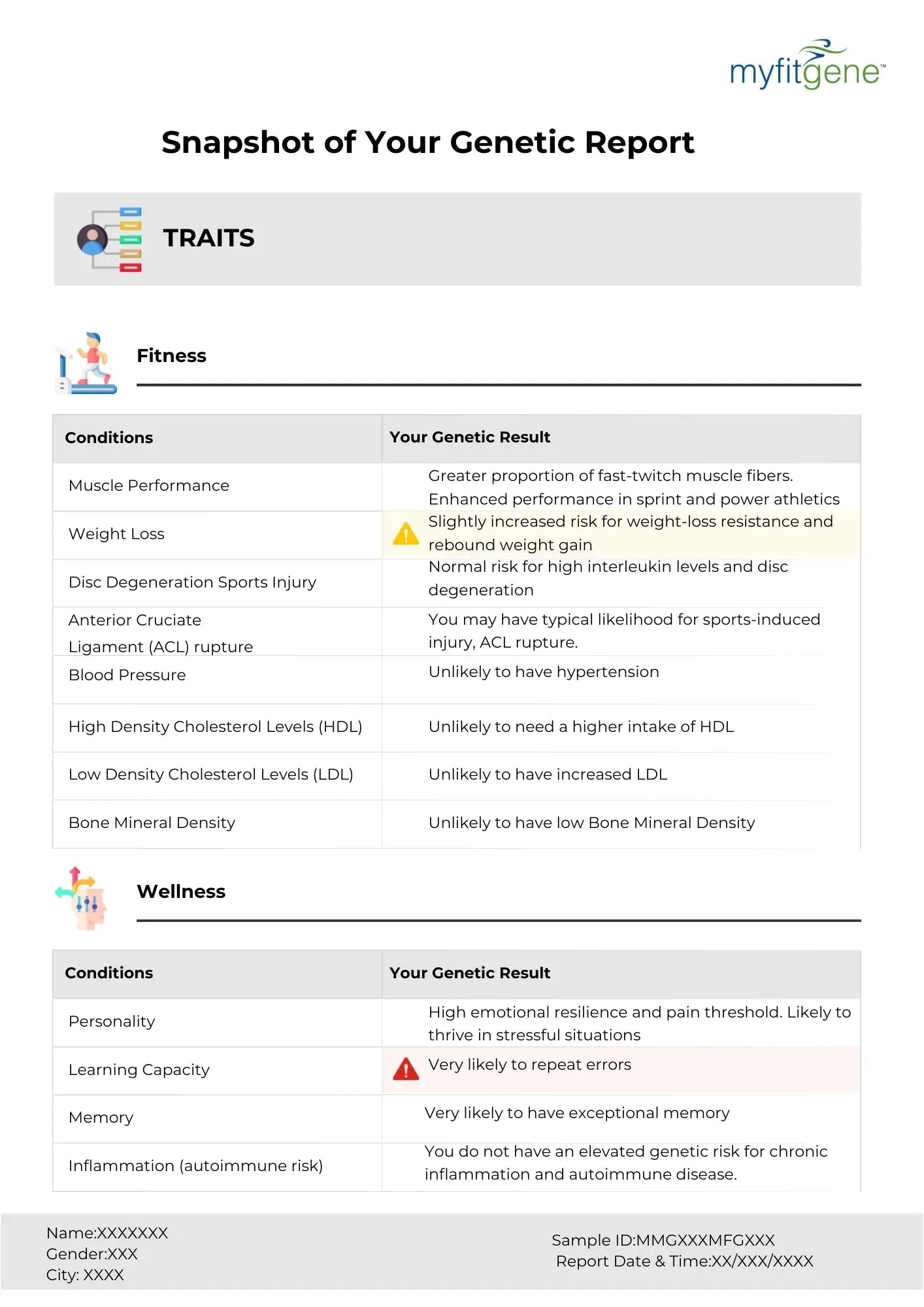
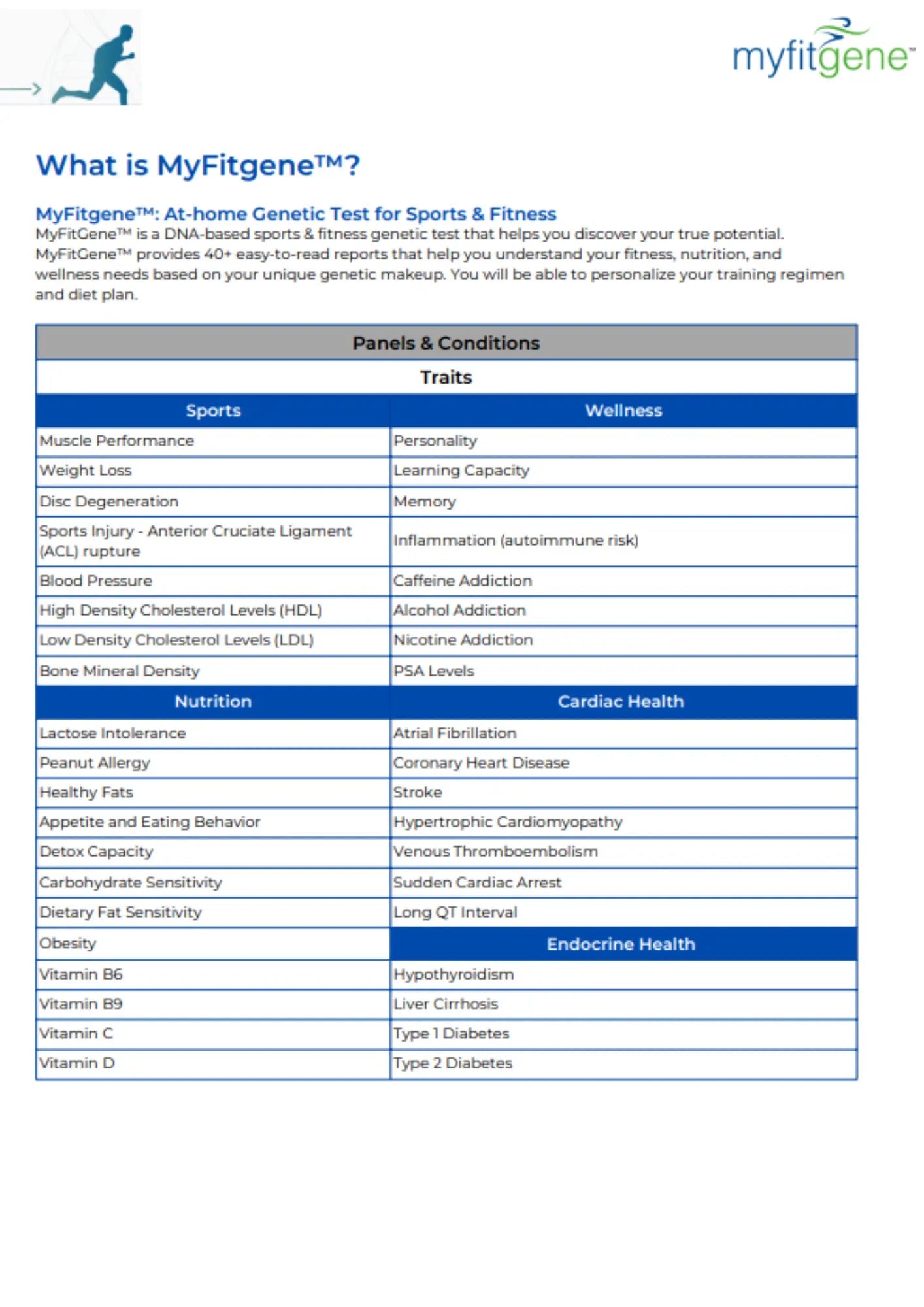
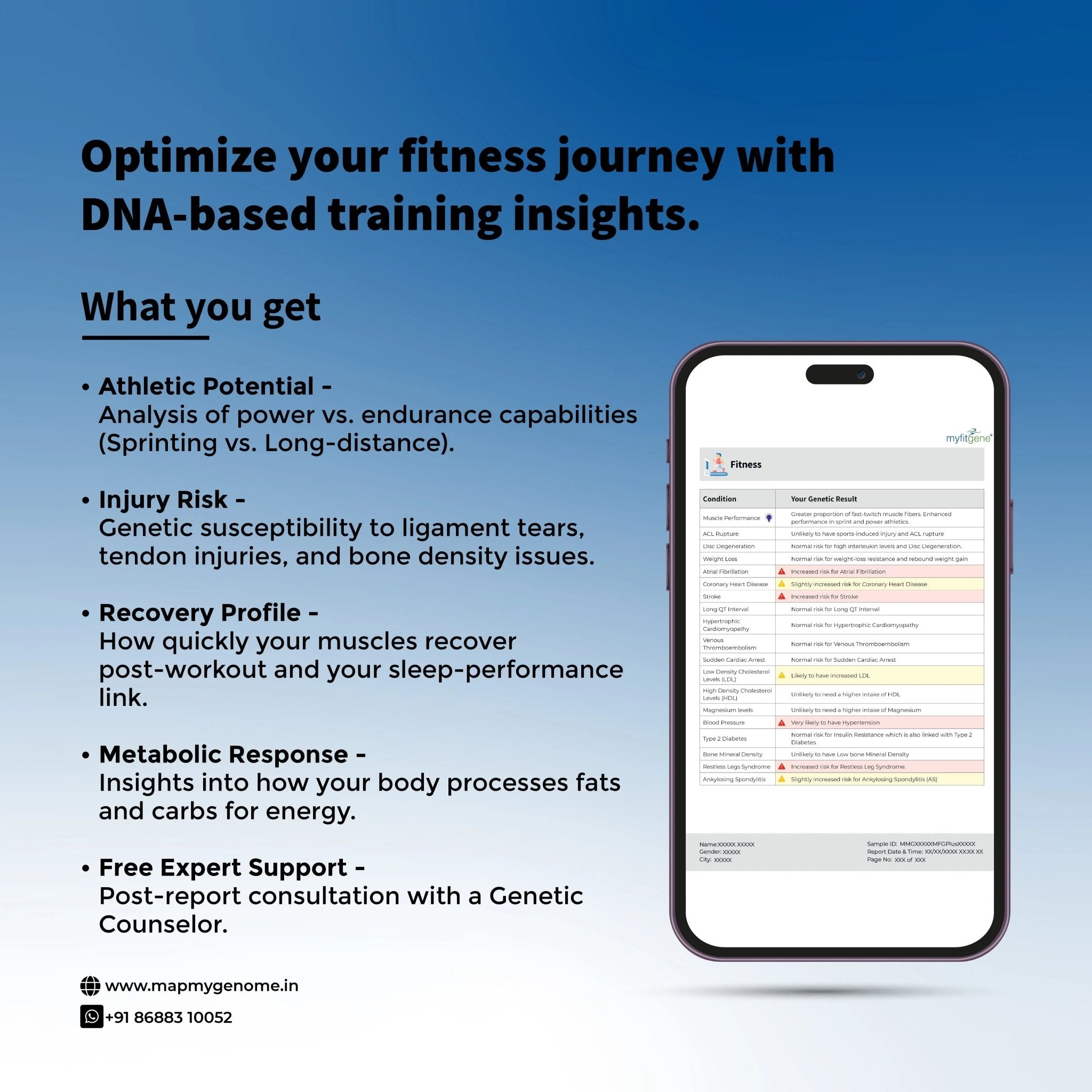
Myfitgene by MapmyGenome is India's leading sports and fitness DNA test — developed in association with leading sports academia. It reveals your power vs. endurance profile, VO2 max trainability, injury risk, recovery rate, optimal training time, and nutritional needs for peak performance.
→ Order Myfitgene — India's #1 Sports & Fitness DNA Test
Want a complete health picture alongside your fitness genetics? Genomepatri covers 100+ health and wellness traits including disease risk, nutrition, and drug response.