

Day 13: Sun Worship — Vitamin D, Sunlight, and Your Genes
Sunlight is one of the most powerful health tools available to us — and one of the most misunderstood. Your skin produces vitamin D when exposed to UVB radiation, but how efficiently you do this, and how much sun exposure is safe for you, depends significantly on your genetics.
The Science of Sunlight and Vitamin D
Vitamin D is essential for bone health, immune function, mood regulation, and cardiovascular health. Deficiency is associated with increased risk of osteoporosis, depression, autoimmune conditions, and certain cancers. India has paradoxically high rates of vitamin D deficiency despite abundant sunshine — driven by skin pigmentation, indoor lifestyles, and dietary factors.
How Your Genes Influence Sun Response
Vitamin D metabolism genes (VDR, CYP2R1, GC): Determine how efficiently you convert sunlight to active vitamin D and how well your cells respond to it
Skin pigmentation genes (MC1R, SLC45A2): Darker skin requires more sun exposure to produce the same amount of vitamin D as lighter skin
Sun sensitivity genes: Variants in DNA repair genes influence your risk of UV-induced skin damage and skin cancer
Practical Sun Wisdom
Aim for 15–30 minutes of midday sun exposure on arms and legs daily (without sunscreen) for vitamin D synthesis
Darker skin tones may need longer exposure to achieve the same vitamin D production
Supplement with vitamin D3 if sun exposure is limited — especially in winter or for those who work indoors
Get your vitamin D levels tested annually, especially if you have risk factors for deficiency
Discover Your Vitamin D Genetics
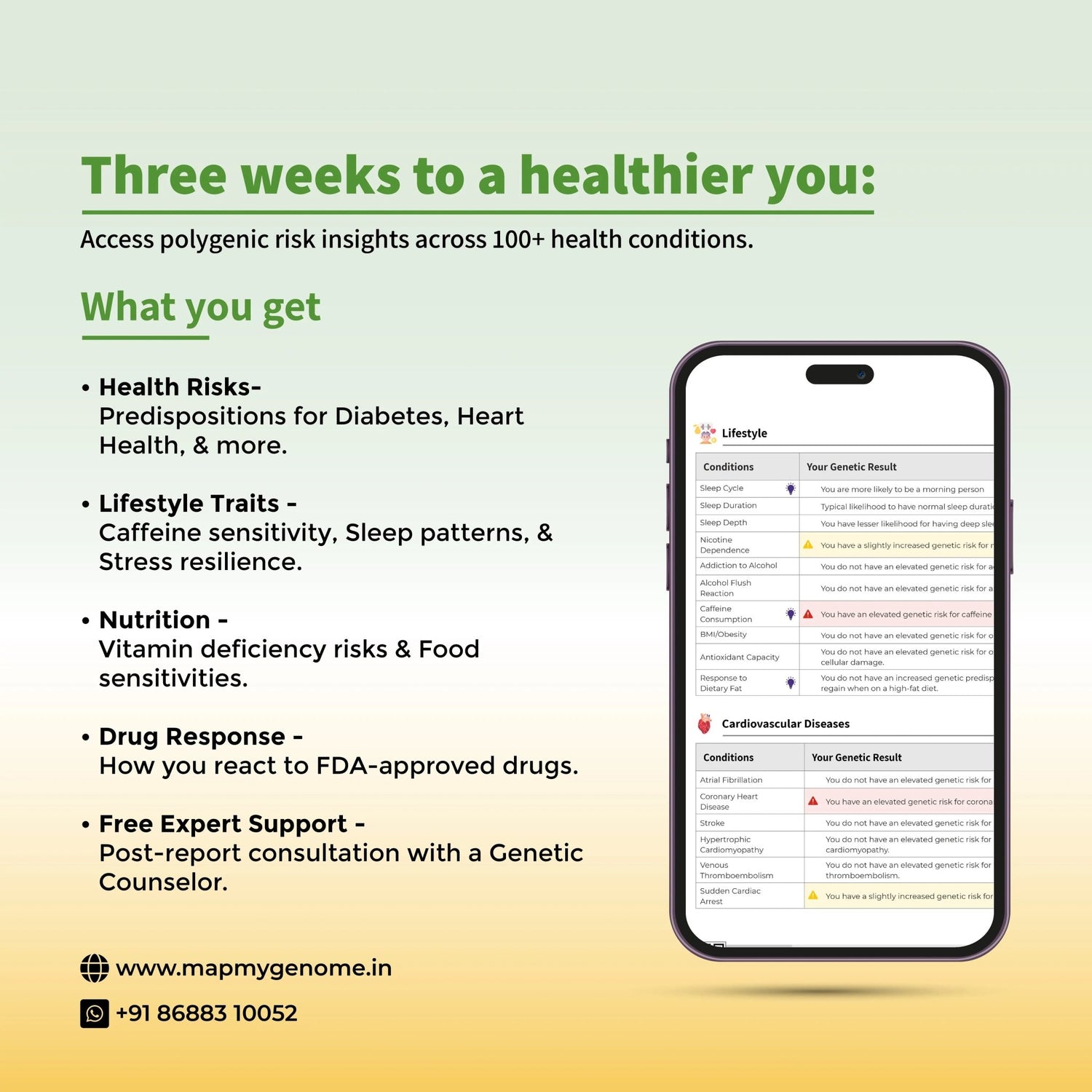
Genomepatri by MapmyGenome analyses your vitamin D metabolism genes, sun sensitivity, and nutritional needs — helping you optimise your sun exposure and supplementation strategy based on your unique genetic profile.