

India is in the midst of a lifestyle disease epidemic. Type 2 diabetes, hypertension, coronary artery disease, obesity, and certain cancers are now among the leading causes of death and disability in the country — and their prevalence is rising rapidly, even among younger age groups. While diet, exercise, and stress are well-known contributors, genetics plays a significant and often underappreciated role.
Can your DNA predict your risk for lifestyle diseases? And if so, what can you do with that information? Here's what the science says.
What Are Lifestyle Diseases?
Lifestyle diseases — also called non-communicable diseases (NCDs) — are conditions strongly influenced by how we live: what we eat, how much we move, how we manage stress, and whether we smoke or drink. The most prevalent in India include:
- Type 2 diabetes and insulin resistance
- Hypertension (high blood pressure)
- Coronary artery disease and heart attack
- Obesity and metabolic syndrome
- Non-alcoholic fatty liver disease (NAFLD)
- Certain cancers (colorectal, breast, prostate)
- Chronic kidney disease
The Role of Genetics in Lifestyle Diseases
Lifestyle diseases are multifactorial — caused by a combination of genetic predisposition and environmental/lifestyle factors. Genetics doesn't determine your destiny, but it does shape the terrain on which your lifestyle choices play out.
Type 2 Diabetes
Type 2 diabetes has a heritability of approximately 40–70%. Key genes include TCF7L2 (the most strongly associated gene), PPARG, KCNJ11, and CDKAL1. Indians are genetically predisposed to insulin resistance and tend to develop diabetes at lower BMI levels than Western populations — a phenomenon sometimes called the "thin-fat Indian" phenotype. Knowing your genetic risk can motivate earlier dietary intervention and more frequent blood sugar monitoring.
Cardiovascular Disease
Coronary artery disease has a heritability of approximately 40–60%. Variants in genes governing LDL cholesterol metabolism (LDLR, APOB, PCSK9), blood pressure regulation (ACE, AGT), and inflammation (CRP, IL6) all contribute to cardiovascular risk. Familial hypercholesterolaemia — a genetic condition causing very high LDL from birth — affects approximately 1 in 250 people and is significantly underdiagnosed in India.
Obesity
Obesity has a heritability of approximately 40–70%. The FTO gene ("fat mass and obesity-associated gene") is the most studied, with certain variants associated with increased appetite, reduced satiety signalling, and higher BMI. However, dozens of other genes contribute to body weight regulation, fat distribution, and metabolic rate. Genetic insights can help identify whether someone is predisposed to respond better to low-carbohydrate vs. low-fat dietary approaches.
Hypertension
High blood pressure has a heritability of approximately 30–50%. Variants in genes governing the renin-angiotensin-aldosterone system (ACE, AGT, AGTR1), sodium handling, and vascular tone all influence blood pressure. Genetic testing can identify people at elevated risk who would benefit from earlier lifestyle intervention and monitoring.
Cancer Risk
While most cancers are not purely hereditary, genetic variants can significantly elevate risk. BRCA1/BRCA2 mutations dramatically increase breast and ovarian cancer risk. Lynch syndrome genes (MLH1, MSH2, MSH6) elevate colorectal and endometrial cancer risk. Knowing these variants allows for more frequent screening and preventive interventions.
What Genetic Testing Can Tell You About Lifestyle Disease Risk
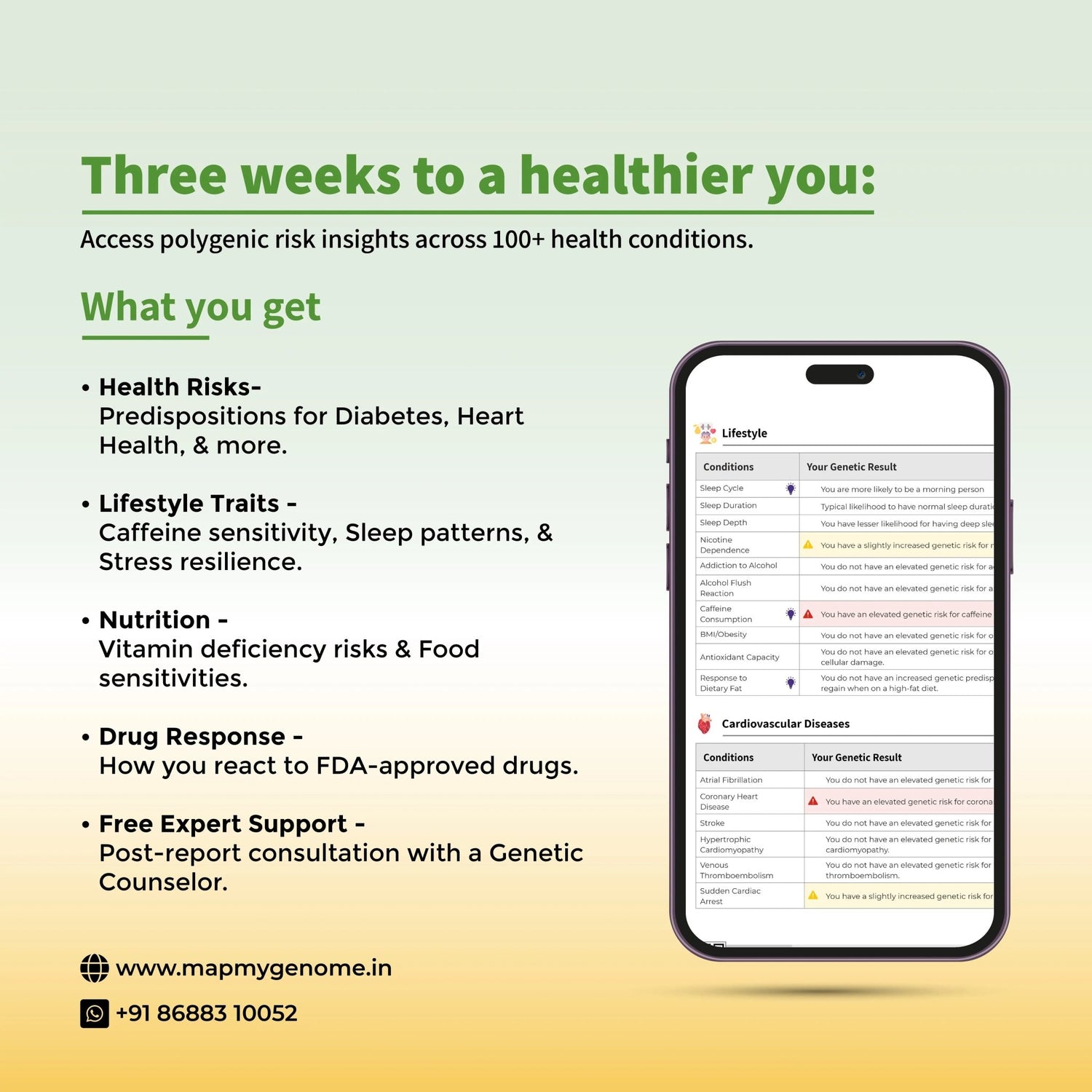
A comprehensive genetic health test like Genomepatri can reveal:
- Your relative genetic risk for type 2 diabetes, heart disease, hypertension, obesity, and other lifestyle conditions — compared to the general population
- How your genes affect your metabolism of carbohydrates, fats, and proteins — informing the most effective dietary approach for your biology
- Your genetic response to exercise — whether you benefit more from endurance or strength training for metabolic health
- Pharmacogenomic insights — how your genes affect your response to commonly prescribed medications for lifestyle diseases (statins, metformin, antihypertensives)
- Nutrient metabolism variants — predispositions to vitamin D deficiency, B12 deficiency, iron overload, and other nutritional factors that influence lifestyle disease risk
What Genetic Testing Cannot Tell You
- Whether you will develop a lifestyle disease — genetic risk is probabilistic, not deterministic
- The exact timeline of disease development
- Everything about your risk — lifestyle, environment, and factors not yet discovered by science also matter
Think of genetic risk as a weather forecast: it tells you the probability of rain, not whether it will definitely rain. But knowing the forecast helps you decide whether to carry an umbrella.
How to Use Your Genetic Risk Information
- Prioritize prevention early — If you have elevated genetic risk for diabetes, start dietary and lifestyle interventions before blood sugar becomes abnormal
- Personalize your diet — Genetic insights can guide whether a low-carb, Mediterranean, or other dietary approach is most suited to your metabolism
- Optimize your exercise — Tailor your training to your genetic strengths and metabolic needs
- Screen more frequently — High genetic risk warrants more frequent clinical monitoring (blood pressure, blood sugar, lipids)
- Inform your family — Genetic risk is shared; your results may be relevant to siblings, parents, and children
FAQs About Genetic Testing for Lifestyle Diseases
If I have high genetic risk, does that mean I'll definitely get the disease?
No. Genetic risk is one factor among many. Many people with high genetic risk for type 2 diabetes or heart disease never develop these conditions — particularly when they make targeted lifestyle changes early. Conversely, people with low genetic risk can develop lifestyle diseases under poor lifestyle conditions.
Is genetic testing for lifestyle diseases useful if I'm already healthy?
Absolutely. The most valuable time to act on genetic risk information is before disease develops. Genetic testing is most powerful as a preventive tool.
How is genetic risk for lifestyle diseases different from hereditary disease risk?
Hereditary diseases (like Huntington's or BRCA-related cancers) are caused by single high-penetrance gene mutations. Lifestyle disease risk is polygenic — influenced by many variants, each contributing a small amount. The interaction with lifestyle factors is much more significant for lifestyle diseases.
Conclusion
Your DNA is not your destiny — but it is a powerful guide. Genetic testing for lifestyle disease risk gives you the information to make smarter, more targeted choices about diet, exercise, screening, and medical care. For Indians, who face disproportionately high rates of diabetes and heart disease, this information is particularly valuable. The earlier you know your risk, the more effectively you can act on it.
🧬 Know Your Lifestyle Disease Risk Before Symptoms Appear
Genomepatri by MapmyGenome covers genetic risk for 100+ health conditions including type 2 diabetes, heart disease, hypertension, obesity, and cancer — alongside personalized nutrition, fitness, and drug response insights. It's India's most comprehensive at-home DNA wellness test.
⭐⭐⭐⭐⭐ Rated 4.97/5 by 143+ customers
→ Order Genomepatri — India's #1 At-Home DNA Wellness Test (₹7,999)
Focused on heart and diabetes risk specifically? Cardiomap is a targeted genetic panel for cardiovascular and metabolic risk — ideal for those with a strong family history.