

How Whole Exome Sequencing Can Detect Rare Genetic Disorders
Over 7,000 rare diseases exist — and 80% of them are genetic in origin. Yet the average patient with a rare disease waits 5–7 years for a correct diagnosis. Whole exome sequencing (WES) is transforming this reality, delivering answers in weeks rather than years.
What is Whole Exome Sequencing?
WES sequences all protein-coding regions of your genome — the exome — which contains approximately 85% of all known disease-causing mutations. By analysing all 20,000+ genes simultaneously, WES can identify the genetic cause of rare conditions that targeted gene panels would miss.
How WES Detects Rare Genetic Disorders
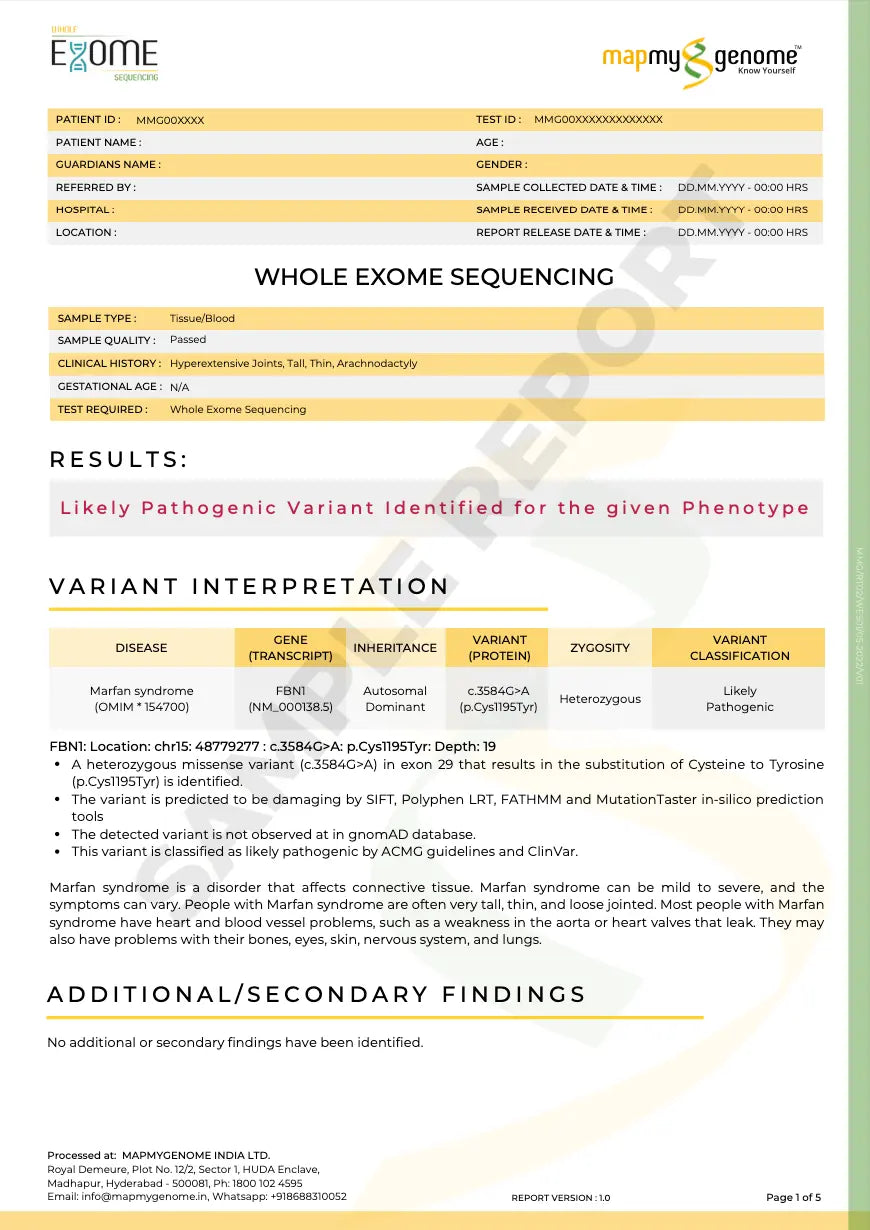
Single gene disorders: WES identifies mutations in individual genes responsible for conditions like Marfan syndrome, Ehlers-Danlos syndrome, and rare metabolic disorders.
De novo mutations: New mutations not inherited from either parent — a common cause of rare paediatric conditions — are readily detected by WES with trio analysis (testing the child and both parents).
Recessive conditions: WES identifies carriers and affected individuals for autosomal recessive disorders like cystic fibrosis, spinal muscular atrophy, and rare enzyme deficiencies.
X-linked disorders: Conditions like Duchenne muscular dystrophy and fragile X syndrome are detectable through WES.
Who Should Consider WES for Rare Disease Diagnosis?
Children with unexplained developmental delay, intellectual disability, or multiple congenital anomalies
Patients who have undergone extensive standard testing without a diagnosis
Families with multiple affected members and no identified genetic cause
Adults with complex, multi-system conditions of unknown origin
The Diagnostic Process
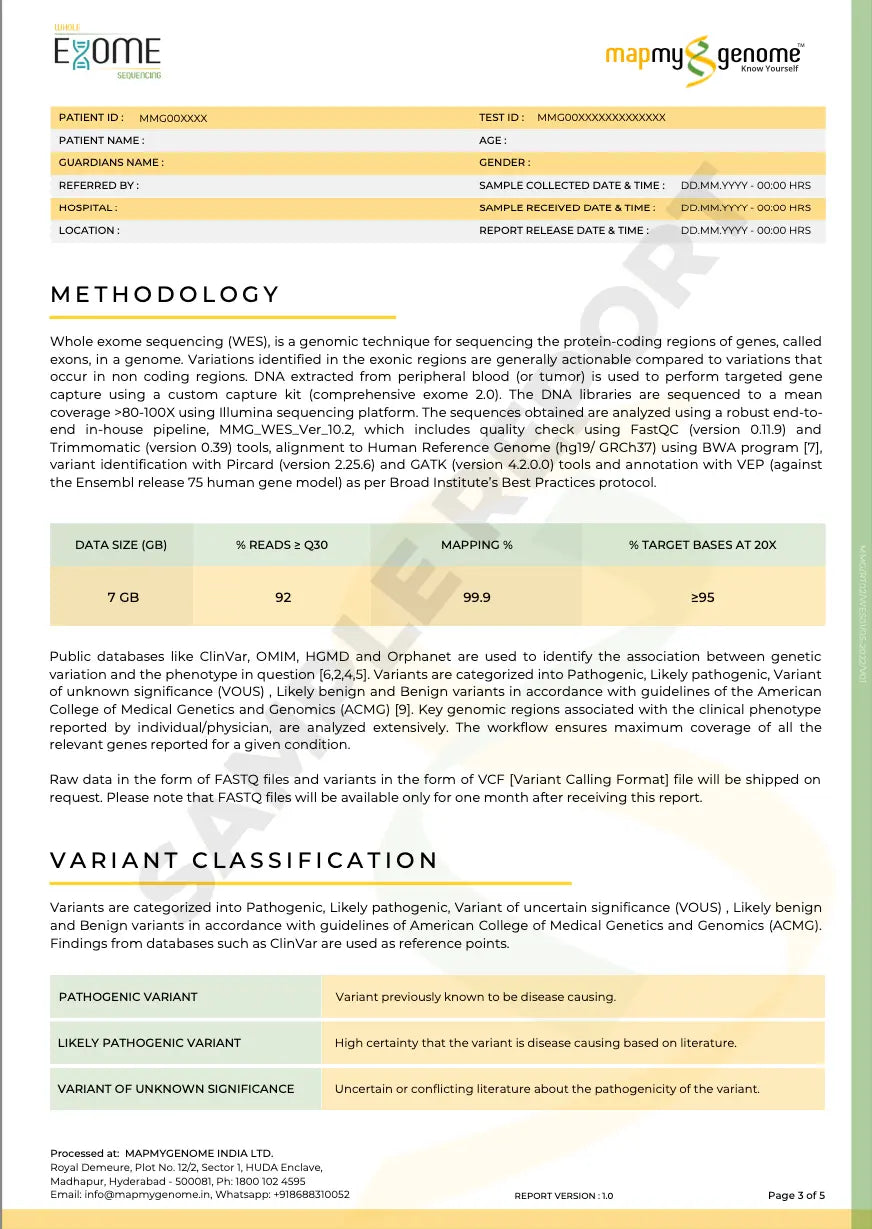
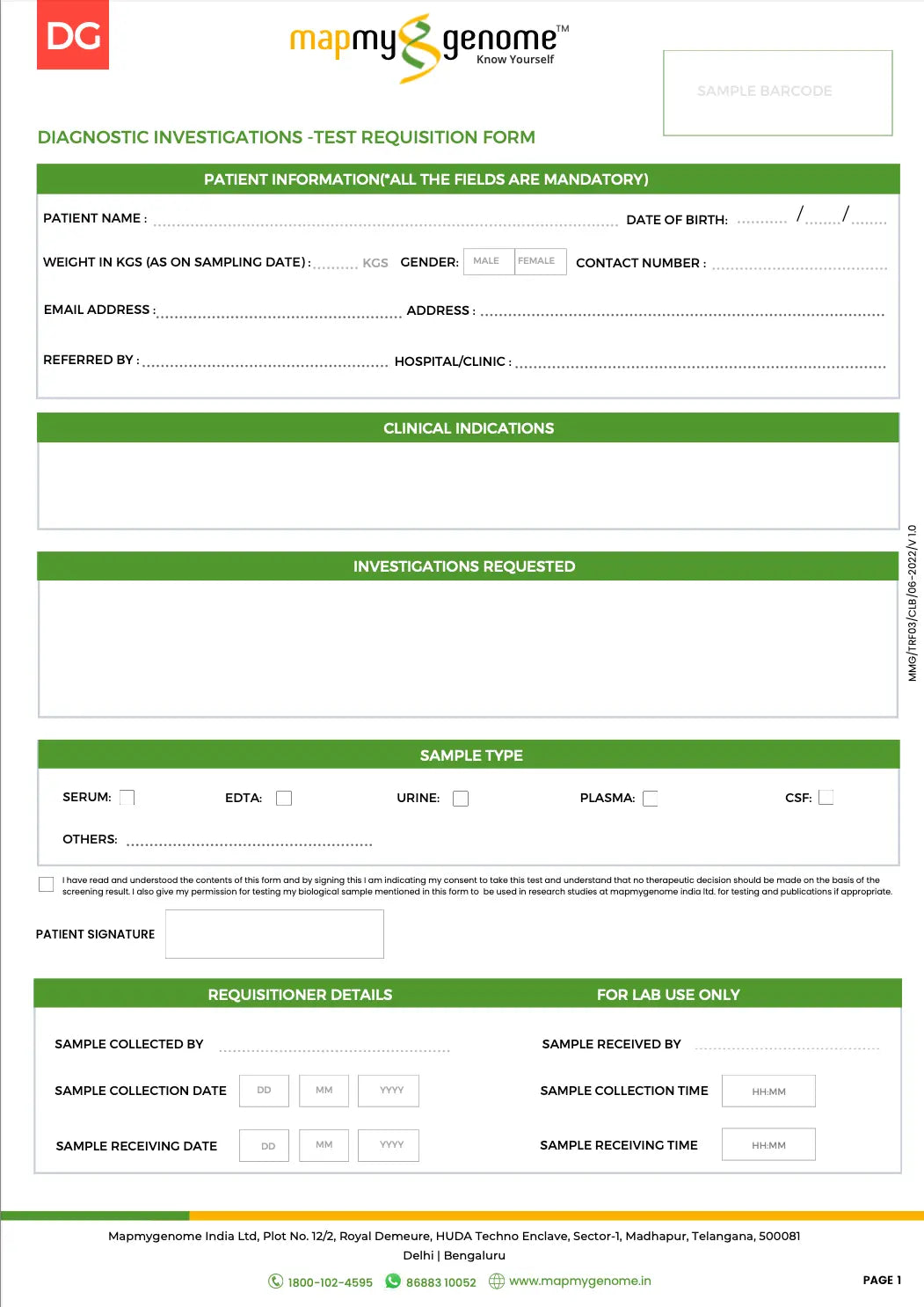
WES involves a simple blood or saliva sample. The DNA is extracted, the exome is captured and sequenced, and the resulting data is analysed by bioinformaticians and clinical geneticists. Results typically take 4–8 weeks and are accompanied by a detailed clinical report and genetic counselling session.
What Happens After a Diagnosis?
A WES diagnosis can:
End years of uncertainty and the “diagnostic odyssey”
Guide targeted treatment and management strategies
Enable cascade testing of family members
Inform reproductive decisions and family planning
Connect families with disease-specific support communities
Next Steps
Talk to a certified genetic counsellor
Choose an NABL-accredited lab for accuracy
Ask about costs, timelines, and what’s included
Take charge of your health and family future with WES
End the Diagnostic Odyssey with Whole Exome Sequencing
MapmyGenome offers whole exome sequencing through NABL-accredited laboratories, with certified genetic counsellors to guide you from sample collection through results interpretation and next steps.