

Every family has a father's-side story on tap. The surname, the village, the "we're originally from..." line that comes out at every wedding. Ask about the mother's side and you'll usually get a shrug — not because it's less interesting, but because for most of human history, there was no way to actually read it.
There's a reason for that silence, and it's sitting inside your cells right now, quietly recording a story nobody's ever asked it about.
The One Part of You That Isn't a Blend
Almost everything about your DNA is a shuffle. Half from your mother, half from your father, cut and recombined into something new — which is why you don't look exactly like either parent, and why your sibling's DNA isn't a copy of yours even though you share the same two people.
Mitochondrial DNA refuses to play that game. It lives outside your nucleus, inside your mitochondria, and it comes from one parent only — your mother — passed down virtually unchanged, generation after generation, with nothing from your father's side mixed in. It's not a blend of your parents. It's your mother's copy, which is her mother's copy, which is her mother's — a single unbroken thread running straight back, untouched by everything that reshuffles the rest of you.
That's what makes it different. And that's exactly what lets it trace something the rest of your genome physically can't: one continuous maternal line, as far back as the thread goes.
Reading the Clock Written Into Your Cells
Copy anything enough times in a row and small errors creep in — not damage, just quiet spelling changes that get carried forward along with everything else. Because mtDNA mutates slowly and on a predictable schedule, scientists can use those accumulated changes almost like a clock, sorting people who share a specific pattern into what's called a haplogroup.
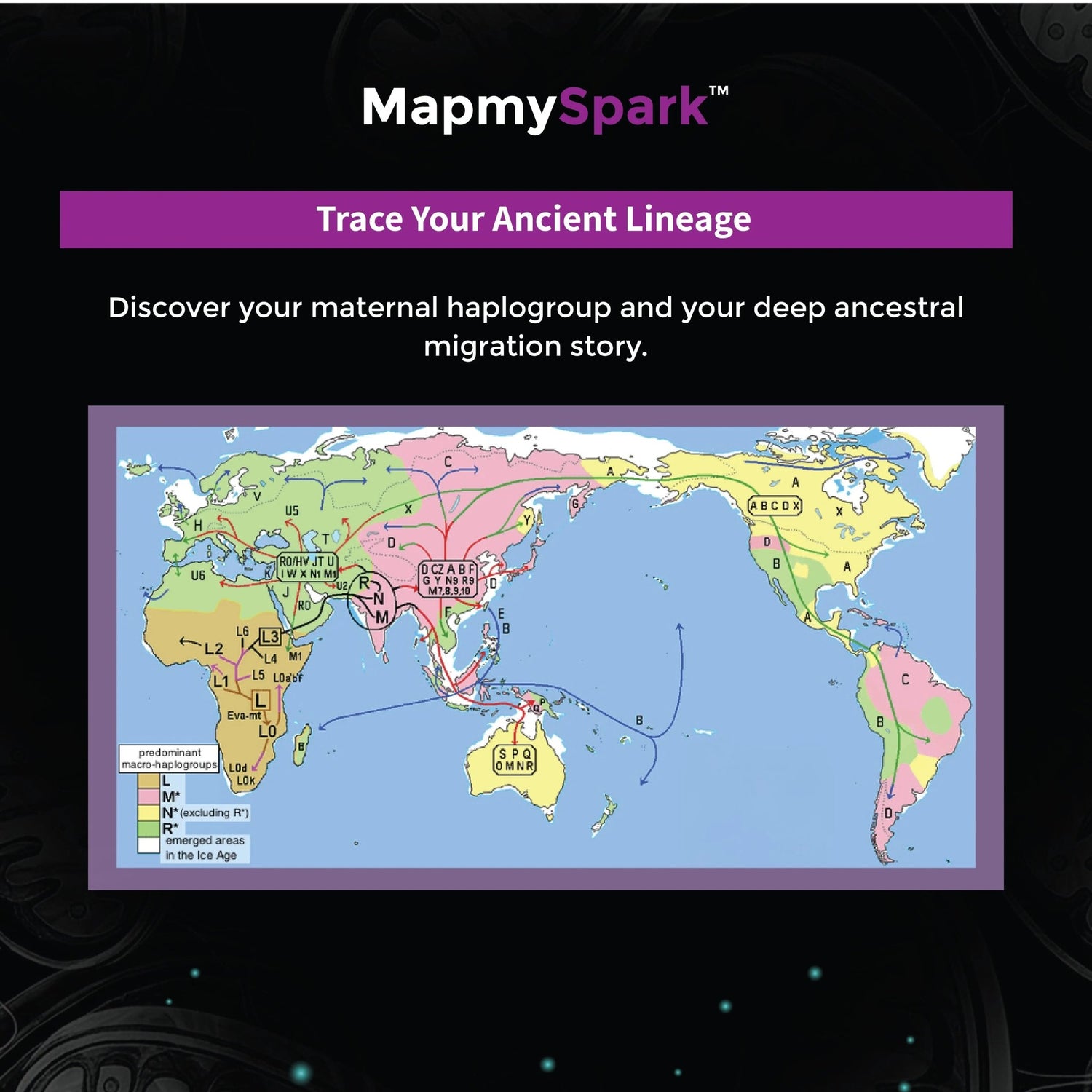
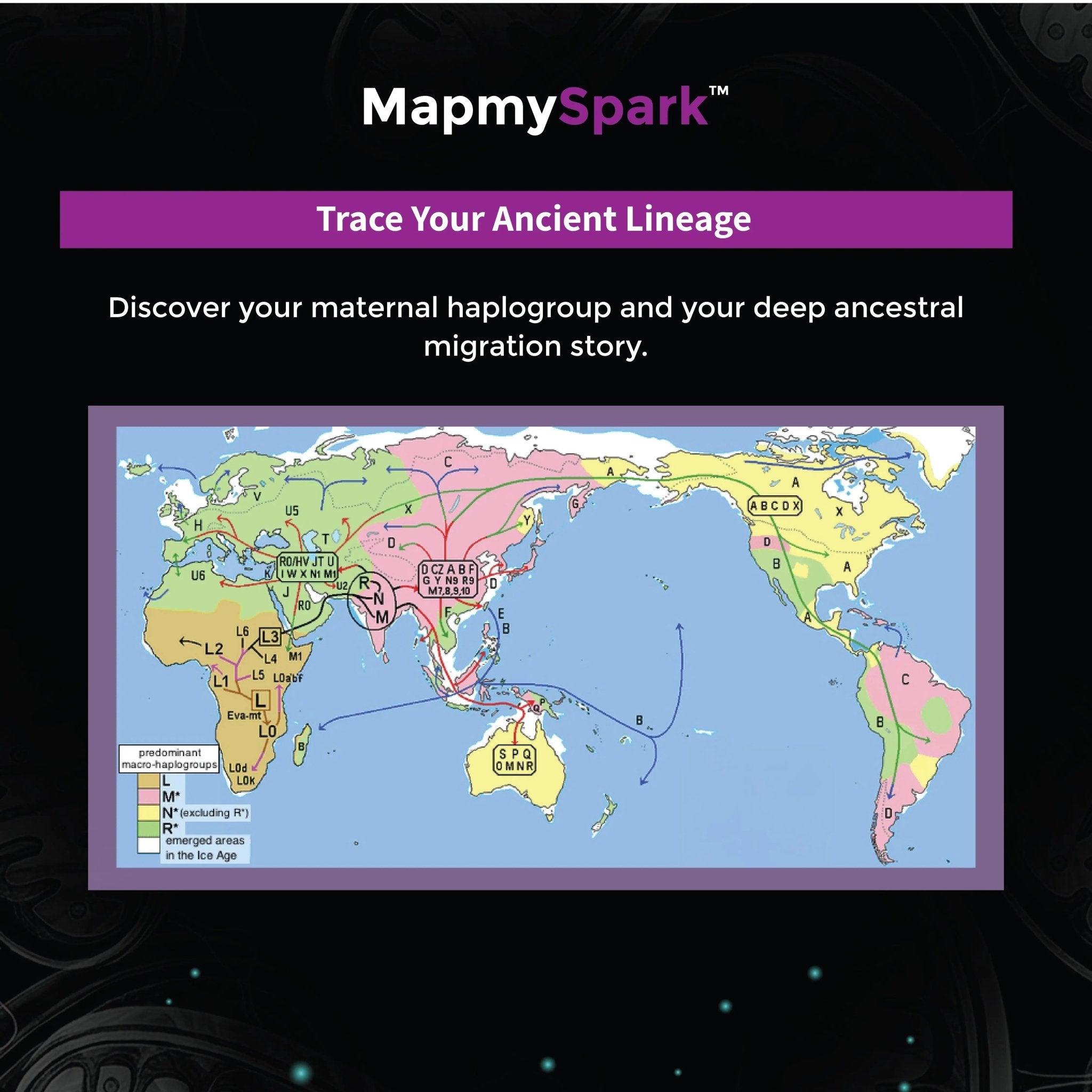
Every person alive today traces back to common maternal ancestors tens of thousands of years ago. Your haplogroup is the branch of that tree your specific maternal line ended up on — a fingerprint of which migration your mother's mother's mother's line was actually part of.
Across most of the Indian subcontinent, that branch runs through haplogroup M — one of the oldest, most diverse mtDNA lineages outside Africa, linked to an early coastal migration out of Africa tens of thousands of years ago. Inside India, M doesn't stop at one branch — it fans out into dozens of regional sub-lineages, which is a big part of why "Indian ancestry" was never going to fit on one label to begin with.
Two Parents, Two Very Different Stories
If you've read a Genomepatri Heritage report, or followed the "Stereotypes vs Genotypes" series on learn.mapmygenome.ai — where we've traced the genomic reality behind Rajput, Chitpavan Brahmin, Nair, Parsi, Bene Israel, and other community identities — you've already seen what autosomal DNA does: it blends. Both parents, reshuffled every generation, distilled into a percentage breakdown of ancestral populations.
Mitochondrial DNA doesn't blend anything. It's a single, unmixed line — and that's exactly why population geneticists studying Indian ancestry keep finding something genuinely striking: maternal lineages tend to run far deeper and more continuously indigenous than paternal ones, which show far more evidence of later, male-driven migration into the subcontinent — including the Steppe-associated ancestry we've written about in the Rajput piece. Your mother's line and your father's line aren't telling the same story. mtDNA is the only place that maternal half gets isolated cleanly enough to actually hear.
Your Cells Aren't Just a History Book — They're Still Running
Heritage is only half of what this DNA can tell you. The other half is happening inside you right now, because the same mitochondria you inherited from your mother aren't a museum piece — they're the machinery generating over 90% of your body's cellular energy, every single day, whether you're thinking about it or not.
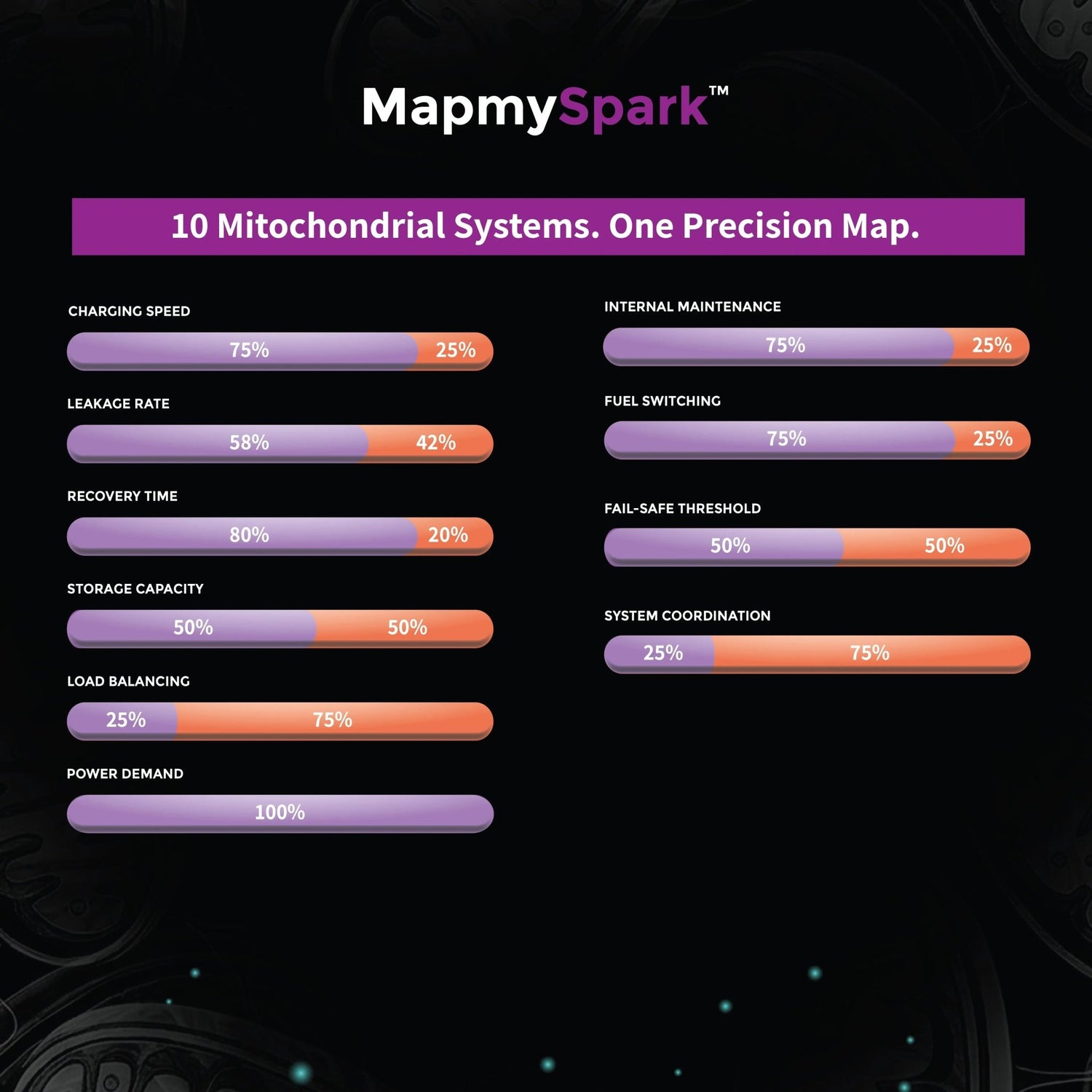
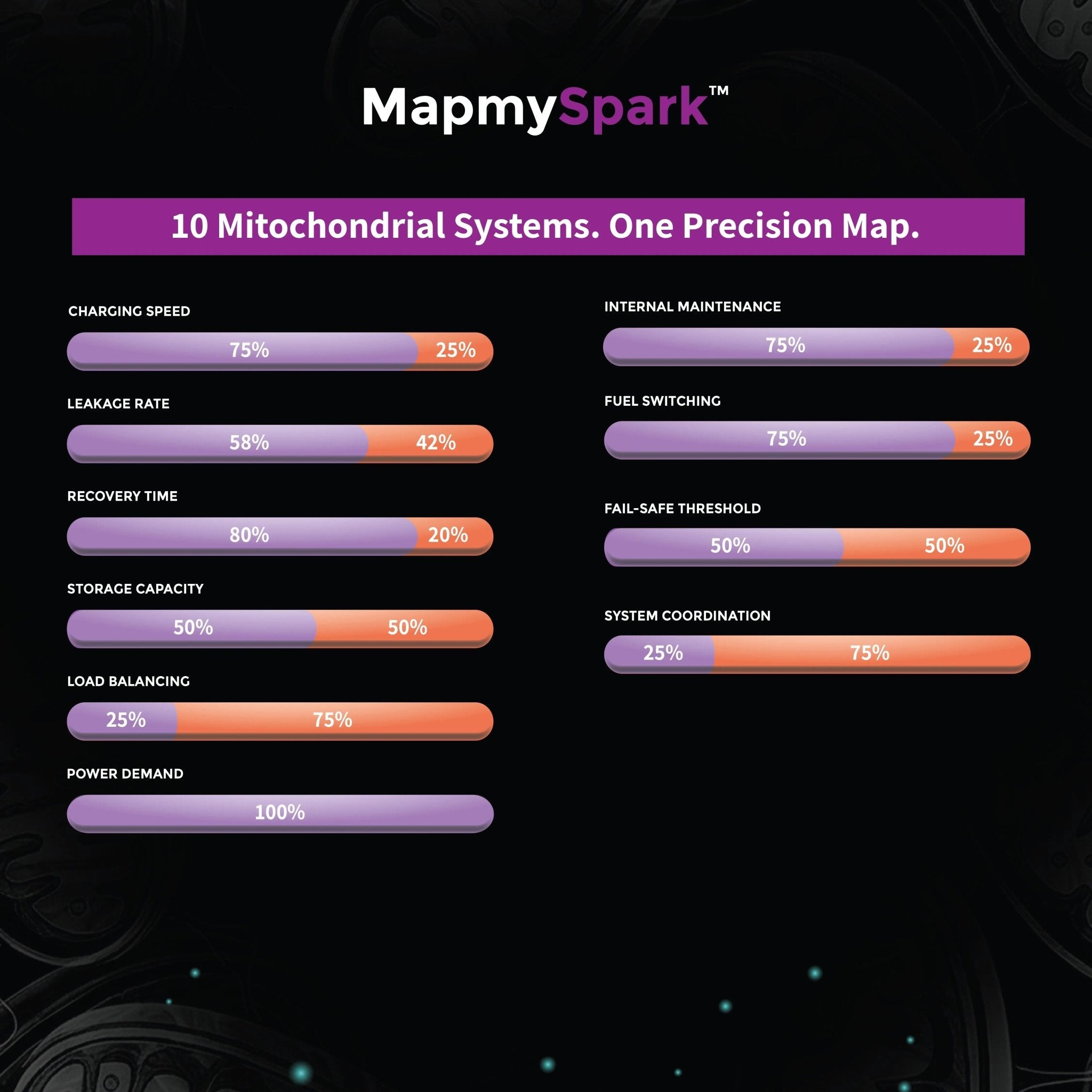
That's the side we've covered elsewhere: how failing mitochondrial function can masquerade as ordinary stress and burnout, and how the MitoBattery Suite breaks that efficiency down into charging speed, leakage rate, and system coordination — the numbers that actually explain why two people on the identical workout plan end up with completely different energy levels.
MapmySpark reads both stories off the same sample: the mitochondrial haplogroup that traces your maternal line back thousands of years, and the nuclear genetic variants that determine how efficiently your cells are turning fuel into energy today. Ancestry and vitality, out of the same microscopic machinery.
Where to Start
If it's the heritage side pulling you in — this is where it lives. Not an averaged-out blend, but one unbroken line back to a specific maternal ancestor, and a haplogroup that places you inside one of the oldest, most diverse lineages on the subcontinent.
If it's the energy side you're chasing, start with why chronic fatigue is sometimes mitochondrial, not mental. Either way, both readings come from the same test.
Trace Your Maternal Line — and Understand Your Energy — From One Test
MapmySpark reads your mitochondrial DNA to reveal your maternal haplogroup (your unbroken ancestral line back thousands of years) and your cellular energy profile — how efficiently your mitochondria generate power today. Ancestry and vitality, from the same sample.
For the full genomic breakdown of specific Indian communities — how ancestry, migration, and endogamy shaped the DNA of groups from Rajputs to Bene Israel — visit the Stereotypes vs Genotypes series on learn.mapmygenome.ai.