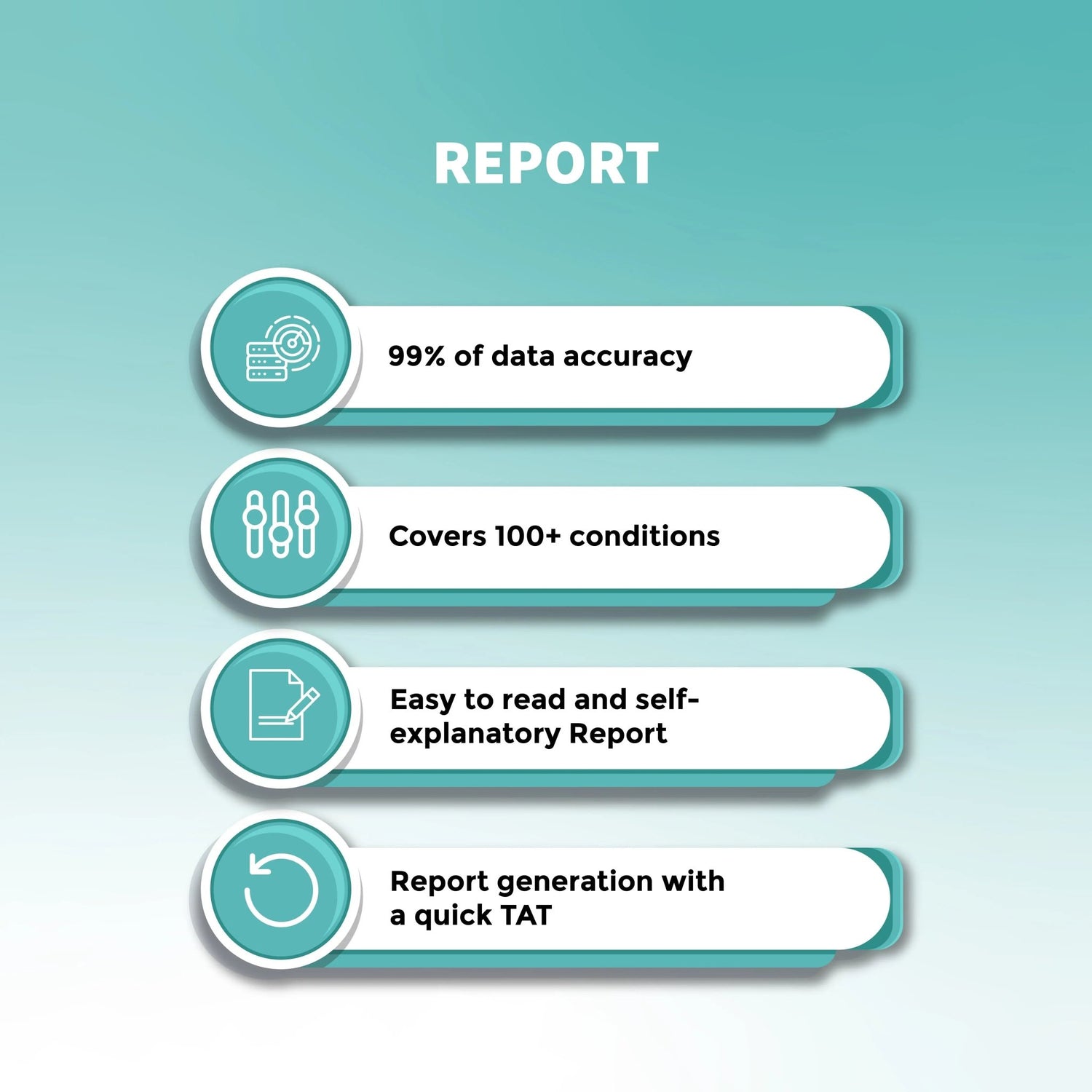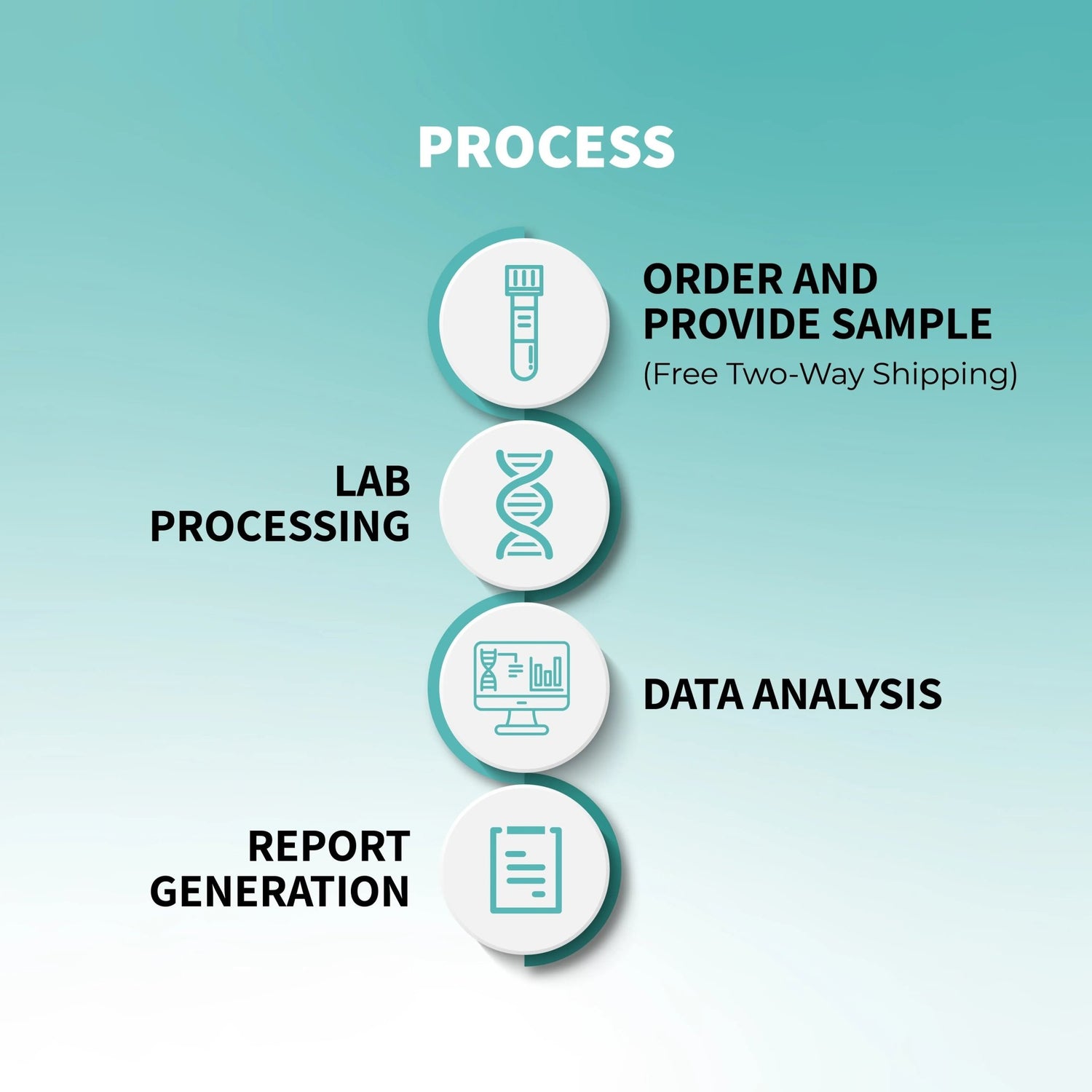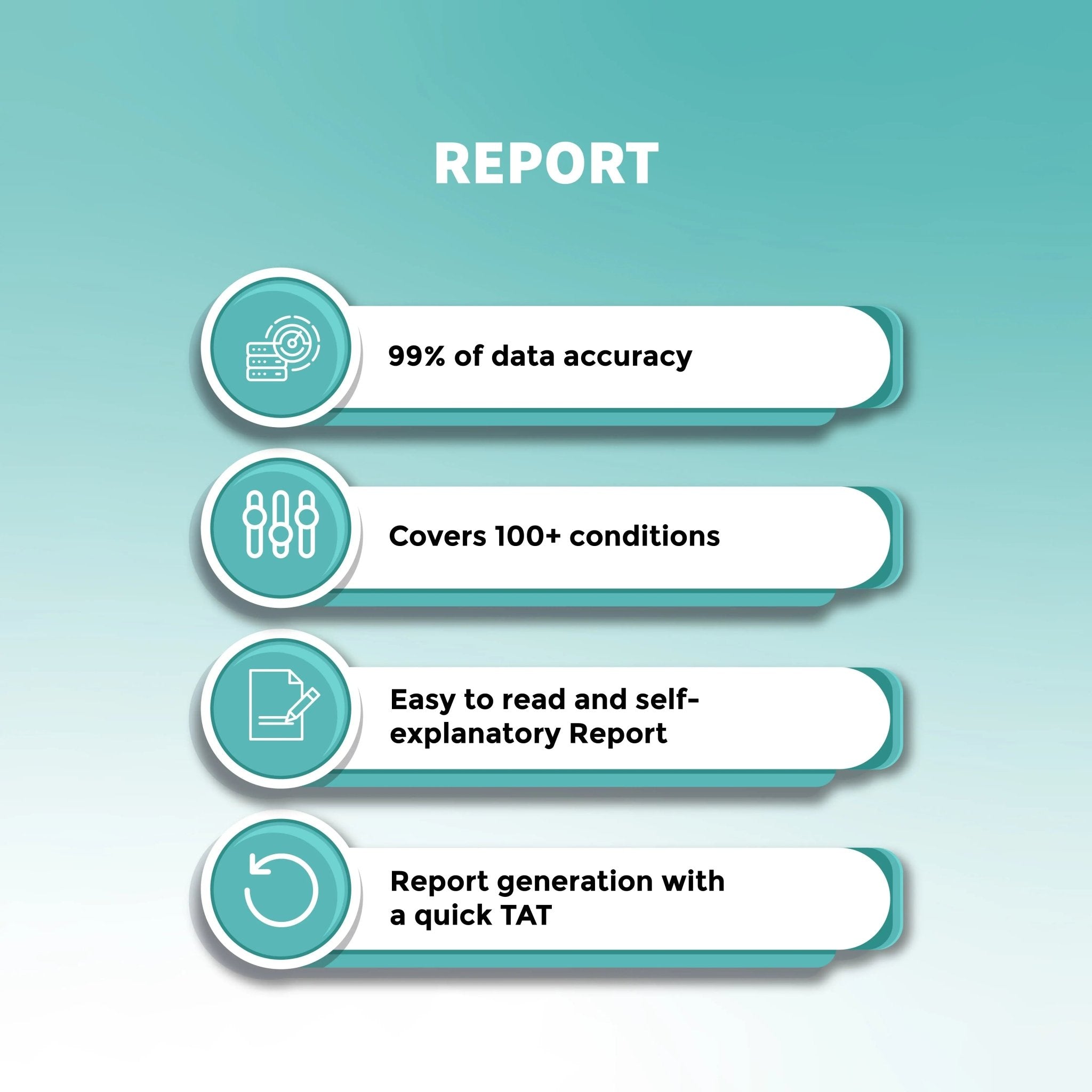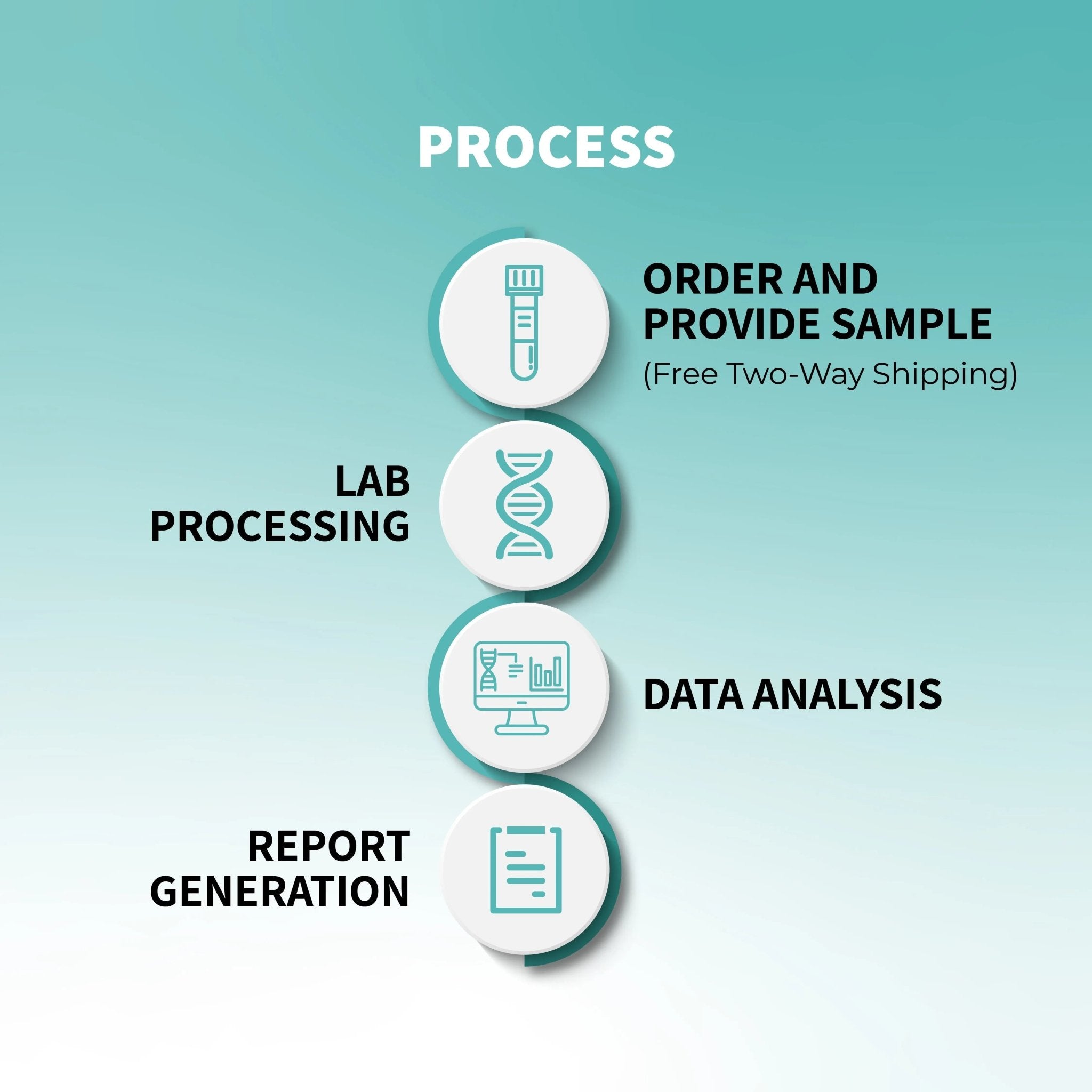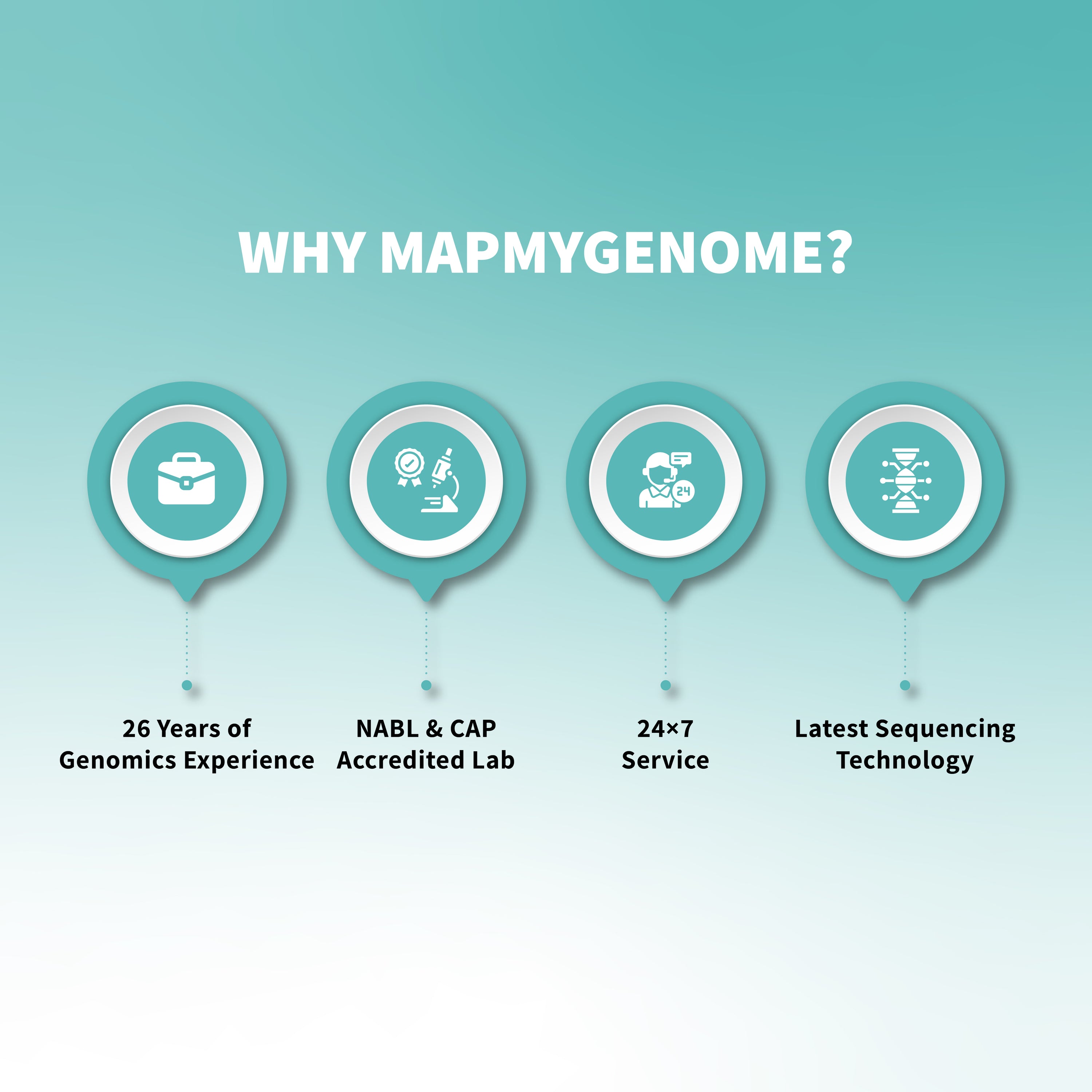


Here's a scenario I hear constantly: someone takes a gut microbiome test expecting a simple report card — a score, a list of good bacteria, a list of bad bacteria. And you do get that. But you also get a ton of other amazing information tucked into the same report — words like Segatella, neurotransmitter levels, and antibiotic resistance start showing up, and suddenly there's a wonderful surprise with a 30-plus page document that gives them a ton of information. If you want to download a sample report, click here .
At a Glance: What You Actually Learn from MapMyBiome
| Test Section | What It Analyzes | Example Finding | Direct Action |
| 5 Microbial Kingdoms | Bacteria, Fungi, Archaea, Viruses, Protozoa | High Candida albicans | Sugar & polyphenol restriction |
| Neurotransmitters | Gut-brain axis signaling potential | Low GABA & Serotonin species | Add fermented foods, lupin, adzuki |
| Sleep Health | Melatonin production drivers | Medium risk tied to species imbalance | Adjust circadian & dietary habits |
| Antibiotic Resistance | Resistance genes across 40+ classes | Tetracycline resistance flag | Shared with prescribing physician |
So let's actually open one up and walk through it together — using a real (anonymized) MapMyBiome report as our guide.
The number everyone looks at first
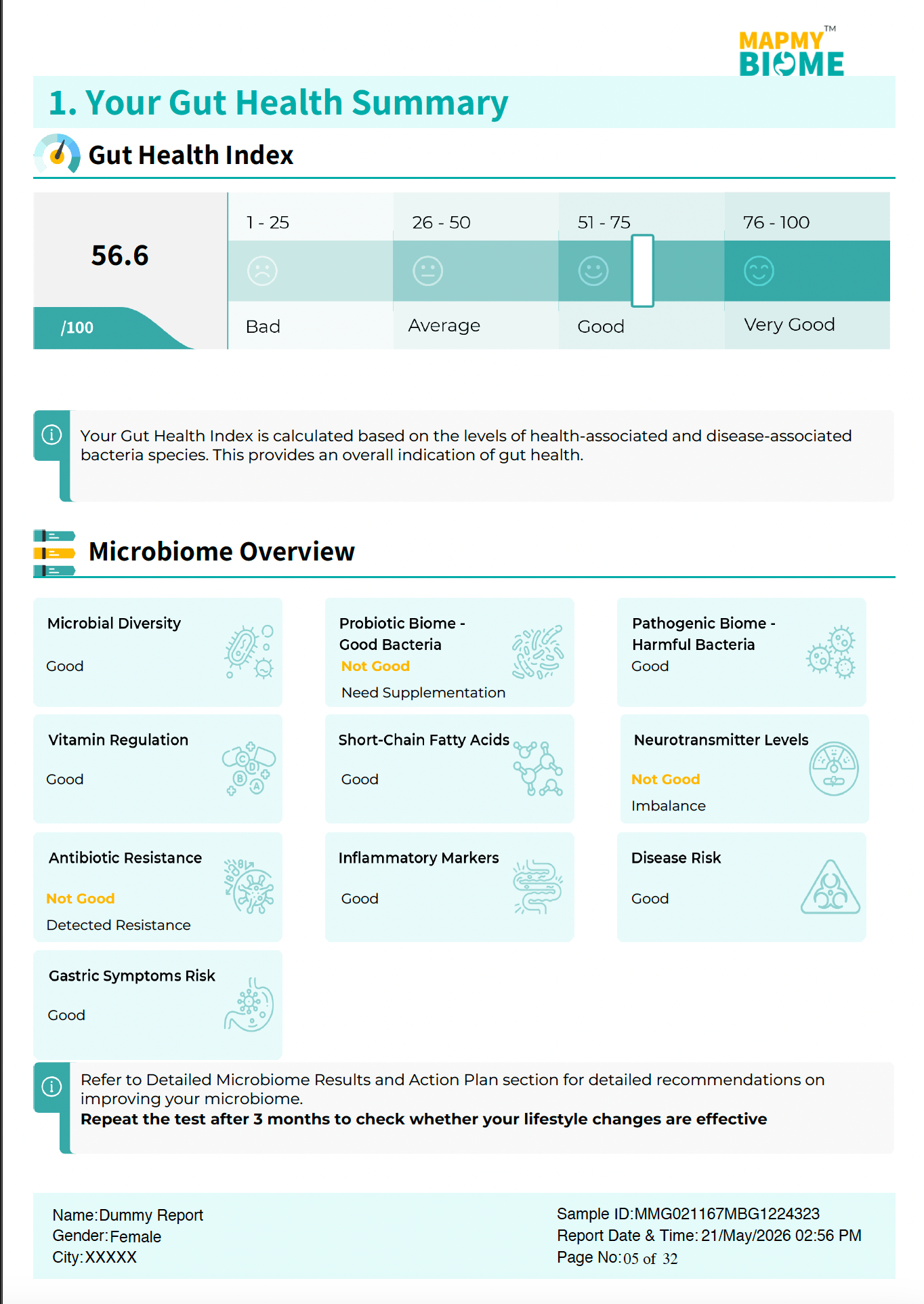
The report leads with a Gut Health Index — a single 0–100 score. In the sample we're using, it's 42.3: "Average," and down sharply from a 77.8 the same person scored a year earlier. That kind of drop is exactly the moment this test earns its keep — it's the difference between vaguely feeling "off" and having a number that says something changed, and here's what.
Your gut isn't just bacteria — it's five kingdoms doing five different jobs
To understand why this test is so comprehensive, you have to look at the science. Most standard gut tests use 16S rRNA sequencing, a basic method that only identifies broad families of bacteria. MapMyBiome uses advanced Shotgun Metagenomic Sequencing. Instead of looking for one specific gene, shotgun sequencing analyzes all the genetic material in your sample. This is why it can map fungi, archaea, and viruses down to the exact species level—crucial data that basic tests completely miss.
Because of this methodology, MapMyBiome has moved well past the old "good bugs vs. bad bugs" model. Every report screens five separate kingdoms of microbes, because an imbalance in any one of them can be behind a symptom bacteria alone wouldn't explain:
-
Probiotic biome — your beneficial bacteria. In our sample, several Lactobacillus species came back genuinely low — not a vague "needs work," but three specific low-abundance species named by name.
-
Pathogenic biome — the harmful players (E. coli, Salmonella, C. diff and friends), checked against strict safety ceilings. This person's came back clean.
-
Archaea — the methane-producers that quietly govern digestion speed and bloating. Normal here.
-
Fungi — the mycobiome. This is where things got interesting: Candida albicans came back "High," flagged as a specific, nameable overgrowth rather than a generic "watch your sugar" note.
-
Viruses & Protozoa — rounding out the full microbial census, both clear in this case.
Underneath all five, the report goes down to individual bacterial species — in our sample, Mitsuokella jalaludinii was running nearly 10x above its normal ceiling, something you'd never catch on a basic panel.
There's also a small but genuinely fun detail: a Bacteroides-Prevotella ratio that essentially reverse-engineers your eating pattern from your biology. This person's ratio pointed to a plant-forward, fiber-rich diet — no food diary required, the bacteria already told on them.
It's not just who's there — it's what they're doing to your mood, sleep, and gut
This is the section that tends to make people sit up. Your gut bacteria don't just digest food — specific species manufacture specific neurotransmitters. In this report, both GABA and serotonin came back low, each one traced to one exact underproducing species. That's a genuinely different kind of insight than "eat better for your mood" — it's "this bacterium, at this level, is short on the raw material for this neurotransmitter."
The report also checks:
-
Vitamin regulation (A, B-complex, C, D, K) — all normal here
-
Short-chain fatty acids — acetate, butyrate, propionate, the fuel that keeps your gut lining intact — all normal
-
Antibiotic resistance — a scan across 40+ antibiotic classes. One flag came back here: resistance to tetracycline, worth knowing before that drug is ever prescribed
-
Inflammatory markers — CRP, TNF, zonulin, calprotectin and more, all low risk in this case
The two additions that go beyond a typical gut test: sleep and symptom risk
We didn't stop at digestion. Two sections push into territory most gut tests never touch:
Sleep Health — your gut bacteria influence melatonin production and circadian regulation. In this sample, melatonin production potential came back "Medium Risk," tied to one specific overabundant species. If you've been blaming your 2am wake-ups purely on screen time, this is a reminder there's a gut-brain axis working against you too.
Gastric Symptom & Disease Risk — the report translates the microbial data into plain-language risk levels for things like stomach pain, diarrhea, bloating, and longer-term risks like Type 2 diabetes and IBS. This person showed medium risk for both stomach pain and diarrhea, each one linked to a named bacterial signature — not a guess, a specific microbial fingerprint.
Then — and this is the part people undervalue — it tells you what to actually do
Every single flag above comes with a matching action plan entry. Low Lactobacillus? Here's the exact fermented-food and prebiotic-fiber protocol. High Candida? Here's the sugar-and-polyphenol plan. Low GABA? Here are the specific foods — lupin sprouts, adzuki beans, oats, kimchi — shown to support GABA production. Low serotonin? A different, specific list. This isn't a generic "eat more fiber" pamphlet stapled to the back — it's a food plan built off your exact flags.
Why this matters alongside your DNA test
If you've already done Genomepatri or MedicaMap, think of it this way: your genes are the fixed part of the story — they don't change with your Tuesday lunch. Your gut microbiome is the part that does. It's why we recommend retesting every 3–6 months: it's the one report in your health picture that can actually show you whether the changes you're making are working, in real time.
Frequently Asked Questions (FAQ)
How often should I retest MapMyBiome?
Every 3 to 6 months to track how dietary changes shift your microbial balance.
Can a gut test replace a DNA test like Genomepatri?
No. DNA tests analyze your fixed genetic blueprint, while MapMyBiome measures dynamic microbial changes influenced by daily lifestyle.
Why does MapMyBiome use Shotgun Metagenomic Sequencing?
Standard 16S rRNA sequencing only detects bacteria. Shotgun Metagenomic Sequencing analyzes all genetic material in your sample, allowing MapMyBiome to map fungi, archaea, and specific microbial species down to the exact strain. This comprehensive data is what drives our highly specific dietary and lifestyle recommendations.
This report is designed to guide lifestyle decisions, not to diagnose or treat any condition — anything flagged medium or high risk is worth a conversation with your healthcare provider.
See What Your Gut Is Actually Doing — Down to the Species Level
MapMyBiome uses shotgun sequencing to screen all five kingdoms of your gut microbiome — bacteria, fungi, archaea, viruses, and protozoa — and maps them to your mood, sleep, digestion, and disease risk, with a personalised food plan built off your exact results. Retest every 3–6 months to track what's actually changing.