


One Size Doesn't Fit All in Medicine
You visit your doctor with a fever. They prescribe a course of antibiotics and tell you to come back in a week if you don't improve. A week later, you're back — the medicine didn't work, or worse, it caused a reaction. Your doctor tries something else. This "trial and error" approach to medication is frustratingly common — and it doesn't have to be.
The reason the same drug works brilliantly for one person and fails — or harms — another comes down to a single word: pharmacogenomics.
What Is Pharmacogenomics?
Pharmacogenomics is the study of how your genes influence your response to drugs. It combines pharmacology (the science of drugs) and genomics (the study of genes) to understand why individuals respond differently to the same medication — and to use that knowledge to prescribe the right drug, at the right dose, for the right person.
While humans share 99% of their DNA, that 1% of genetic variation makes each of us unique — including in how we metabolize, respond to, and tolerate medications.
How Genes Affect Drug Response
Your genes provide instructions for building proteins — including the enzymes in your liver that metabolize drugs. Variations in these genes can significantly alter how a drug behaves in your body:
- Normal metabolizers — Process drugs at the expected rate; standard doses work as intended
- Poor metabolizers — Process drugs too slowly; the drug accumulates, increasing the risk of side effects and toxicity
- Rapid/ultrarapid metabolizers — Process drugs too quickly; the drug clears before it can work, reducing efficacy
- Intermediate metabolizers — Process drugs at a reduced rate; may need dose adjustments
These differences are not random — they are encoded in your DNA and remain constant throughout your life. A single genetic test can reveal your metabolizer status for dozens of drugs across multiple therapeutic areas.
Real-World Impact: Why This Matters
The consequences of prescribing without pharmacogenomic information can be significant:
- Patients prescribed antidepressants may cycle through 3–4 different medications over months before finding one that works — when a genetic test could have identified the right option from the start
- Poor metabolizers of Clopidogrel (a common heart drug) receive no antiplatelet protection — yet believe they are protected against heart attack and stroke
- Certain cancer chemotherapy drugs cause severe toxicity in patients with specific genetic variants — toxicity that is entirely predictable and preventable with prior testing
- Codeine — a common pain reliever — is converted to morphine in the body; ultrarapid metabolizers can experience life-threatening morphine toxicity from standard doses
The US FDA has added pharmacogenomic information to the labels of over 200 drugs — acknowledging that genetic variation is a clinically significant factor in drug response.
The Power of Personalized Medicine
Pharmacogenomics is a cornerstone of precision medicine — an approach that combines genetic variability, environment, and lifestyle to create customized prevention and treatment plans for each individual. Instead of the "one size fits all" approach, precision medicine delivers "the right one for you."
Beyond individual patient care, pharmacogenomics is accelerating drug discovery — helping researchers understand why certain drugs cause adverse reactions in specific populations, and enabling the development of safer, more targeted therapies.
Key Drug Categories Where Pharmacogenomics Makes a Difference
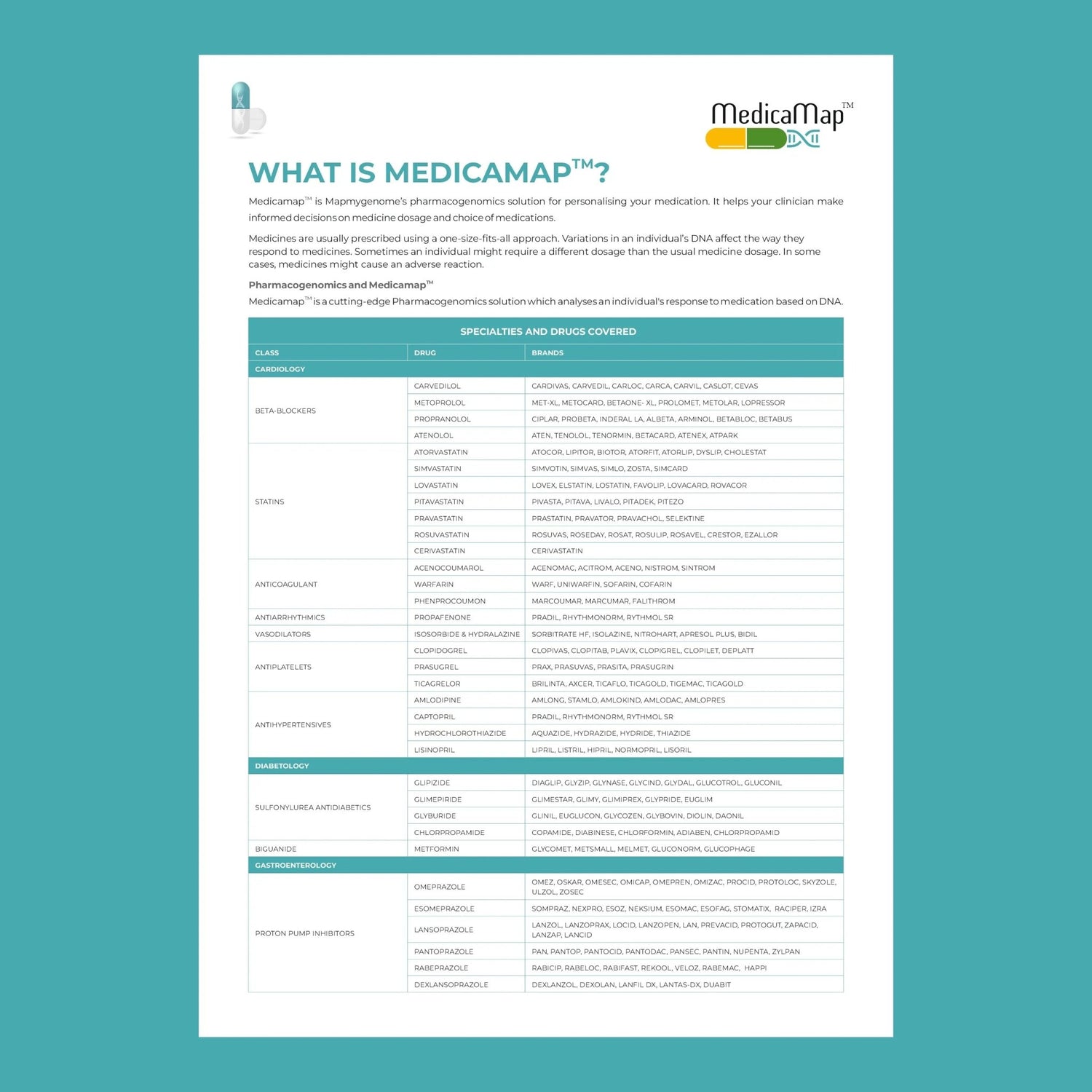
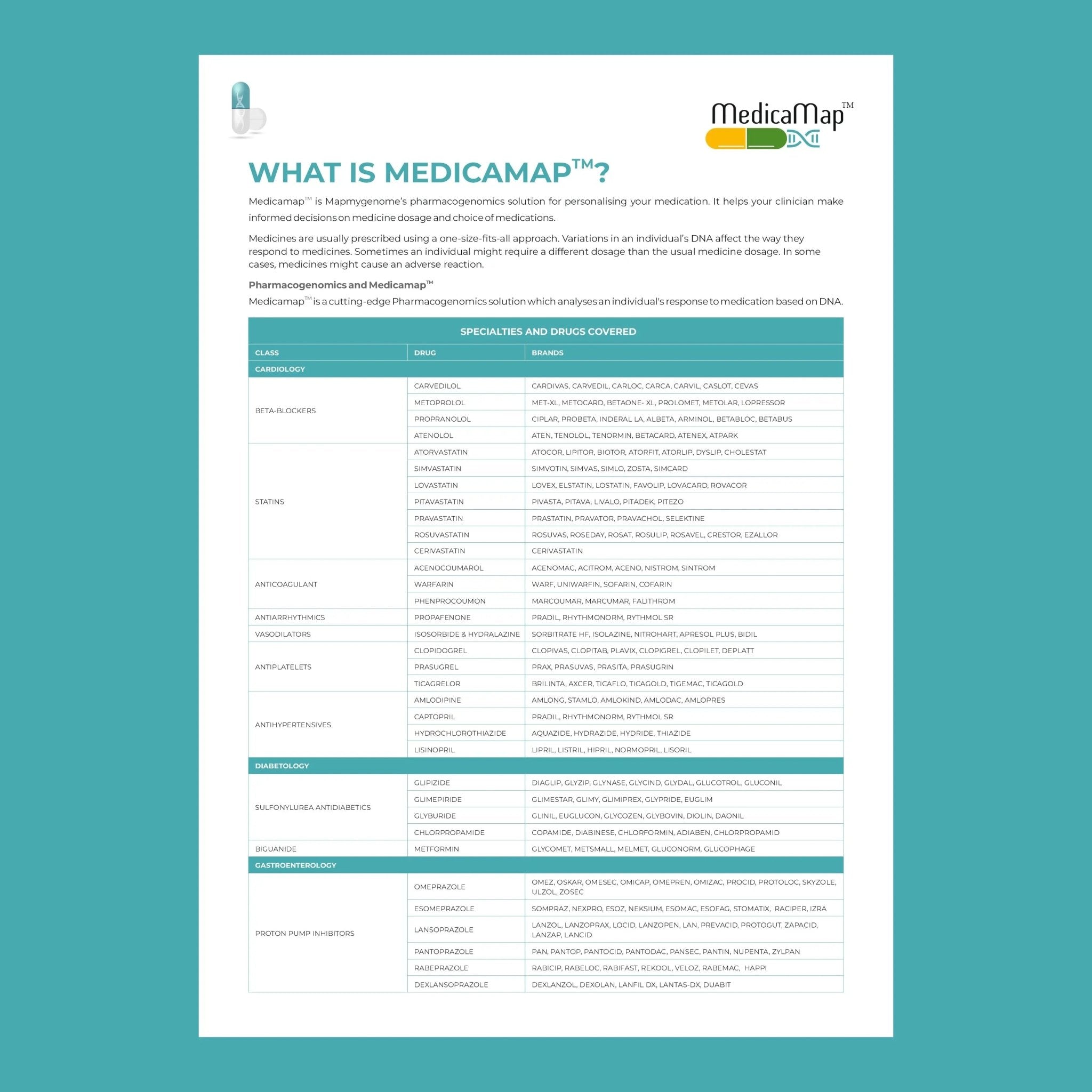
- Cardiovascular drugs — Clopidogrel, warfarin, statins
- Psychiatric medications — Antidepressants (SSRIs, SNRIs), antipsychotics, mood stabilizers
- Pain management — Codeine, tramadol, opioids
- Oncology — Chemotherapy agents (5-fluorouracil, irinotecan, tamoxifen)
- Infectious disease — HIV antiretrovirals, antifungals
- Anaesthesia — Succinylcholine and related agents
FAQs
Is pharmacogenomic testing a one-time test?
Yes. Your genetic makeup does not change over your lifetime. A single pharmacogenomic test provides information that is relevant for all future prescribing decisions — making it a lifelong investment in safer, more effective healthcare.
Should I get pharmacogenomic testing before starting a new medication?
Ideally, yes — particularly for medications where genetic variation is known to significantly affect response or safety. Discuss with your doctor whether pharmacogenomic testing is appropriate before starting a new drug regimen.
🧬 Personalize Your Medication with MedicaMap
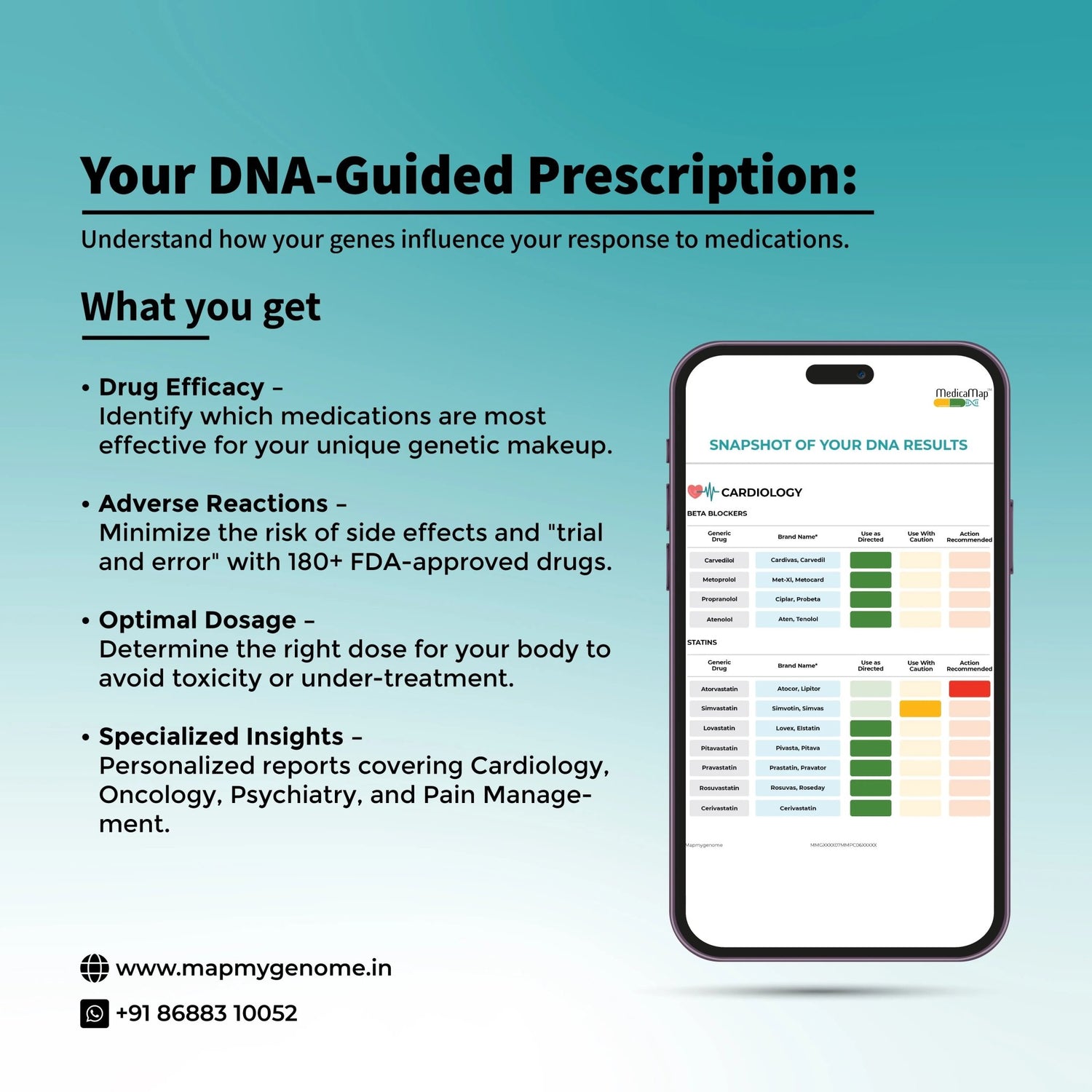
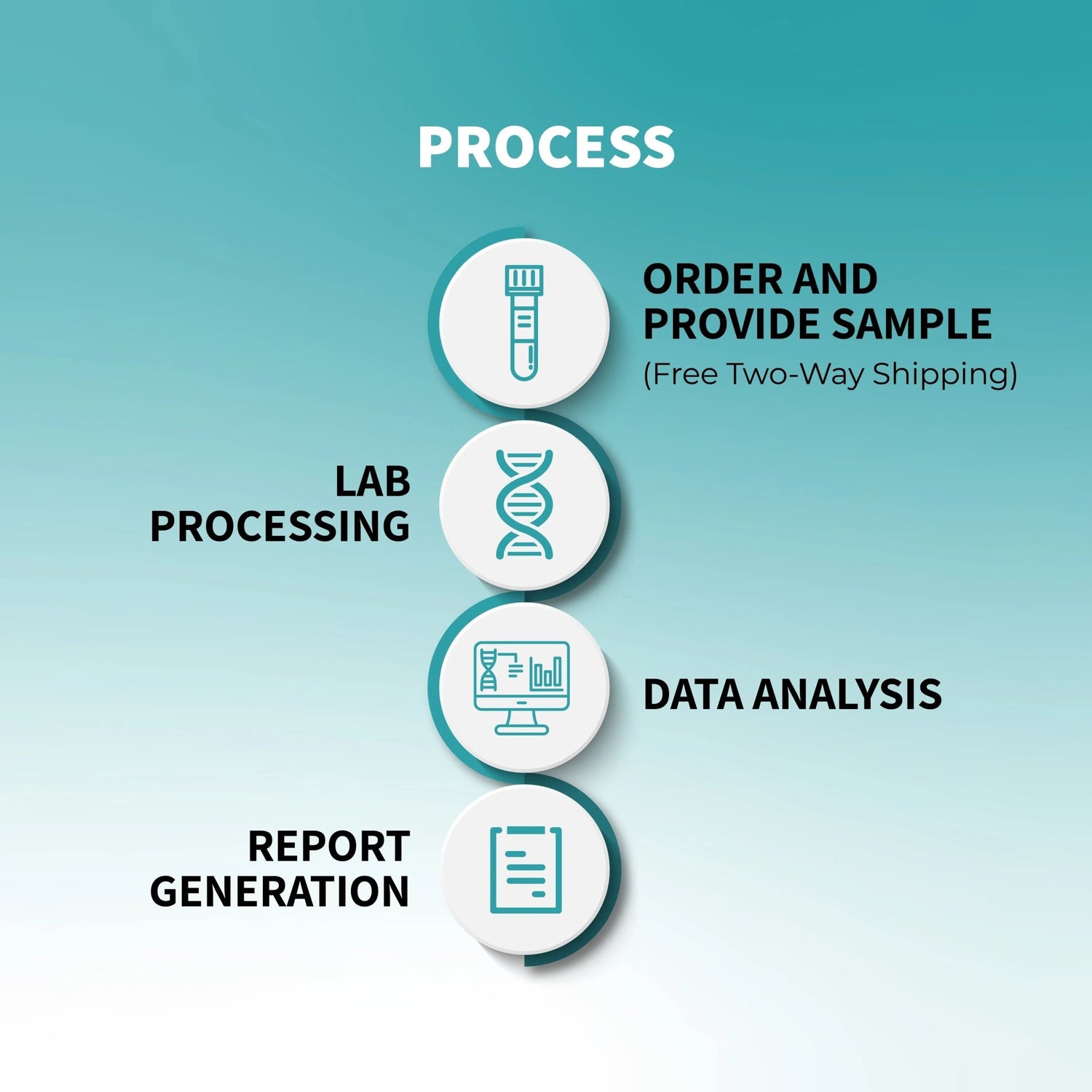
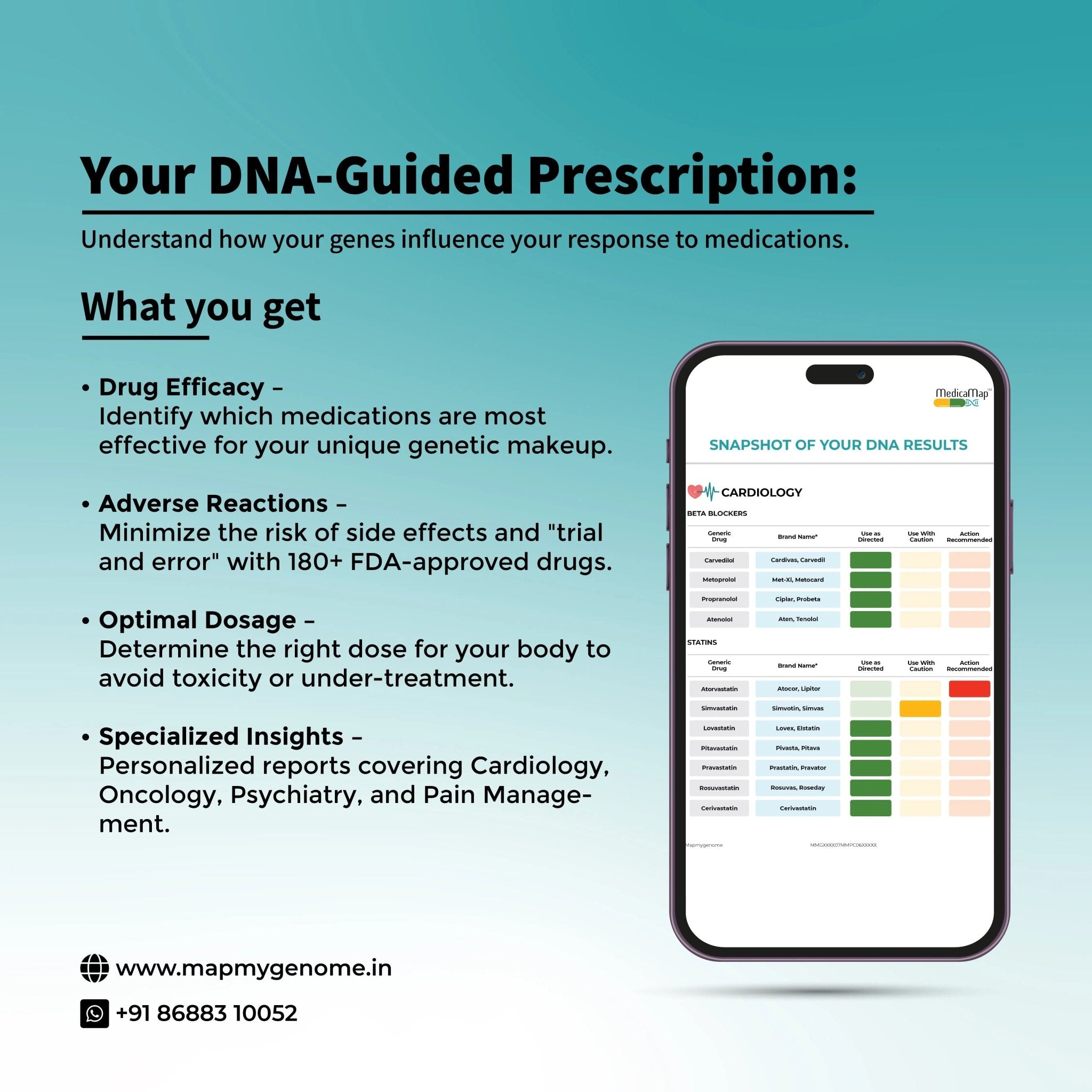
MedicaMap by MapmyGenome is India's comprehensive pharmacogenomics solution — providing information about your body's response to 165+ medicines across 12 specialties, including cardiology, psychiatry, oncology, pain management, and more. It helps your clinician make informed decisions on drug choice and dosage — replacing trial and error with precision.
→ Genomepatri — Includes pharmacogenomic insights alongside 100+ health and wellness traits (₹7,999)
For a dedicated pharmacogenomics report covering 165+ drugs, contact us at info@mapmygenome.in or call 1800 102 4595 to learn about MedicaMap.










1 comment
How many drugs are covered