

Have you ever wondered where your family truly comes from? Beyond the stories passed down through generations, your DNA holds the most accurate record of your ancestral journey — spanning thousands of years and thousands of miles. Genetic ancestry testing has made it possible for anyone to explore their heritage with remarkable precision.
What Is Genetic Ancestry Testing?
Genetic ancestry testing analyzes specific markers in your DNA to trace your ethnic origins and migration patterns. Unlike family history research, which is limited by available records, DNA testing can reveal ancestry going back hundreds of generations — including connections to populations and regions that may never appear in any written record.
Types of Genetic Ancestry Tests
Autosomal DNA Testing
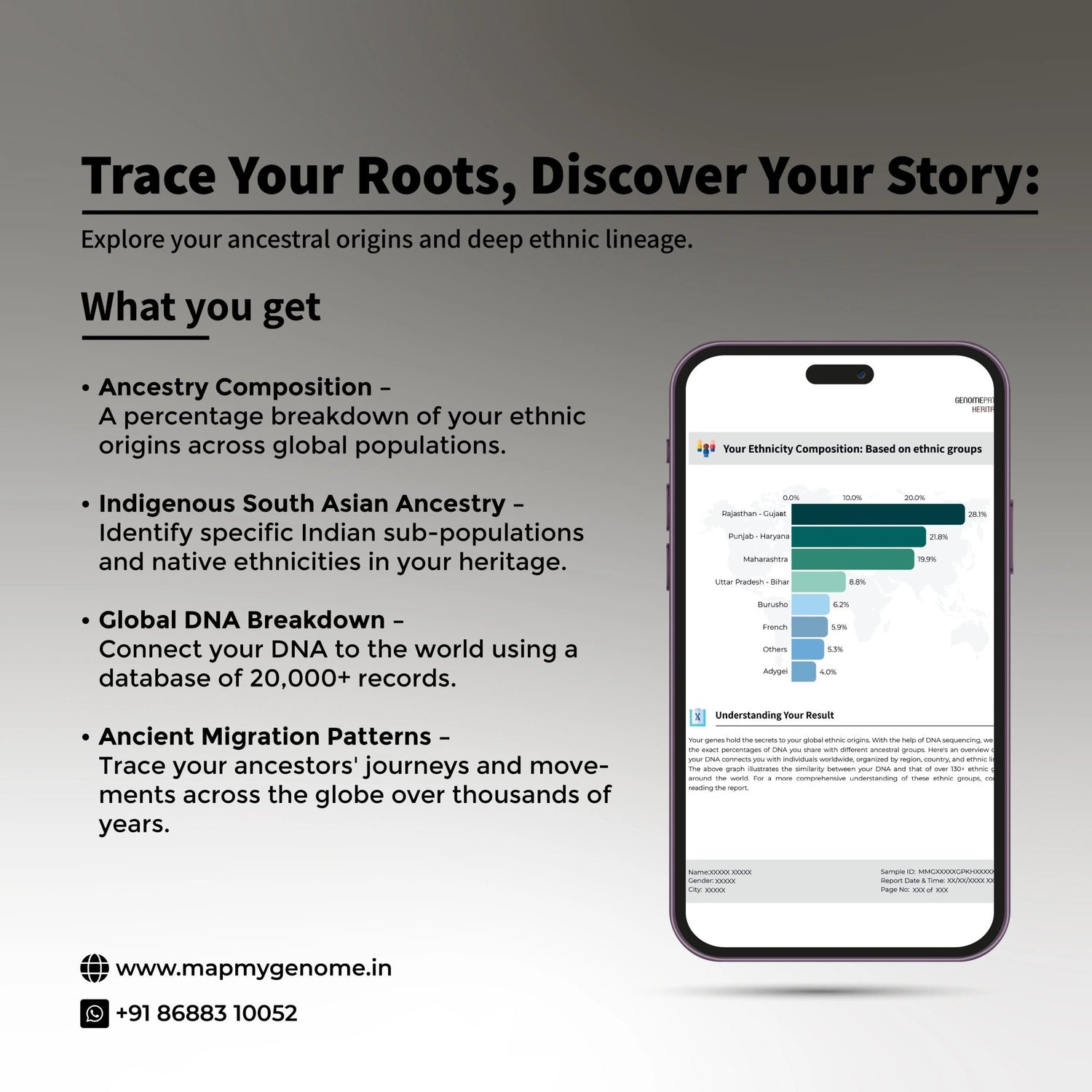
Tests DNA inherited from both parents across all chromosomes. Provides an ethnicity estimate showing the percentage of your DNA that matches reference populations from different regions of the world. Identifies relatives up to approximately 5–6 generations back. This is the most popular type of ancestry test.
Y-DNA Testing
Tests the Y chromosome, which is passed from father to son virtually unchanged. Traces the direct paternal line (father's father's father's...) back thousands of years. Useful for tracing surnames and paternal haplogroups. Only available for biological males.
Mitochondrial DNA (mtDNA) Testing
Tests mitochondrial DNA, which is passed from mother to child virtually unchanged. Traces the direct maternal line (mother's mother's mother's...) back thousands of years. Available for both males and females.
What Can Ancestry Testing Tell You?
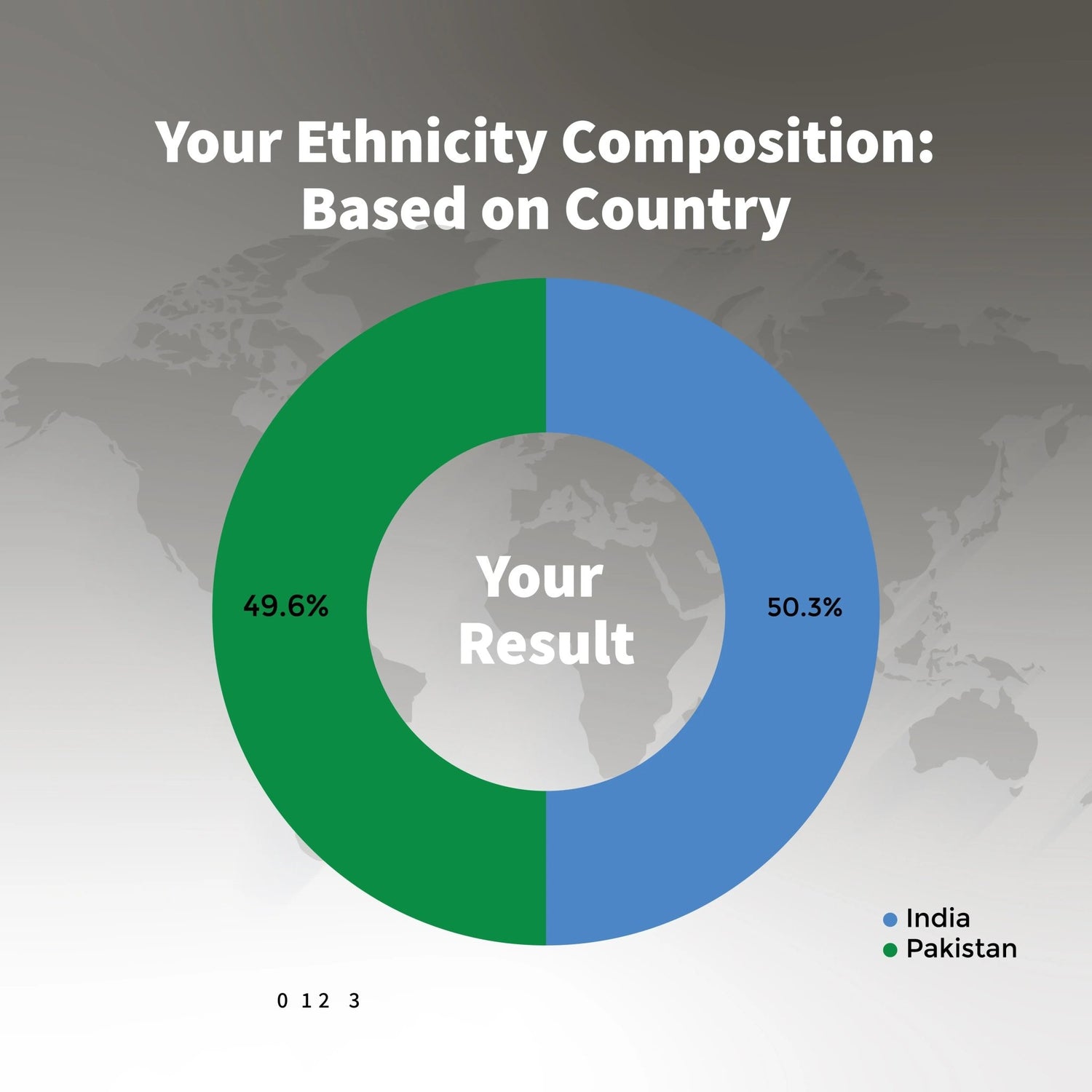
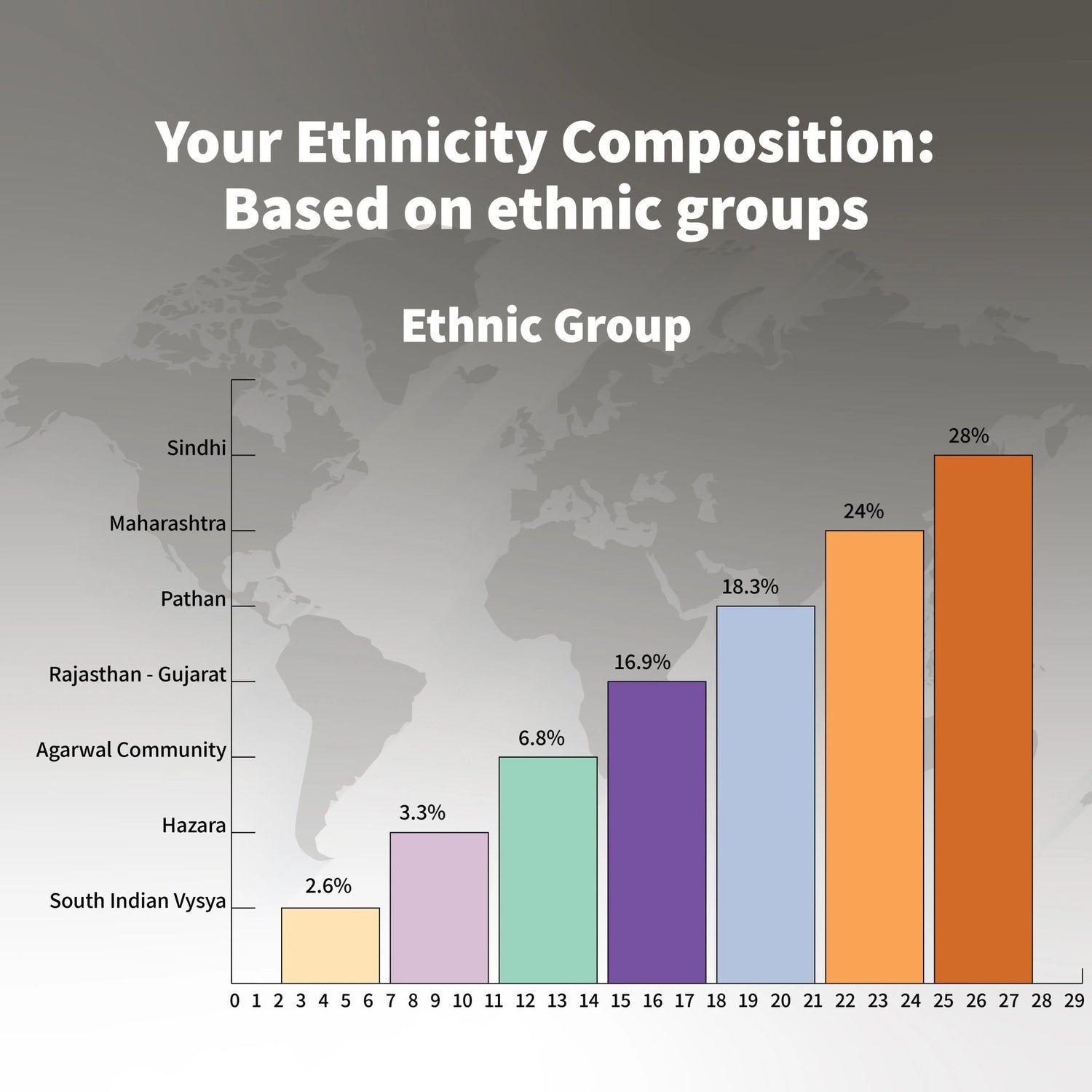
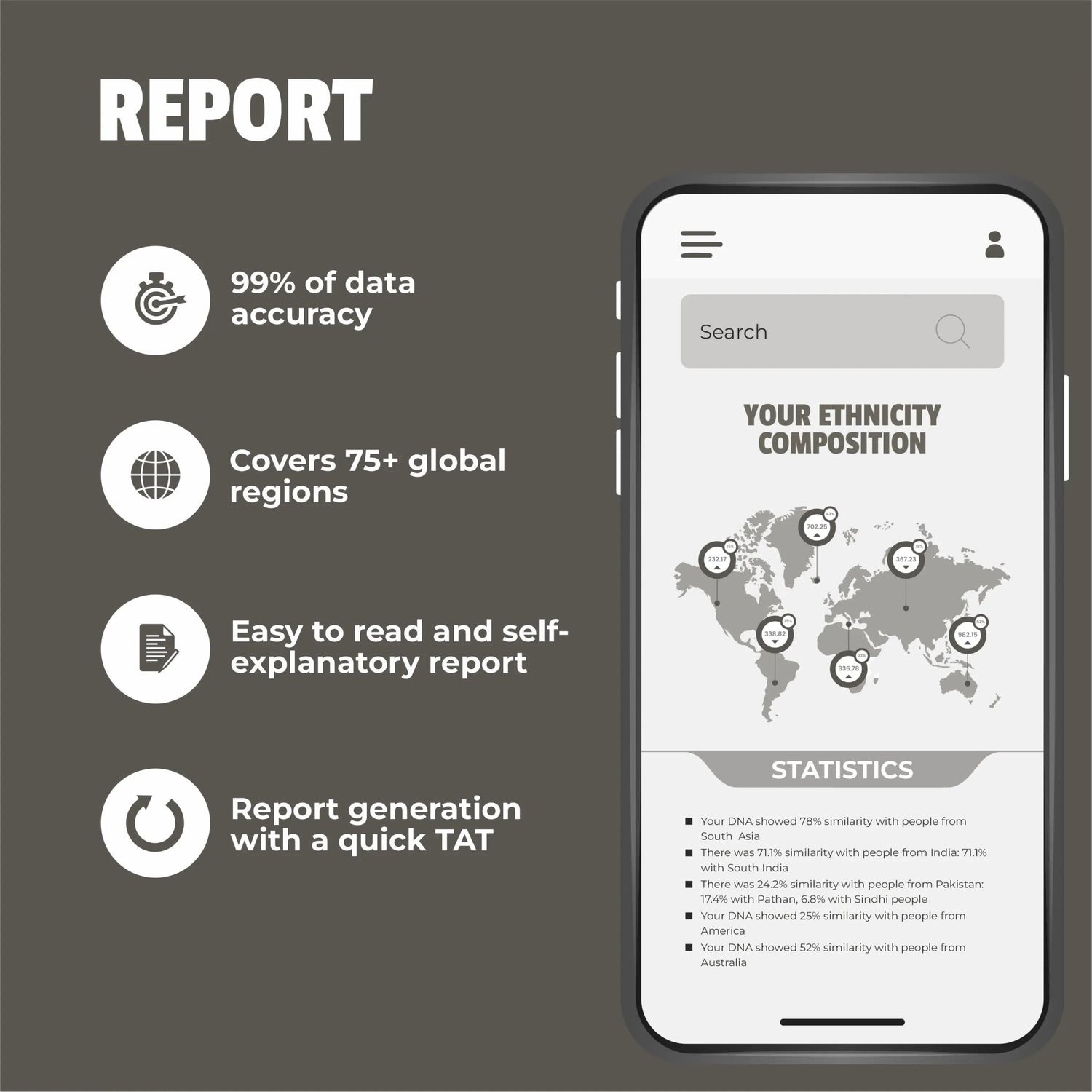
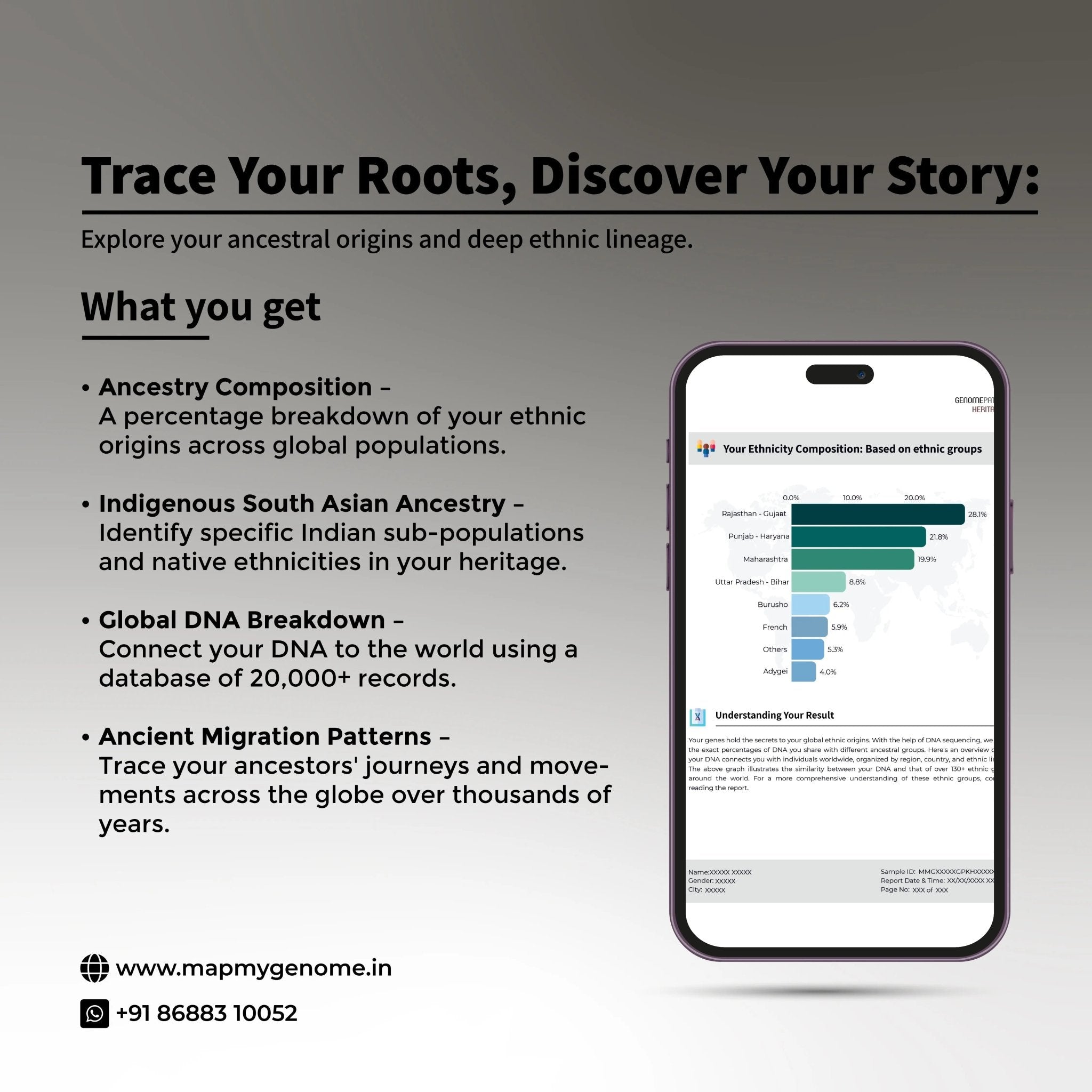
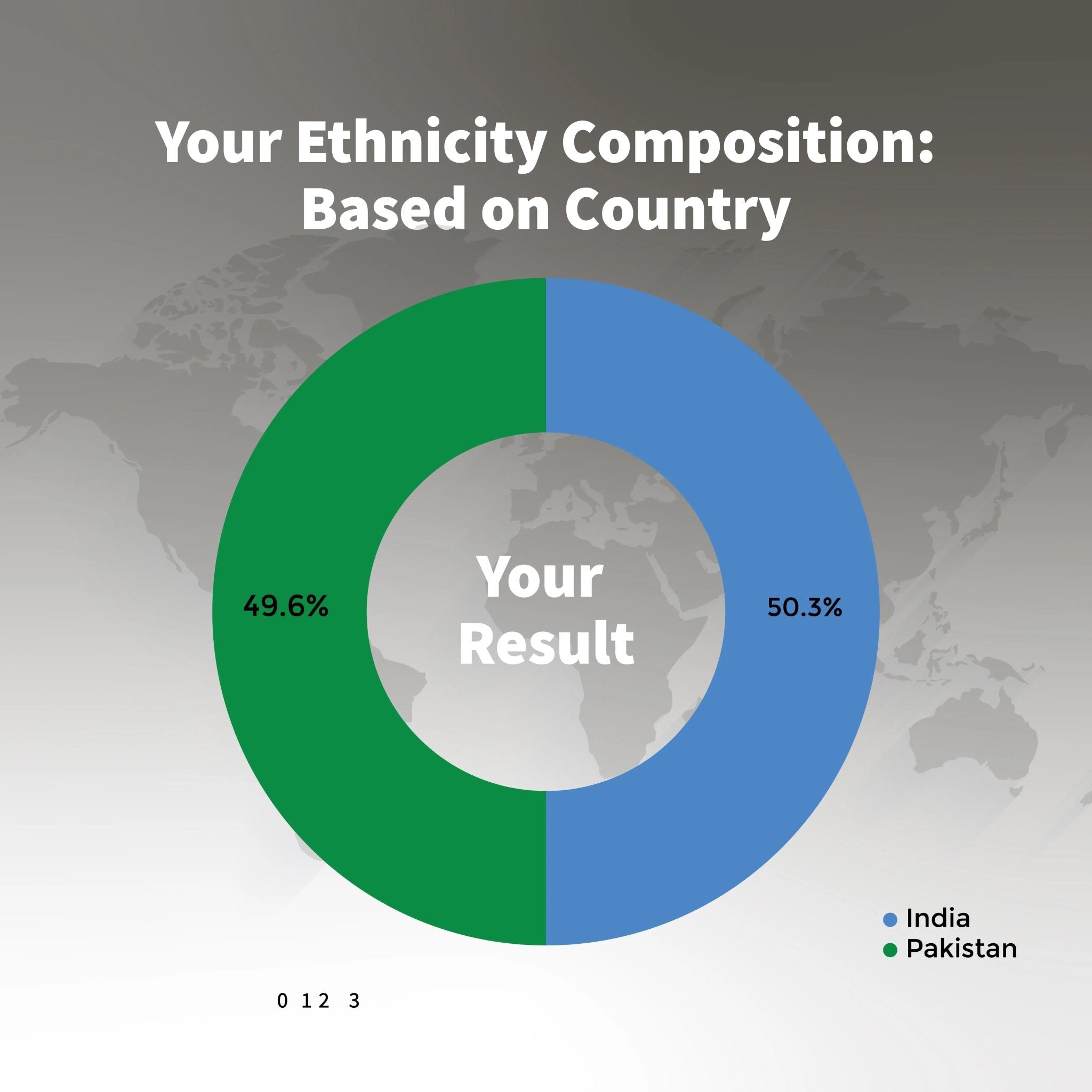
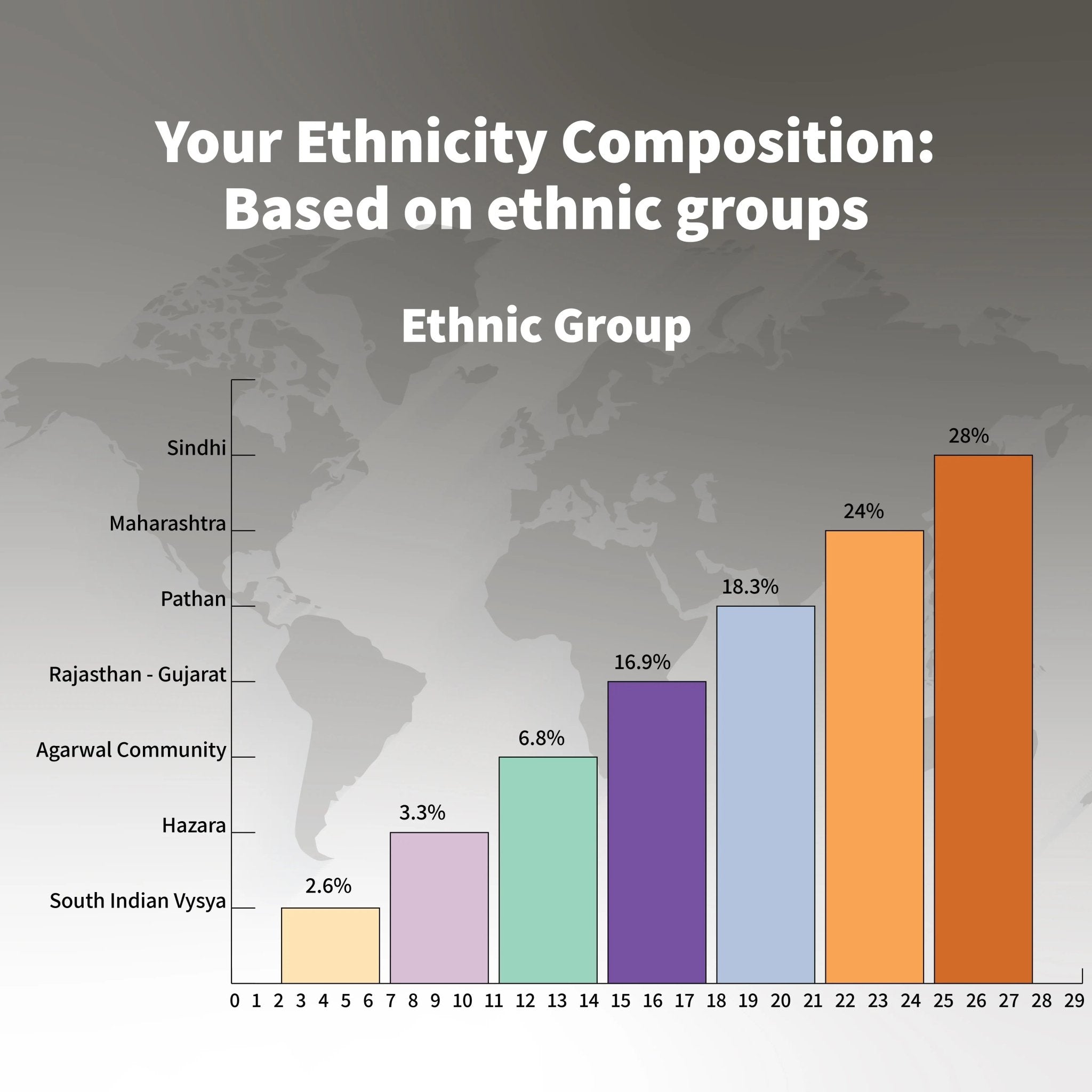
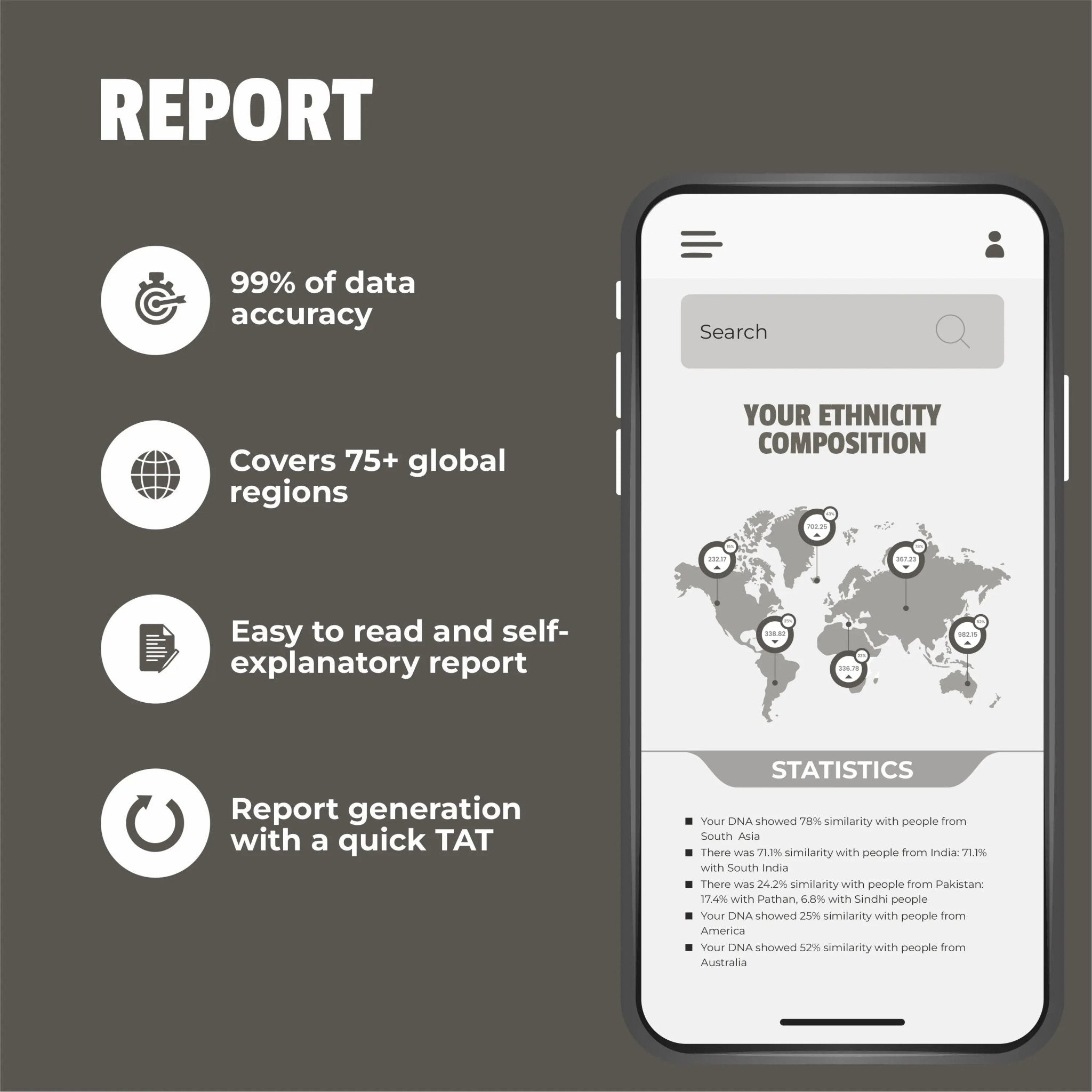
- Ethnicity estimates: The percentage of your DNA matching reference populations from different world regions
- Migration patterns: The routes your ancestors likely took as they moved across the globe
- Haplogroups: Your deep ancestral lineage groups, shared with populations from specific regions
- Relative matching: Connections to living relatives who have also tested
- Ancient ancestry: Connections to ancient populations (Neanderthal, Denisovan ancestry)
Ancestry Testing in the Indian Context
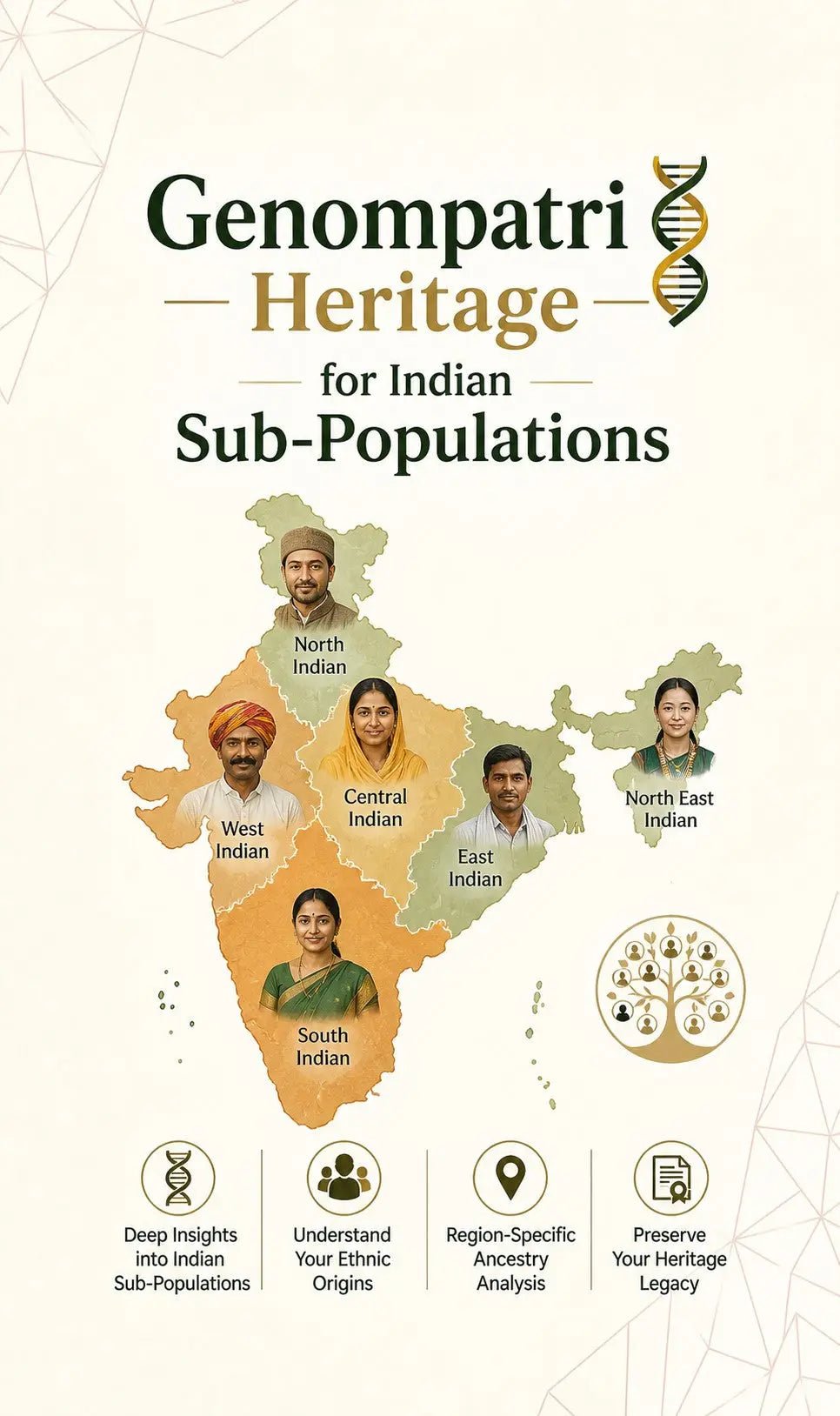
India is one of the most genetically diverse nations on earth, shaped by thousands of years of migration, trade, and cultural exchange. Your DNA may carry traces of ancient Dravidian, Indo-Aryan, Central Asian, East Asian, or even European ancestry — stories that no historical record can fully capture. For many Indians, ancestry testing reveals surprising connections to populations across the subcontinent and beyond.
Standard Western ancestry databases have historically underrepresented South Asian populations, making India-specific ancestry analysis particularly valuable for accurate results.
Combining Ancestry with Health Insights
The most powerful approach is to understand both your ancestral story and your genetic health profile. Certain ancestral populations carry specific genetic variants that influence disease risk, metabolism, and nutrition needs. Knowing both gives you the complete picture.
FAQs
How accurate are ancestry tests?
Accuracy depends on the size and diversity of the reference population database. Tests are most accurate for populations well-represented in the database. Results are probabilistic estimates, not definitive statements — and they improve as databases grow.
Can ancestry testing reveal health information?
Standard ancestry tests focus on ethnicity and migration. Comprehensive genetic tests like Genomepatri combine ancestry insights with health risk assessment, drug response, and wellness traits — giving you a complete genetic picture.
Discover Where You Come From — and What Your DNA Means for Your Health
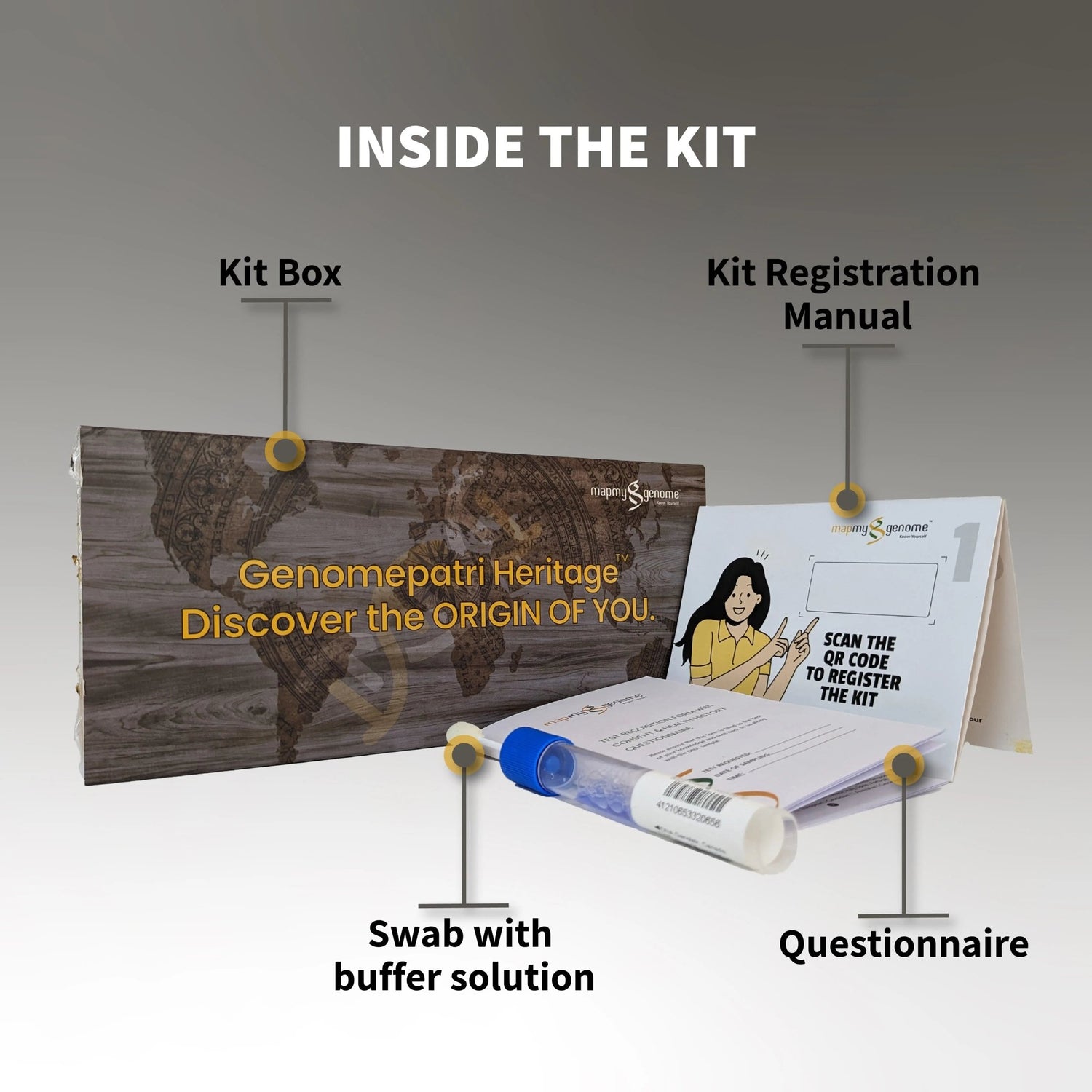
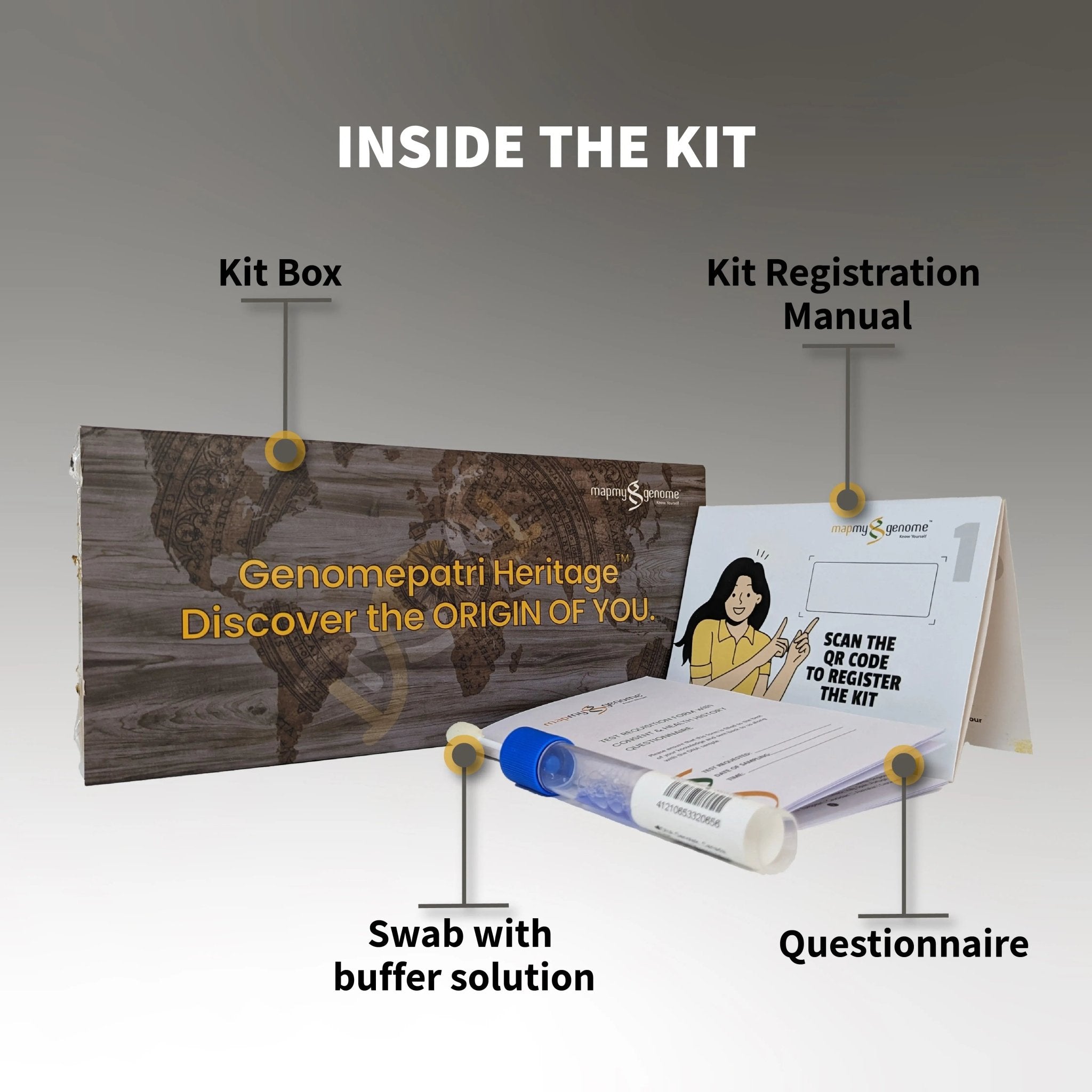
The Discover Yourself Bundle combines Genomepatri (India's #1 health DNA test) with Genomepatri Heritage (ancestry tracing) in one comprehensive package — your complete ancestral story and actionable health insights from a single saliva sample at home.
Explore the Discover Yourself Bundle → Explore Genomepatri →