

Noncommunicable Diseases: Risk Factors and Statistics
Noncommunicable diseases (NCDs) — also known as chronic diseases — are not passed from person to person. They are of long duration and generally slow progression. The four main types of NCDs are cardiovascular diseases, cancers, chronic respiratory diseases, and diabetes.
The Global Burden
NCDs kill 41 million people each year, equivalent to 71% of all deaths globally
Each year, 15 million people die from an NCD between the ages of 30 and 69 years — over 85% of these “premature” deaths occur in low- and middle-income countries
Cardiovascular diseases account for most NCD deaths (17.9 million people annually), followed by cancers (9.0 million), respiratory diseases (3.9 million), and diabetes (1.6 million)
India bears a disproportionately high burden of NCDs, with cardiovascular diseases, diabetes, and cancers among the leading causes of death
Key Risk Factors
Modifiable behavioural risk factors — tobacco use, physical inactivity, unhealthy diet, and harmful use of alcohol
Metabolic risk factors — raised blood pressure, overweight/obesity, raised blood glucose, and raised cholesterol
Genetic risk factors — family history and inherited genetic variants that increase susceptibility to NCDs
The Genetic Angle
While lifestyle factors are the primary drivers of NCDs, genetic predisposition plays a significant role in determining who develops these conditions and at what age. Understanding your genetic risk profile allows you to take targeted preventive action — through diet, lifestyle, and medical surveillance — before symptoms appear.
Know Your Genetic Risk for NCDs
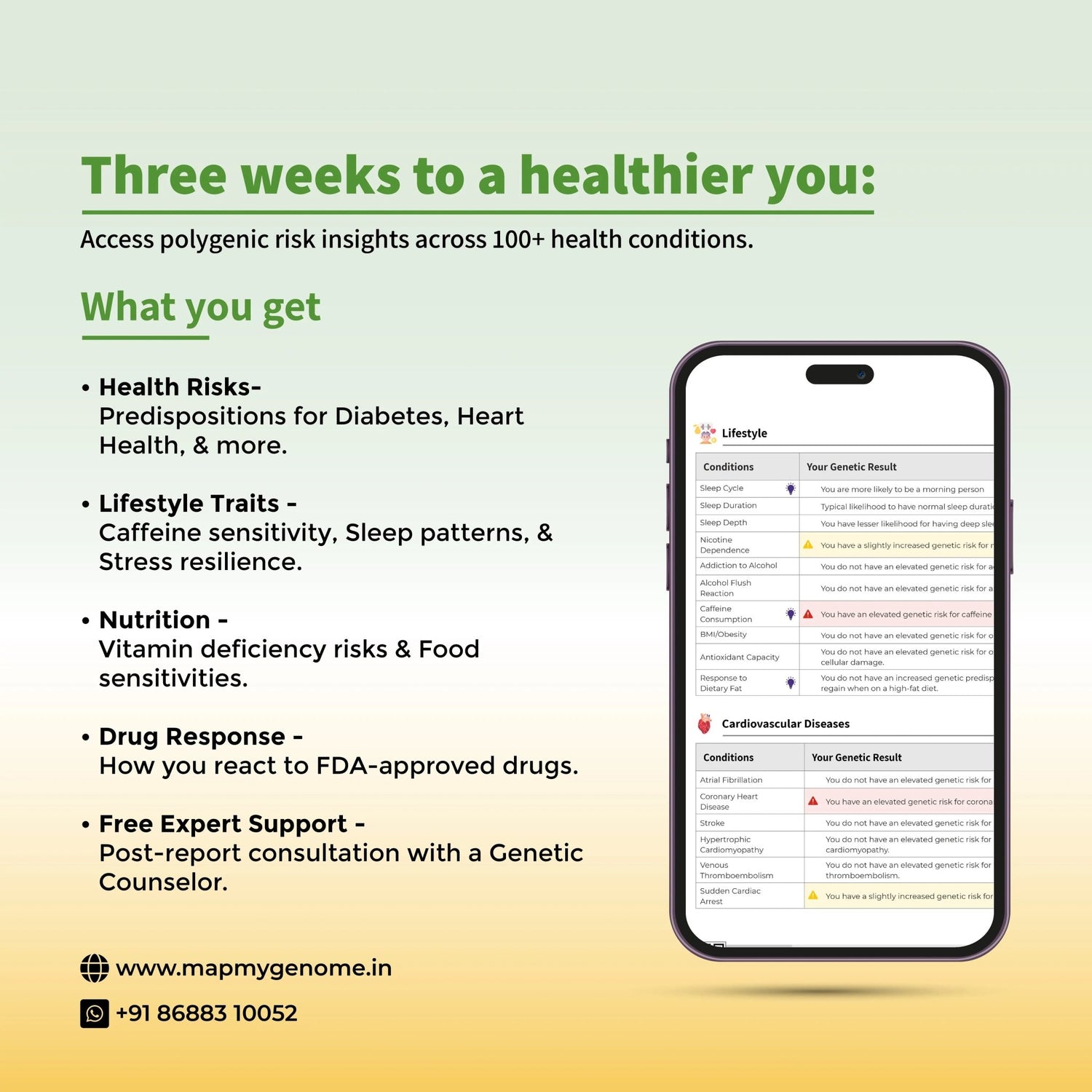
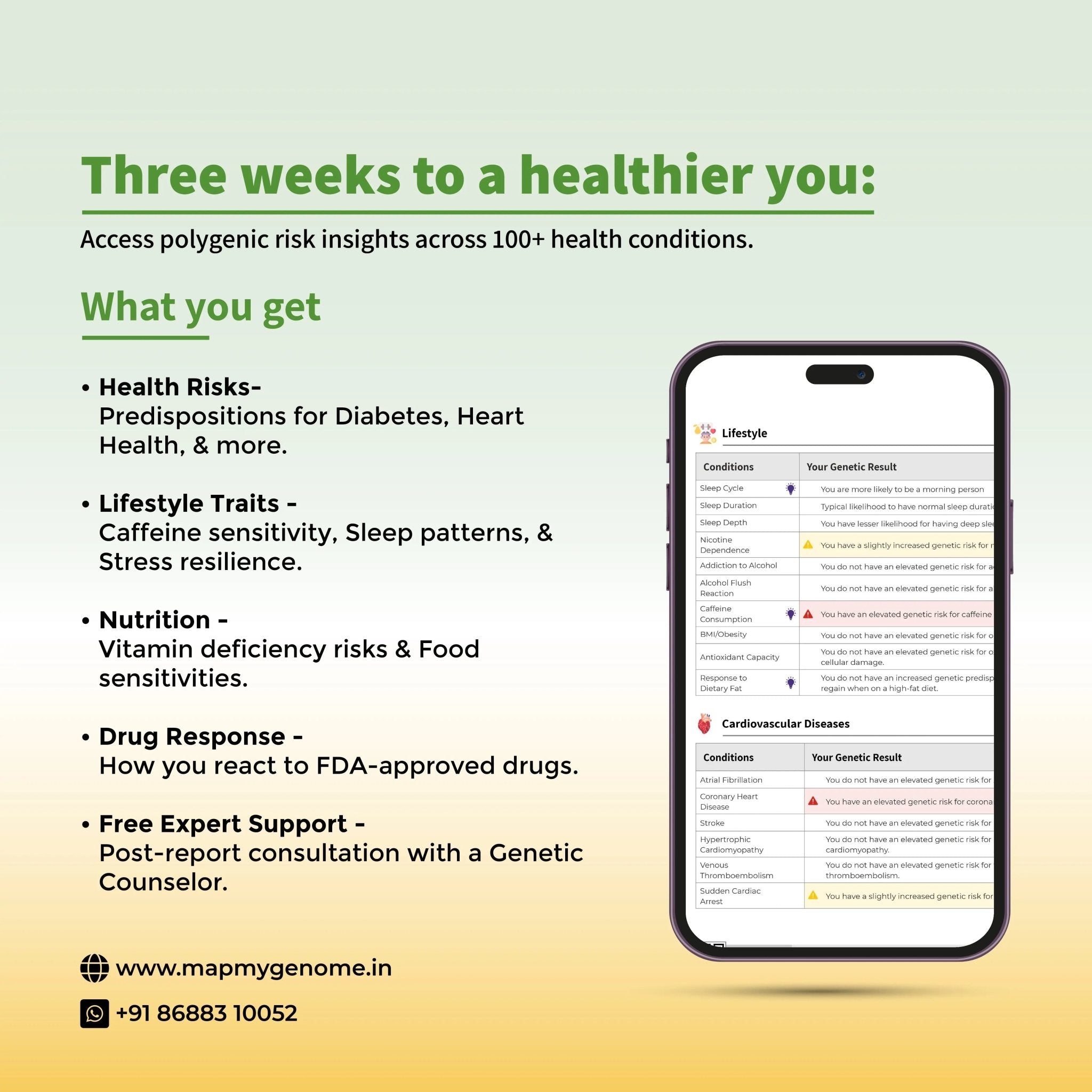
Genomepatri by MapmyGenome assesses your genetic predisposition to cardiovascular disease, diabetes, cancer, and 100+ other health conditions — with certified genetic counselling to help you take proactive steps for your health.