

Vitiligo: What You Need to Know
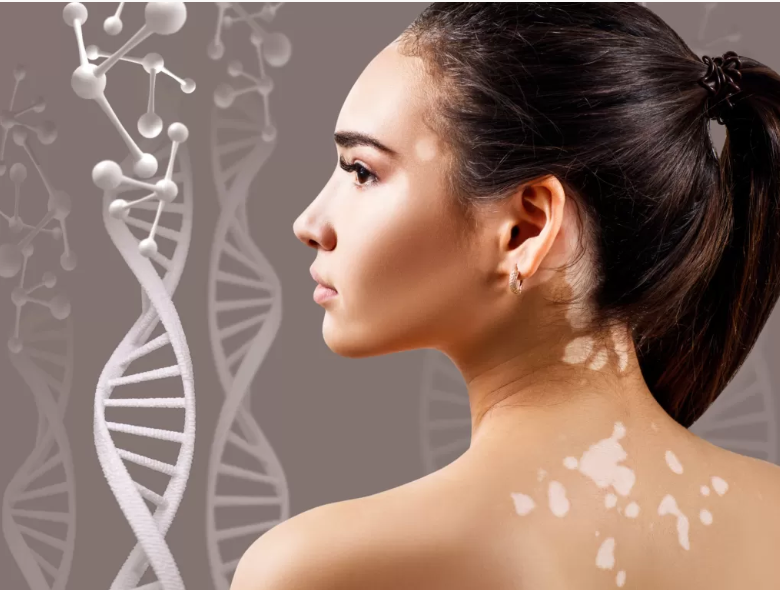
Vitiligo is a condition that causes the skin to lose its natural colour. It occurs when melanocytes — the pigment-producing cells — die or stop producing melanin, the pigment that gives colour to hair, skin, and eyes. Patches of lighter skin appear, and sometimes a section of hair turns white. A common misconception is that vitiligo is contagious — this is not true.
Types of Vitiligo
Generalised — the most common type; patches appear in various places on the body
Segmental — restricted to one side of the body or one area, such as the hands or face
Mucosal — affects mucous membranes of the mouth and/or genitals
Focal — a rare type in which macules are in a small area and do not spread within one to two years
Trichome — a white or colourless centre, then an area of lighter pigmentation, then normally coloured skin
Universal — a rare type in which more than 80% of the skin lacks pigment

Risk Factors
Autoimmune reaction
Hereditary or family history of vitiligo
Triggers: stress, severe sunburn, skin trauma, or chemical exposure
A defect in melanocytes causing them to destroy themselves
Problems Associated with Vitiligo
Macules are more sensitive to sunlight, causing sunburns rather than tanning
Some people may have abnormalities in their retinas and variation in iris colour
Low self-esteem due to visible skin colour differences
Treatment
There is no cure for vitiligo. Treatments focus on creating a uniform skin tone through camouflage therapy, repigmentation therapy, light therapy, and surgery. About 10–20% of people with vitiligo fully regain their skin colour. Those with the best chance are young, with vitiligo that peaked in less than six months and is located mainly on the face.
The Genetic Basis of Vitiligo
About 30% of people with vitiligo have at least one family member with the condition. Multiple genetic markers (SNPs) are associated with vitiligo. A combination of genetic, environmental, and lifestyle factors increases the risk. Genomepatri by MapmyGenome helps individuals understand their genetic susceptibility to vitiligo, enabling targeted preventive action.
Know Your Genetic Skin Health Profile
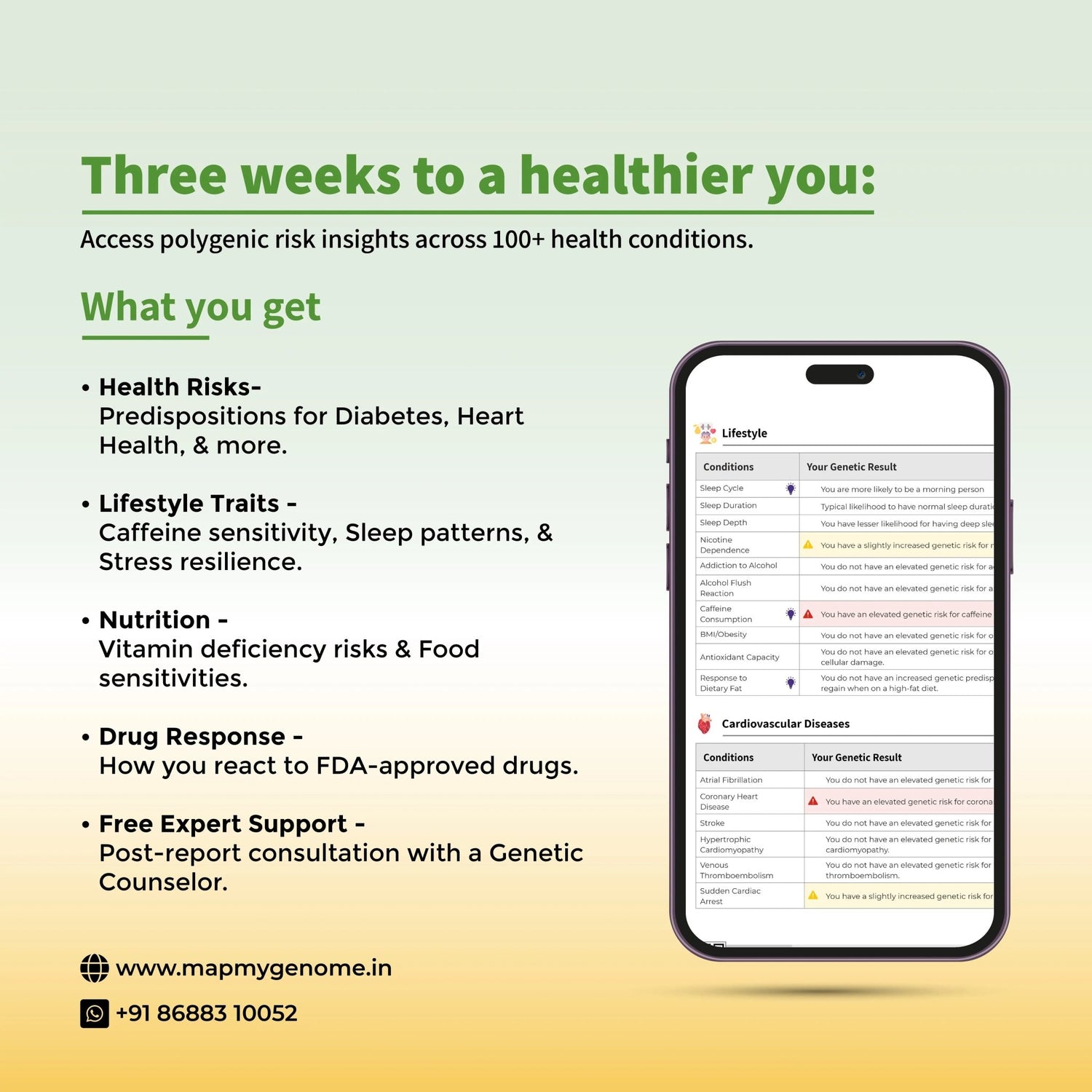
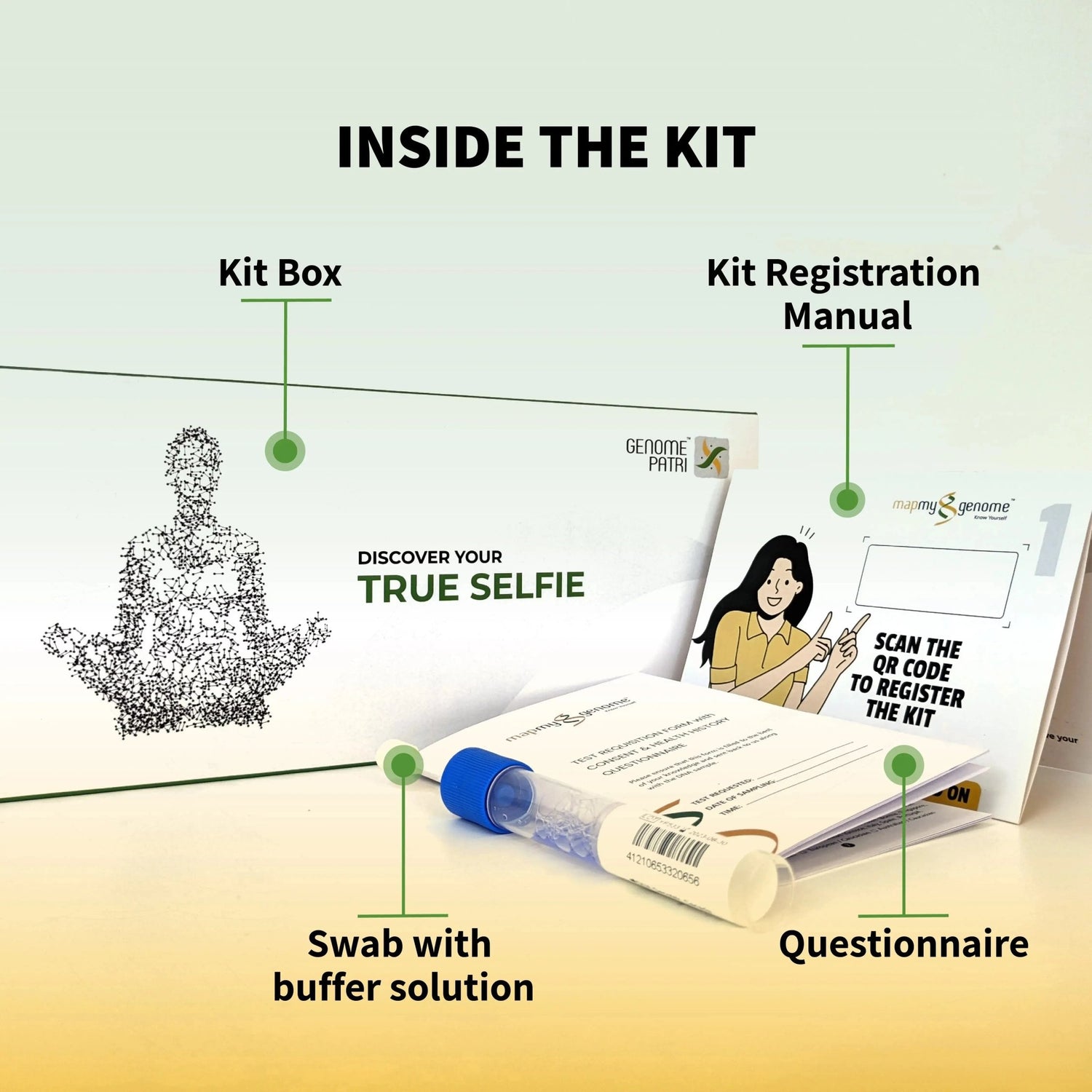
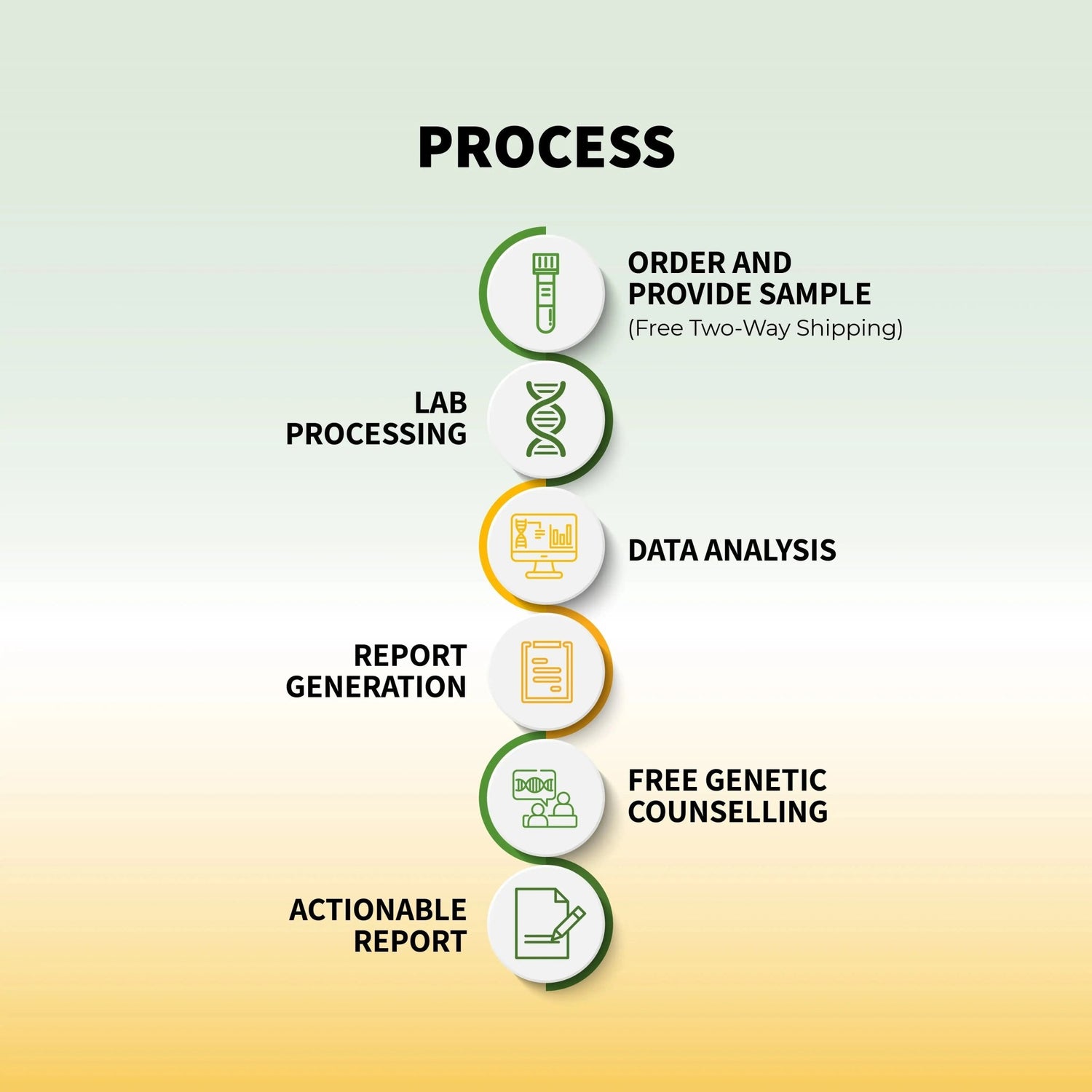
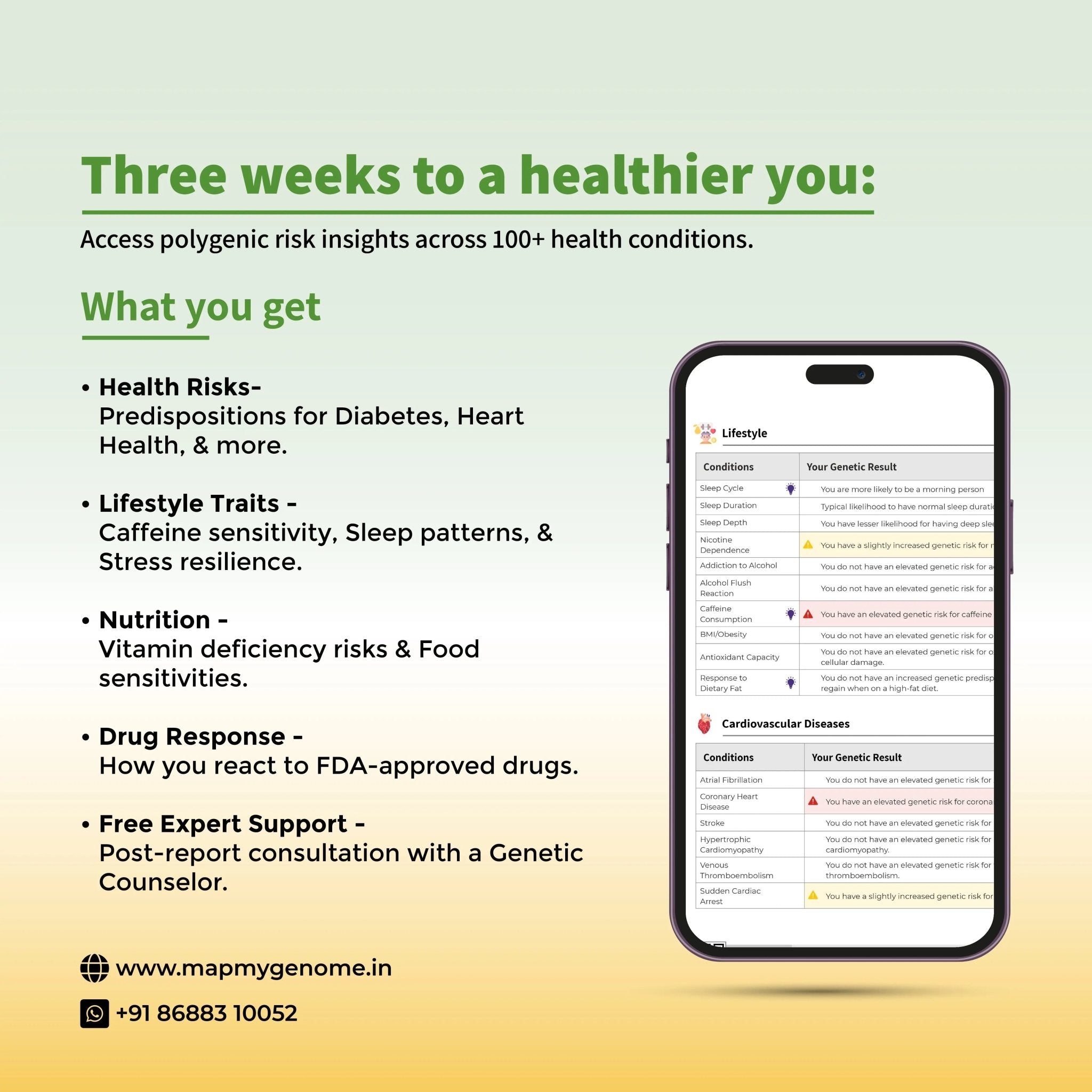
Genomepatri by MapmyGenome covers genetic predisposition to vitiligo, skin conditions, sun sensitivity, and 100+ other health traits. Includes certified genetic counselling to help you understand your results and take proactive steps.